Serving Newark, NJ & nearby
(973) 291-0751
Newark, NJ

What Newark's Weather Does to a 1950s Garage Door

Newark homes built between 1938 and 1996 have garage doors with little or no insulation. Here's what the cold does to them and when repair still makes sense.

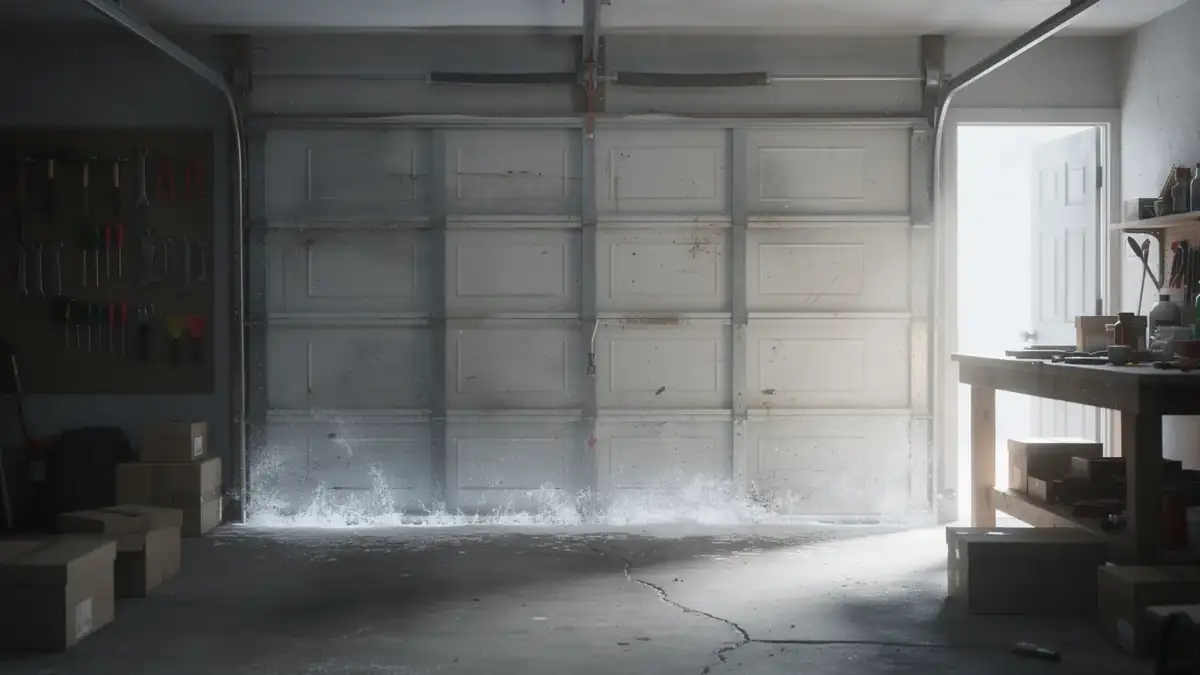
The garage door is closed with water splashing against the bottom.

What the Weather Here Does to It

  1. Newark sits in a cold-severe climate band

    And the housing behind most garage doors in this city went up between 1938 and 1996, with the typical build year landing around 1958. That matters because steel panels from that era were not made to handle the swing between a humid August and a January cold snap. The metal contracts, the seams at the panel joints open up a hair, and the weatherstripping along the bottom - if it's even original - hardens and cracks.

  2. In neighborhoods like the Central Business District

    Where a lot of the garage stock dates to that same postwar run, you'll see the same pattern on door after door: a bowed top panel, a track that's pulled slightly away from the jamb, a bottom seal that's shrunk back an inch from the corner. None of that is damage from one storm. It's forty-plus winters of expansion and contraction working on a door that was never built with a thermal break in it.

  3. The cold doesn't break a door by itself

    It finds whatever was already marginal - a spring wound a little light, a roller worn a little thin - and finishes the job.

Checking It Yourself

If your house is part of that 1938-to-1996 stock, which covers most of Newark and the 156 named areas around it, start with the springs. A lot of these houses still run a single torsion spring over the header instead of two, because that's what went in when the house was built. Look for a gap in the coil - a clean break usually shows as a visible split with the spring pulled apart.

Next, pull the release handle with the door closed and try to lift the door by hand. It should move smooth and stay roughly where you let go. If it drops like dead weight, the spring isn't carrying its share anymore, whatever shape it looks like it's in.

Check the bottom panel where it meets the slab. On a door with no insulation - common on houses built before insulation rules were part of the code - you'll feel outside air right through the steel on a cold day, not just around the seal. That's the panel itself, not a gap you can caulk.

One thing you can't check from the ground: whether the torsion hardware is original side-mount or has been swapped to center-mount at some point. That tells a tech a lot about what parts will fit, and it's worth noting before you call.

The Seasonal Bit

The jump from fall into a hard winter night is when a lot of these doors stop working, not during the coldest week of January itself. Steel garage door springs lose a measurable amount of lifting power as the temperature drops, and on a door that's already old stock from the 1950s or 60s, that loss is the difference between a spring that was barely getting by and one that snaps on a Tuesday morning.

Openers show it too. A chain-drive unit installed decades ago, paired with original steel track, tends to bind right at the point the track gets cold enough to contract slightly against its brackets. You'll hear it as a grinding or a hesitation partway up, not a smooth run.

We don't see this pattern spike in July. We see it in the first real cold stretch, which in this climate band tends to be when the calls start coming in - not because people wait, but because that's when the hardware actually fails.

The Problem

  1. Here's the part worth being straight about: a lot of these doors can't be made warm

    If your garage door is original to a house built before insulation rules existed, it's a single layer of steel with no foam core and no thermal break at the frame. You can replace weatherstripping, add a bottom seal, even line the inside with a foam kit from a hardware store, and the door will still be colder than the house around it. That's not a repair problem, it's a materials problem.

  2. For a door that's structurally sound

    Straight panels, hardware that's just worn, not bent - repair makes sense and costs less than replacement. Springs, rollers, a bent track section, a worn cable: all fixable on the stock that's common across this area.

  3. But once a panel is bowed from decades of temperature swing

    Or the door is original to a house from the 1940s and the steel gauge is thinner than anything made today, you're better off replacing the door than chasing seals on it every winter. We'll tell you which situation you're in before we start work, not after.
How it works

From “it’s stuck” to “it’s fixed”

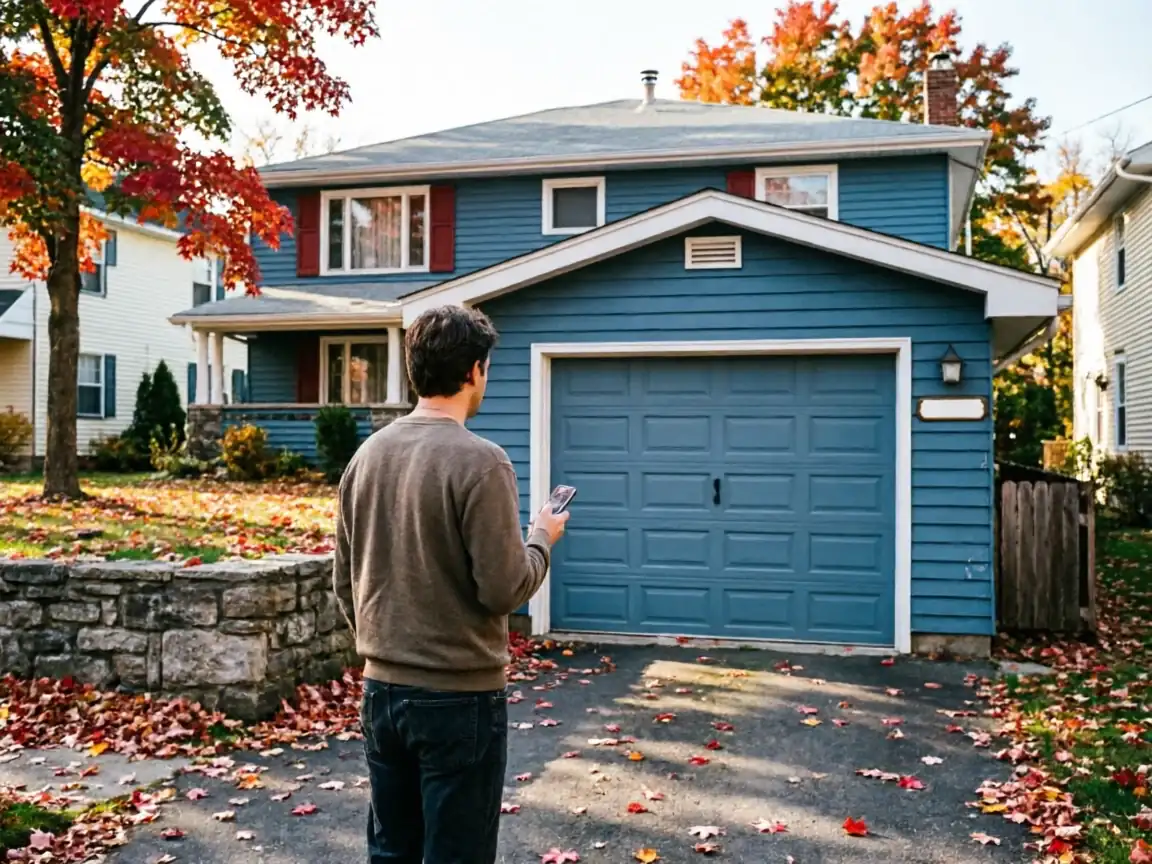
A man stands in a driveway looking at a blue garage door on a blue house.

Tell us what’s wrong

Describe the symptom - won’t open, loud bang, opener runs but the door won’t move.

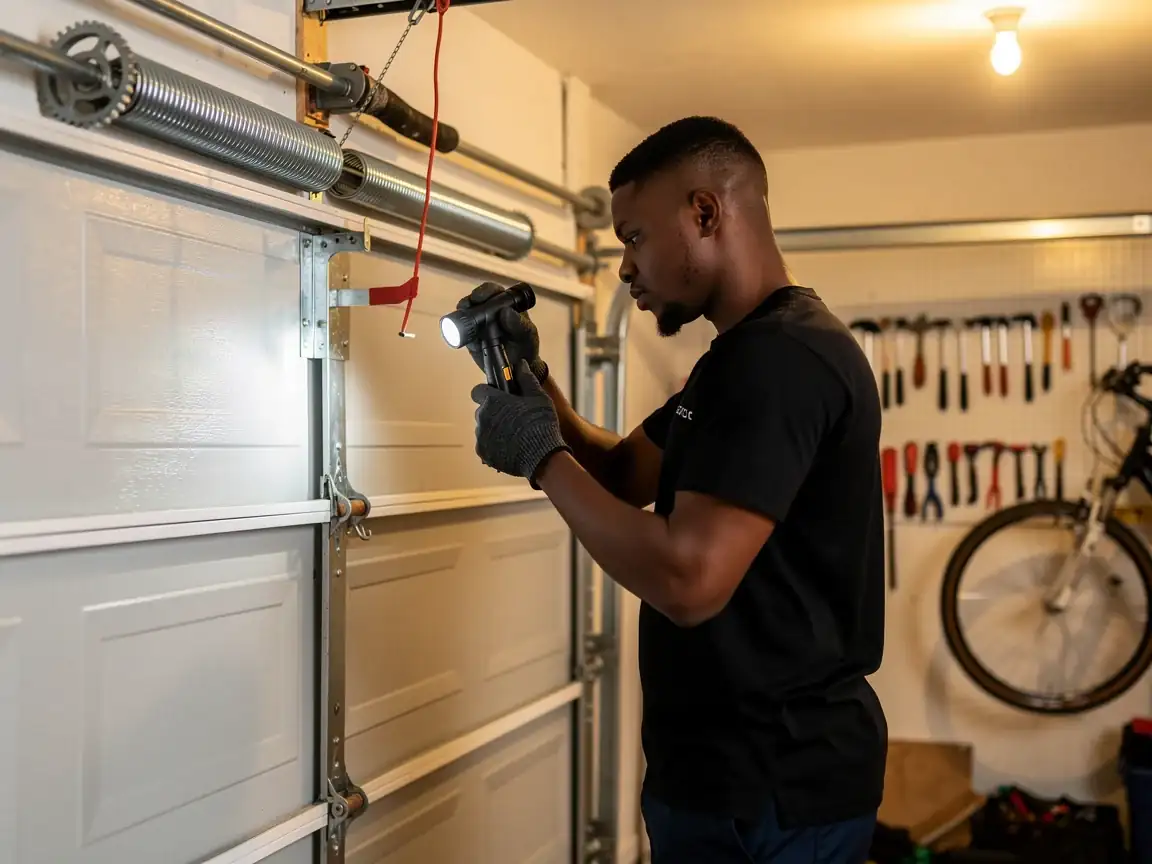
A technician shines a flashlight on the garage door's top panel and roller.

On-site diagnosis

A technician tests the door under power and by hand and finds what actually failed.

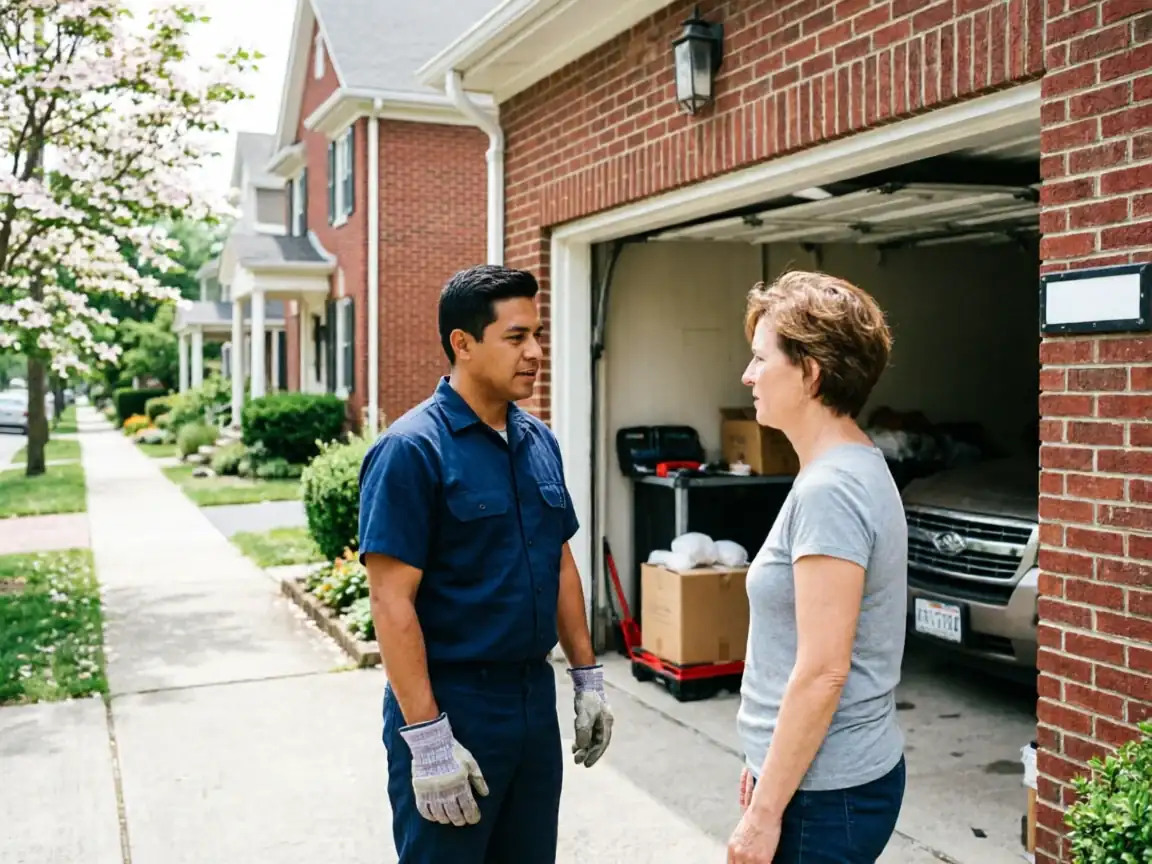
A technician talks to a woman in front of a brick house with an open garage.

Clear, up-front plan

You get the fix that’s needed and what drives the cost - before any work starts.

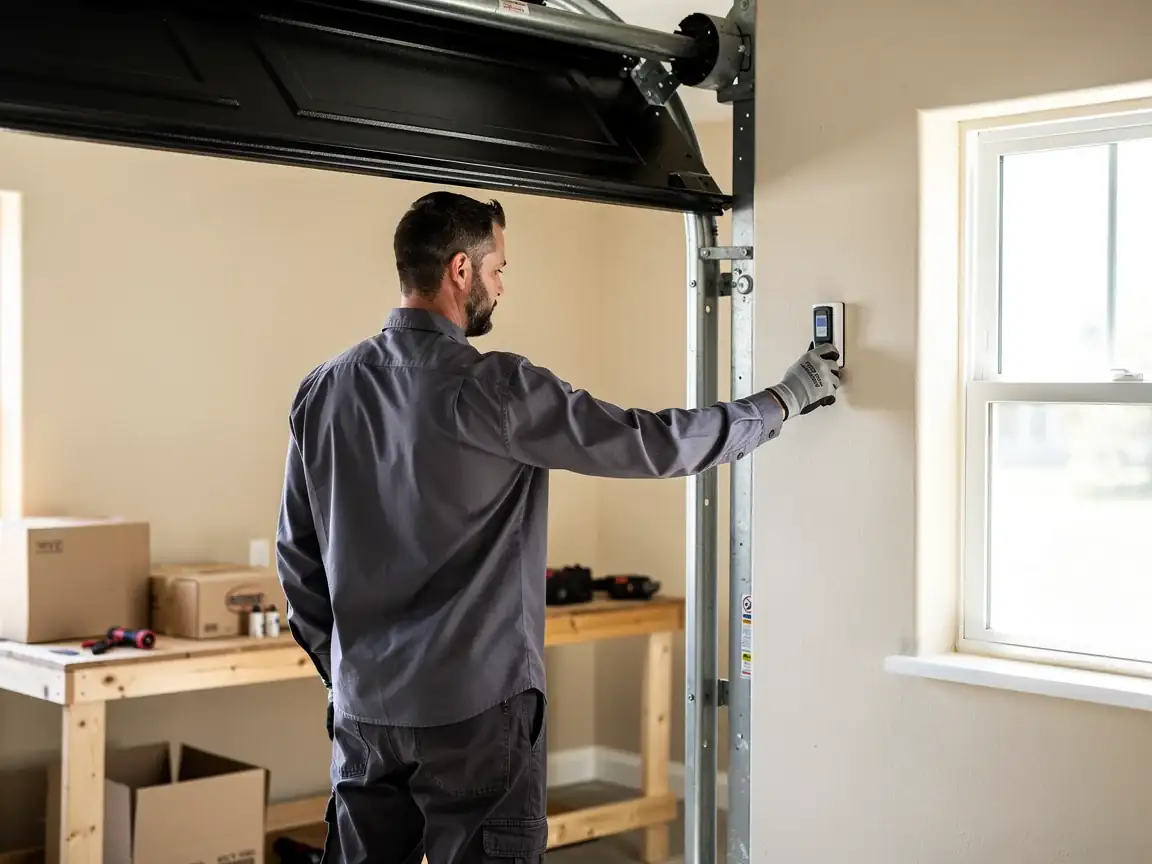
A technician adjusts a garage door opener control panel on a wall.

Repaired & tested

The repair is done, the door is set true and tested, and the work area left clean.

Not sure which repair your door needs in Newark, NJ? Describe what it’s doing - every job starts with a diagnosis.

How we work

What to expect

Diagnosis firstEvery visit starts by finding what actually failed - not a pre-written parts list.
The right part for the doorSprings and openers matched to the door’s weight and age, so the fix holds up.
Straight answersWhen a repair makes more sense than a replacement - or the reverse - you hear it plainly.
Clean, careful workTension released safely, hardware set true, the door tested under power before we leave.
What we do

Garage Door Services

Repair and installation work for Newark homes and businesses.

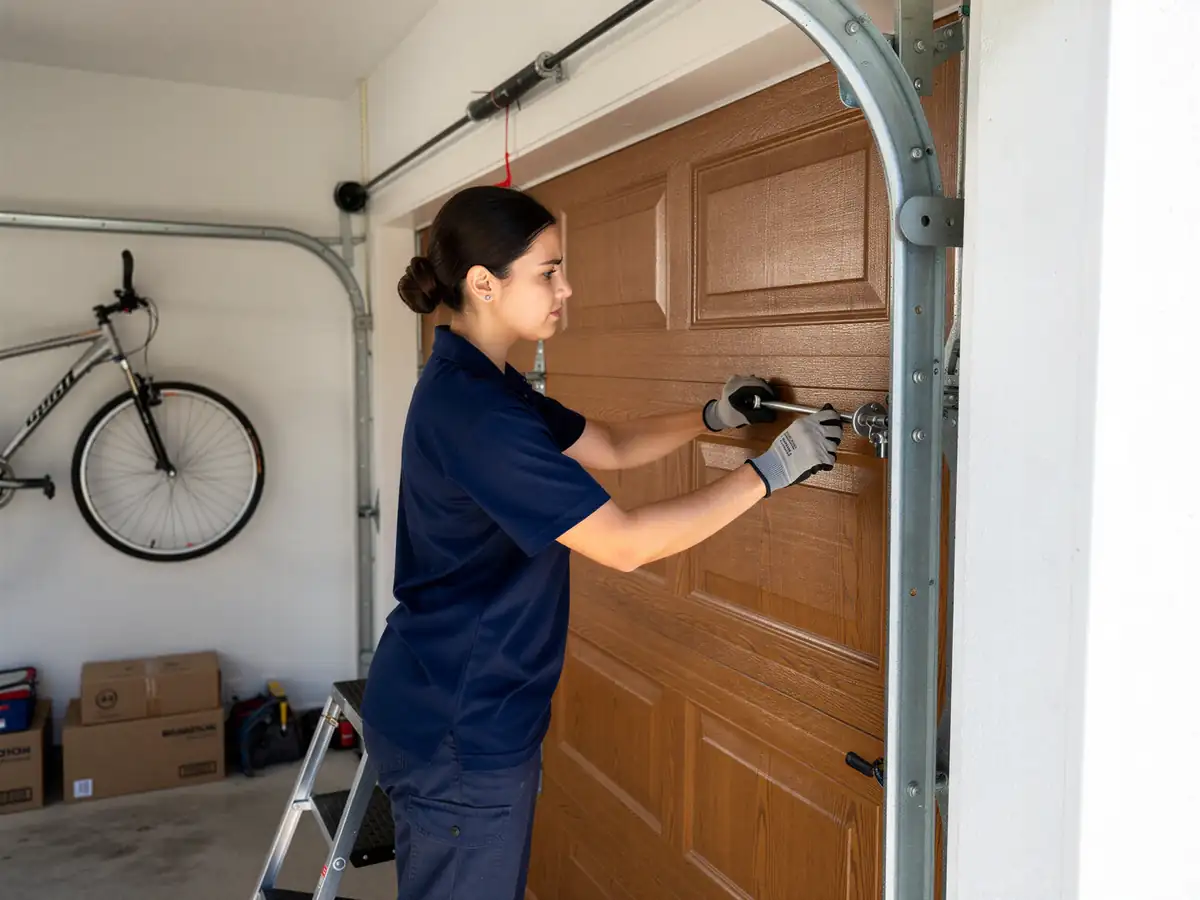
A technician adjusts a brown garage door with a tool.

Garage Door Repair

Broken spring, stuck opener, or dead track on a Newark garage door. We work on the pre-1960 doors and hardware common across Newark's older housing stock.

Learn more
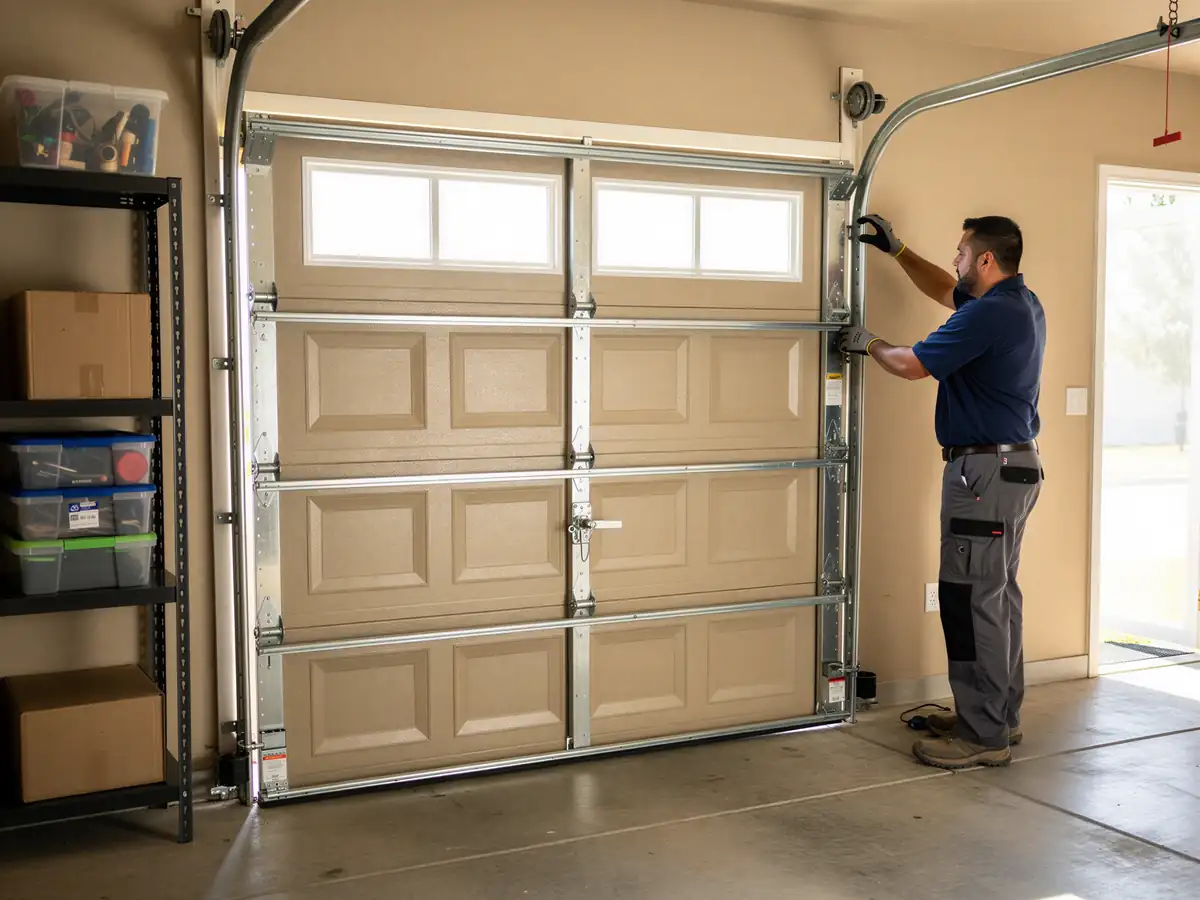
A technician in a blue shirt is working on a tan garage door with windows.

Garage Door Installation

Newark homes built mostly before 1960 carry original hardware that wasn't made for today's openers. We install doors sized and sealed for this city's housing stock and winters.

Learn more
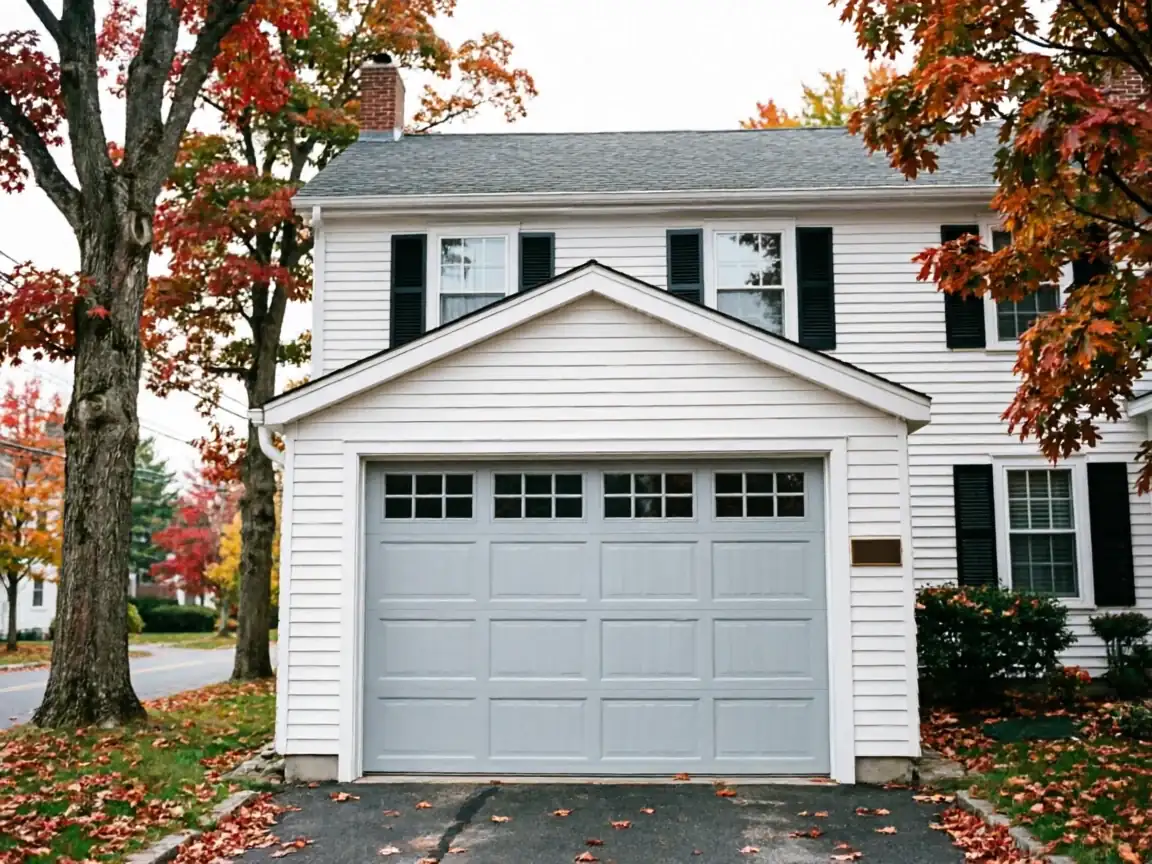
A white house with a light gray garage door and black shutters.

Garage Door Service

Garage door won't open or makes a grinding noise? Newark Garage Door Pros diagnoses and repairs doors on Newark's older housing stock, built mostly before 1960.

Learn more
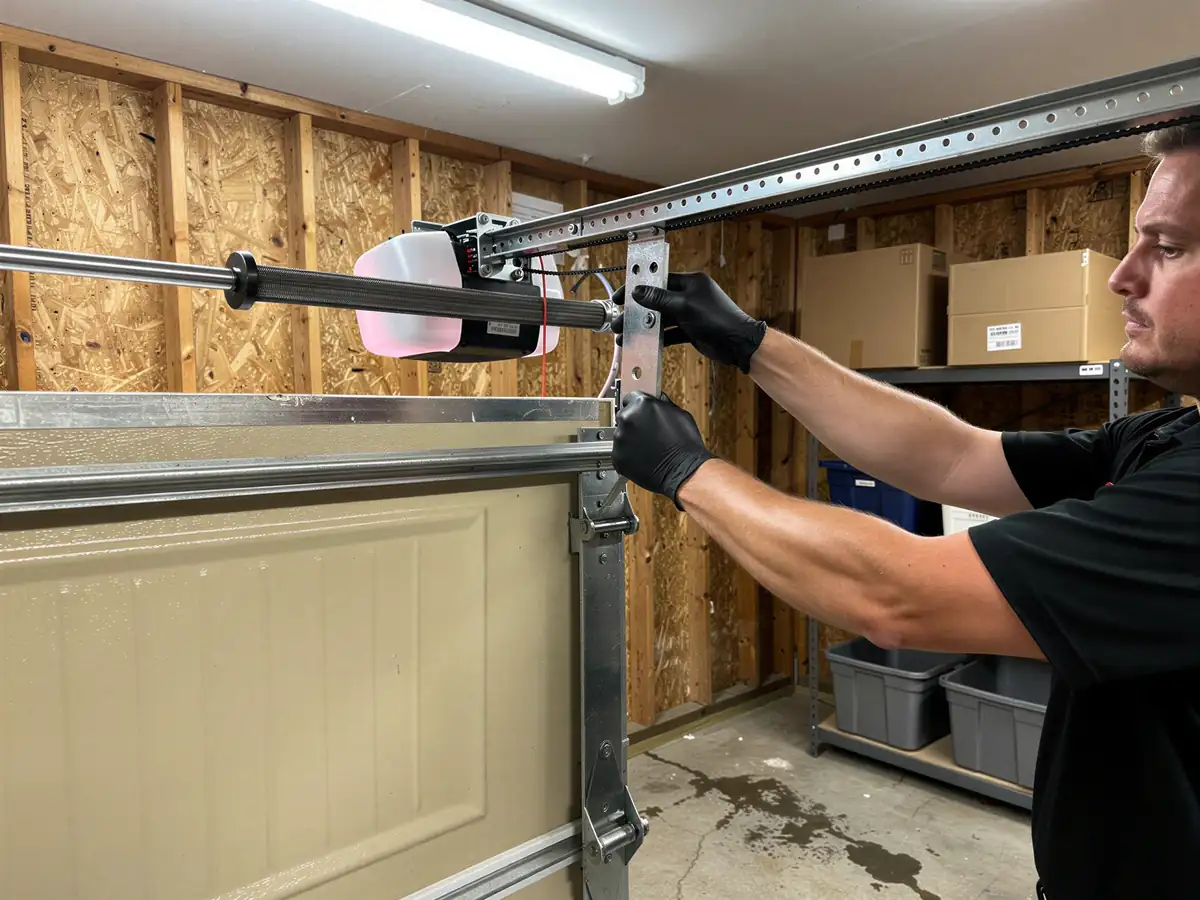
A technician in black gloves adjusts the garage door opener rail.

Opener Installation

Opener replacement and install for Newark homes built 1938-1996, where old chain drives and cold-weather strain wear out openers fast. Call for a quote.

Learn more
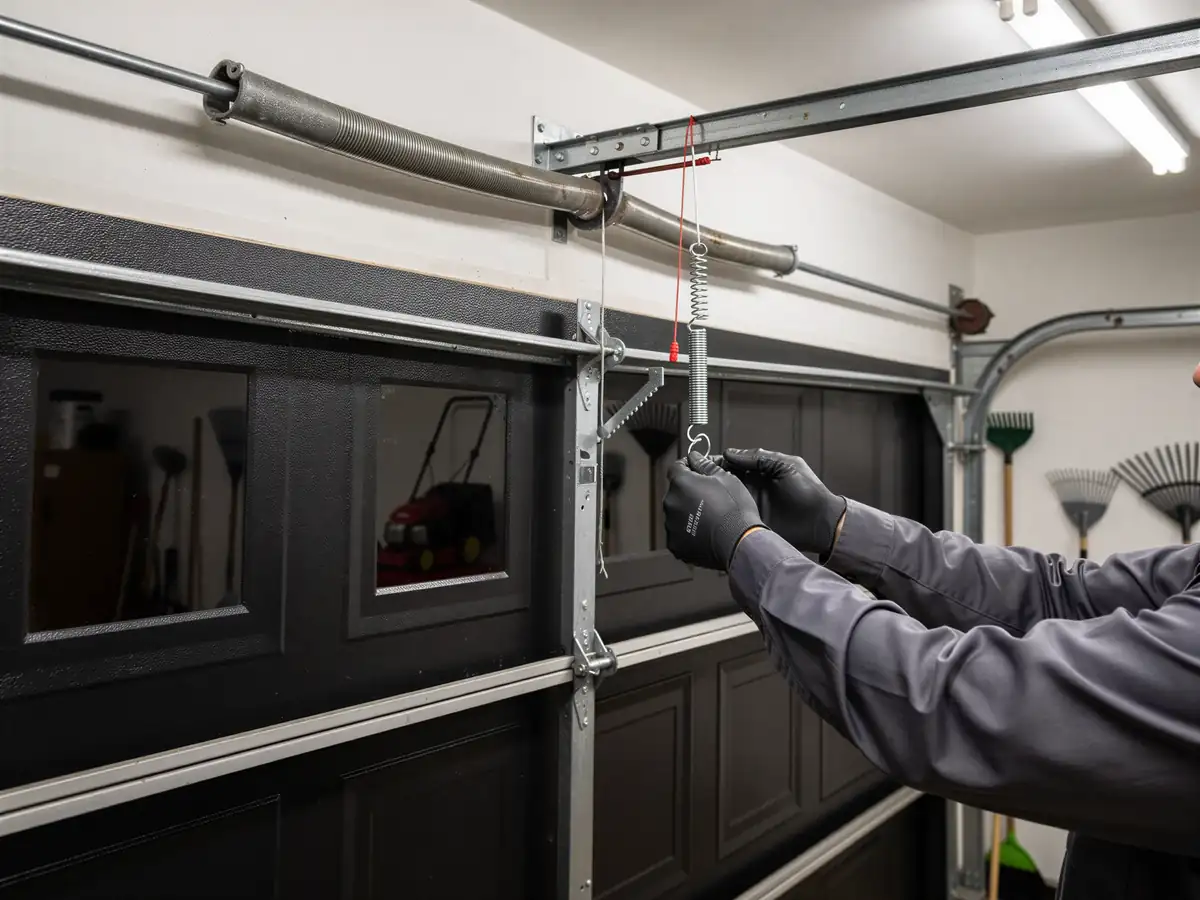
A technician in black gloves is working on a garage door spring.

Spring Repair

Broken torsion or extension spring on your Newark garage door? We explain why it happens, how we fix it, and what it costs in this area's older housing stock.

Learn more
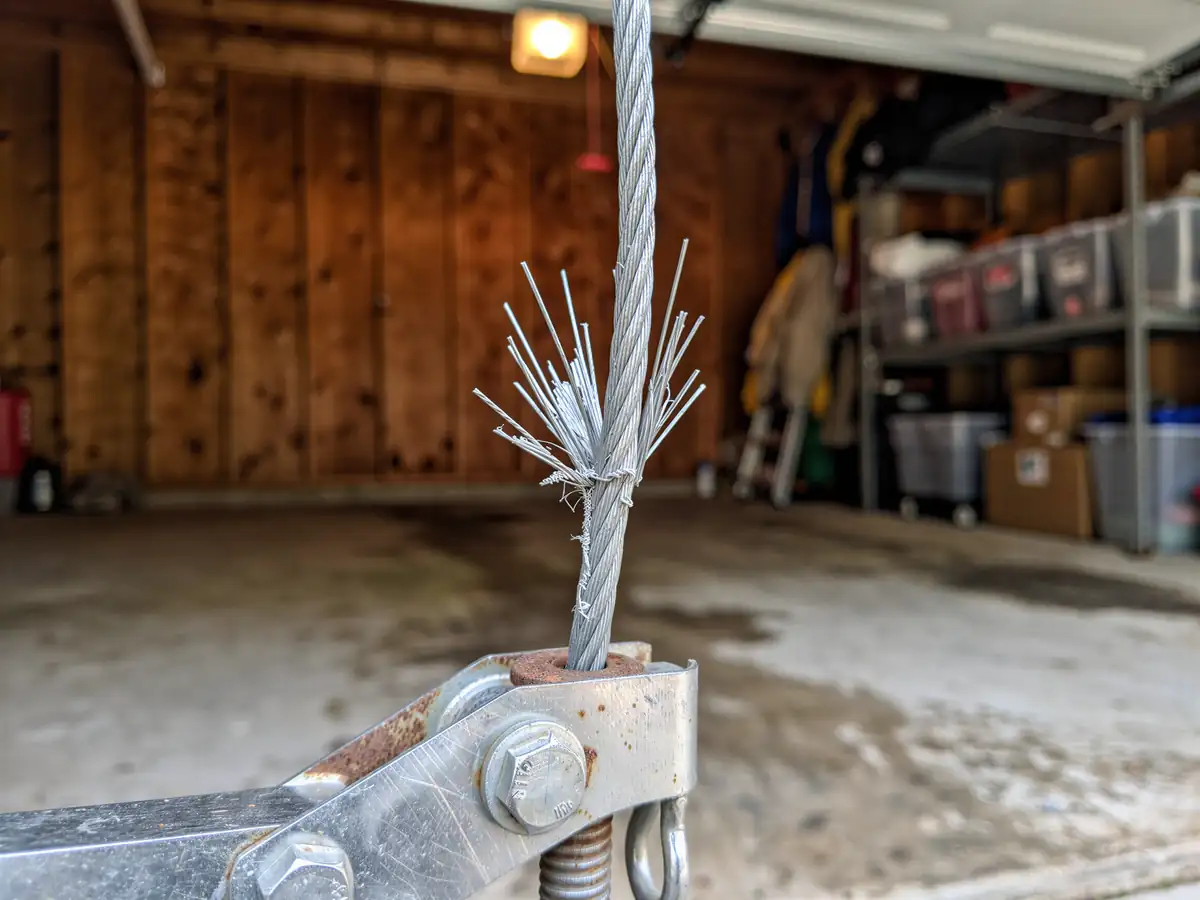
The frayed garage door cable is attached to a metal bracket in a garage.

Cable Repair

Snapped or fraying garage door cables in Newark, NJ. Why it happens so often in pre-1960 housing stock and cold winters, and what the fix actually involves.

Learn more
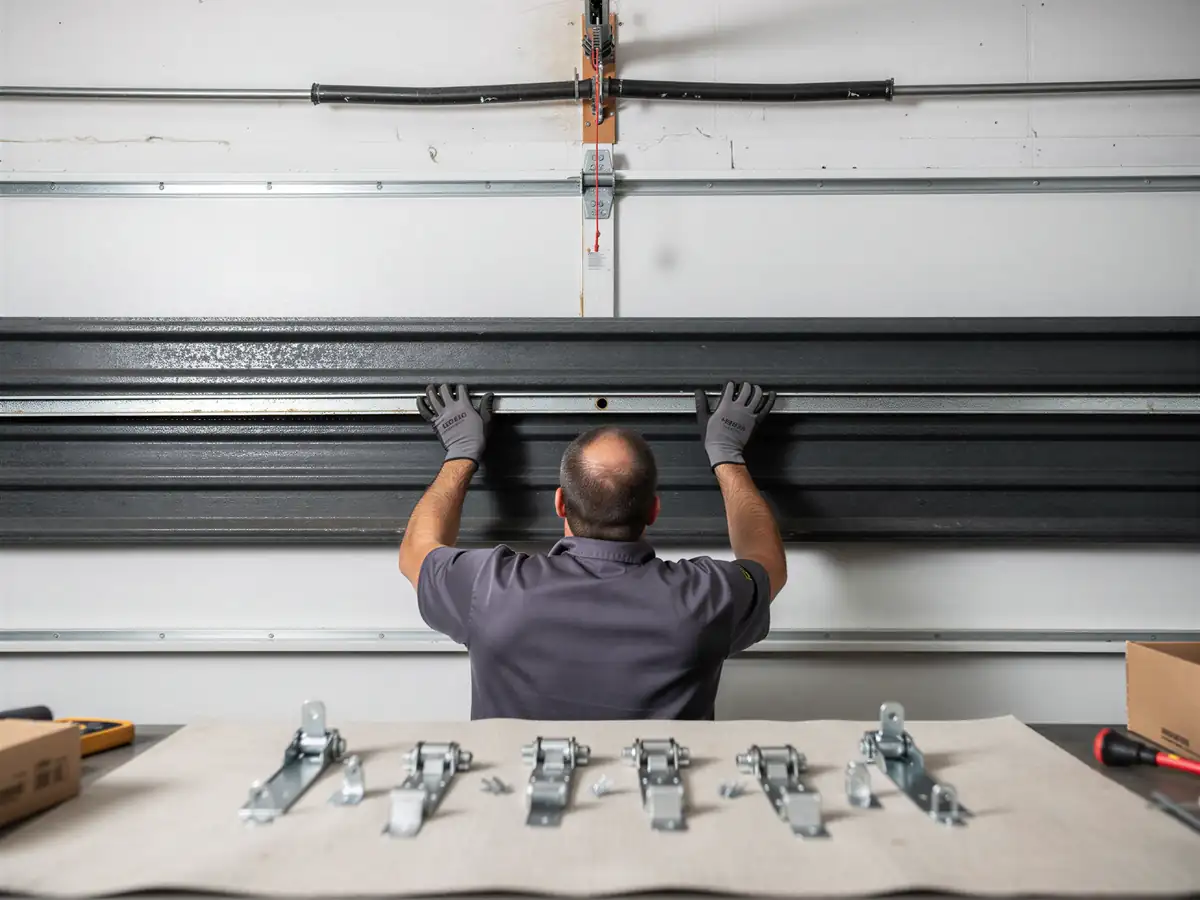
A technician installs a black garage door panel with new hinges on a table.

Panel Replacement

Dented or cracked garage door panels are common on Newark's pre-1960 housing stock. We match panels on older doors and explain when replacement beats a patch job.

Learn more
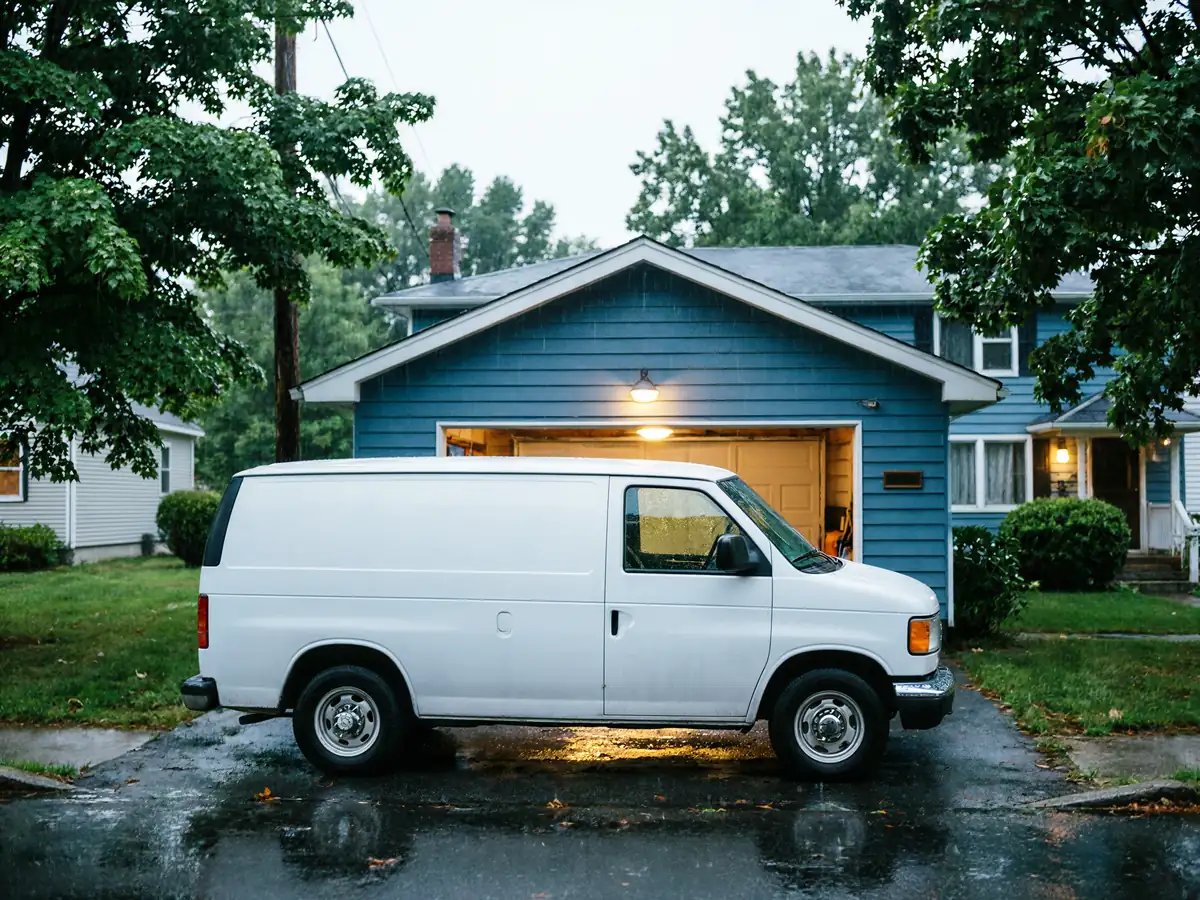
A white van is parked in a wet driveway in front of a blue house.

Emergency Garage Door Repair

Broken spring or jammed door in Newark tonight? We fix the faults common to Newark's 1938-1996 housing stock and cold-climate hardware wear across the area.

Learn more
Questions

Frequently asked

Straight answers about garage door repair in Newark. Still unsure? Ask us directly.

My house was built in the 1950s. Is my garage door original?

A lot of them are, especially in neighborhoods built out in that postwar run across Newark. If the door still has a single torsion spring mounted over the header rather than two side-mounted springs, that's usually a sign it's original hardware, even if the panel face has been swapped at some point.

Why does my door act up specifically in cold weather?

Steel springs lose lifting power as temperature drops, and on hardware that's already decades old, that loss is often enough to push a marginal spring into failure. Track and rollers also tighten up slightly in the cold, which is why doors that ran fine in October start binding or grinding once the first hard freeze hits.

Can you insulate my old garage door instead of replacing it?

You can add a foam kit and better weatherstripping, and it helps some. But a single-layer steel door from before insulation rules were standard has no thermal break in the frame or panel, so it'll still run colder than an insulated door no matter what you add to the inside face.

Ready to get your garage door sorted?

Request a QuoteCall