What the Weather Here Does to It
Newark sits in a cold-severe climate band
And that matters more for openers than most people think. Cold doesn't just stiffen springs and thicken grease in the gearbox - it also coincides with the ice and wind events that knock out power across the neighborhoods close to the Central Business District. When the power goes, your opener goes with it, and that's the moment people discover they've never located the manual release cord, or that it's rusted stiff from decades of disuse.
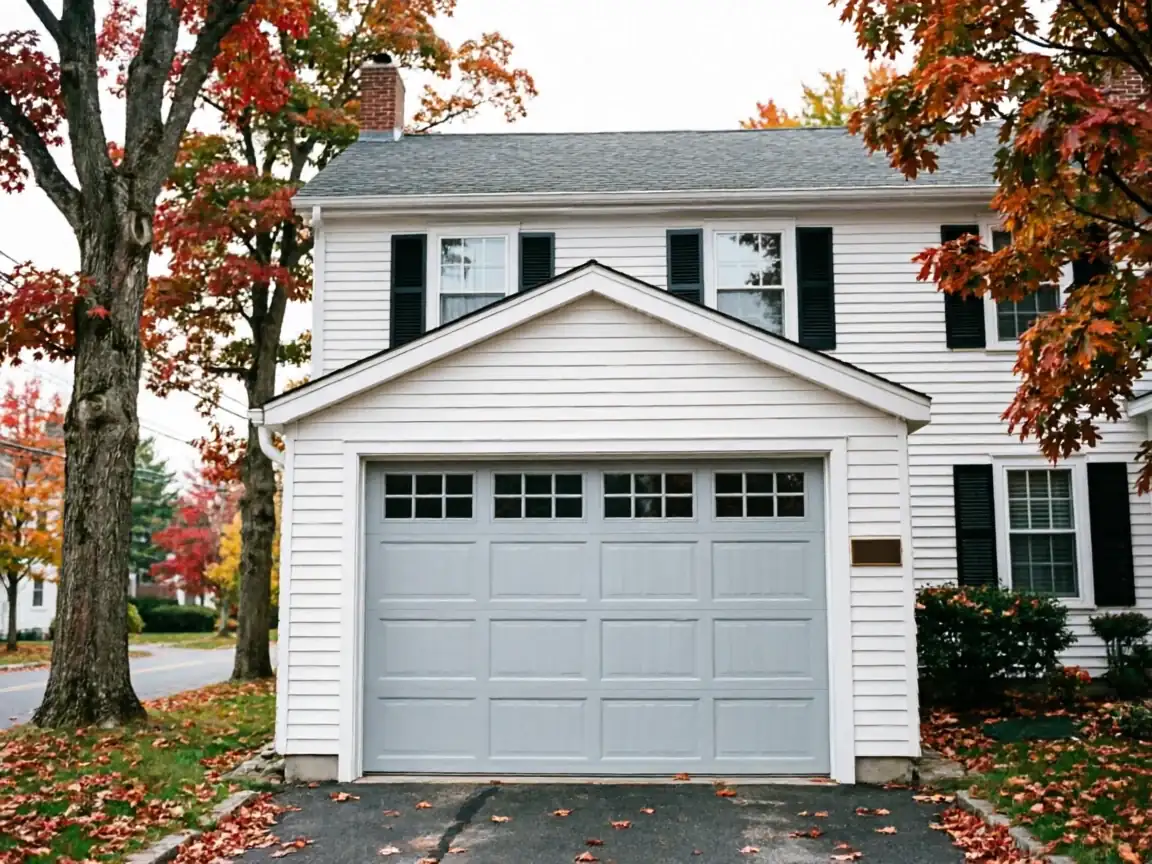
Most housing stock around Newark went up between 1938 and 1996
With a median build year of 1958. A lot of those garages still have the original opener mount or a first-generation replacement bolted to framing that was never meant for a heavier modern unit. Cold makes the chain or belt drive on an older unit bind slightly, and if the power cuts out while the door is half-open, that bind is the difference between a door you can lift by hand and one that won't budge.
Checking It Yourself
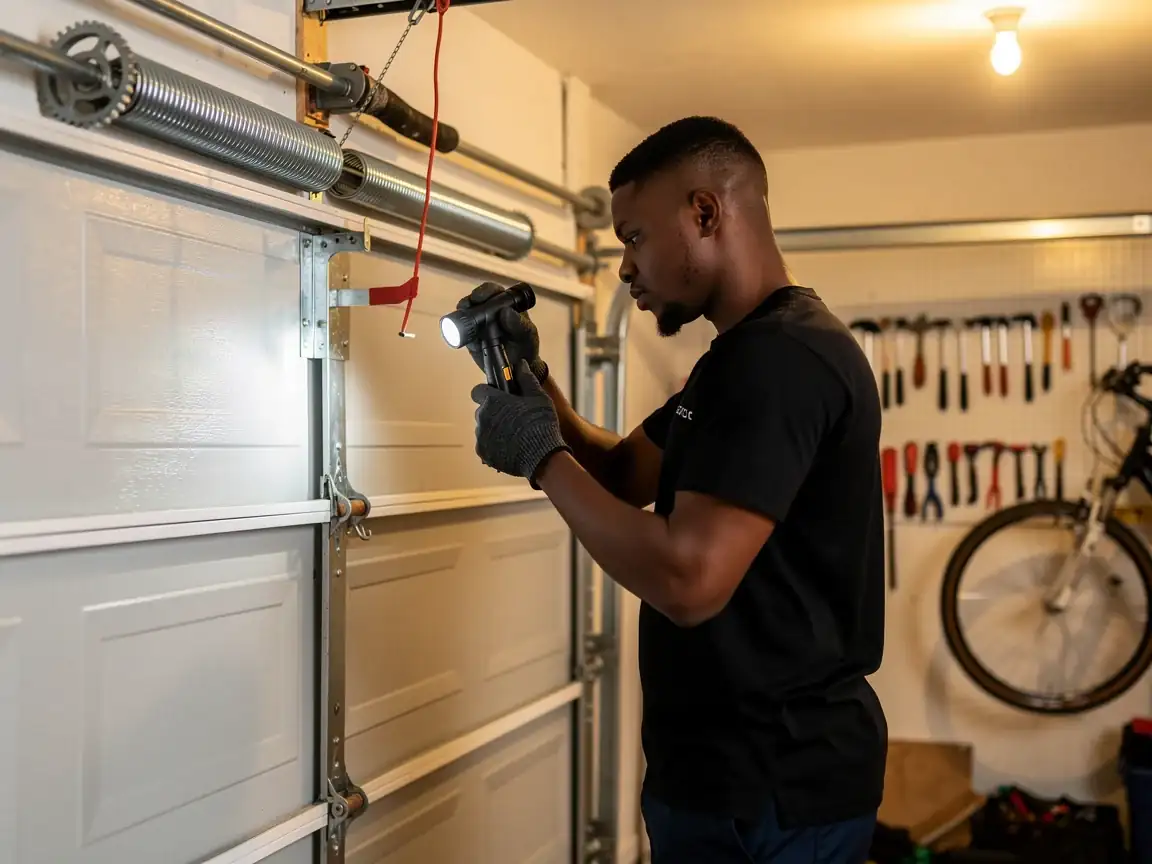
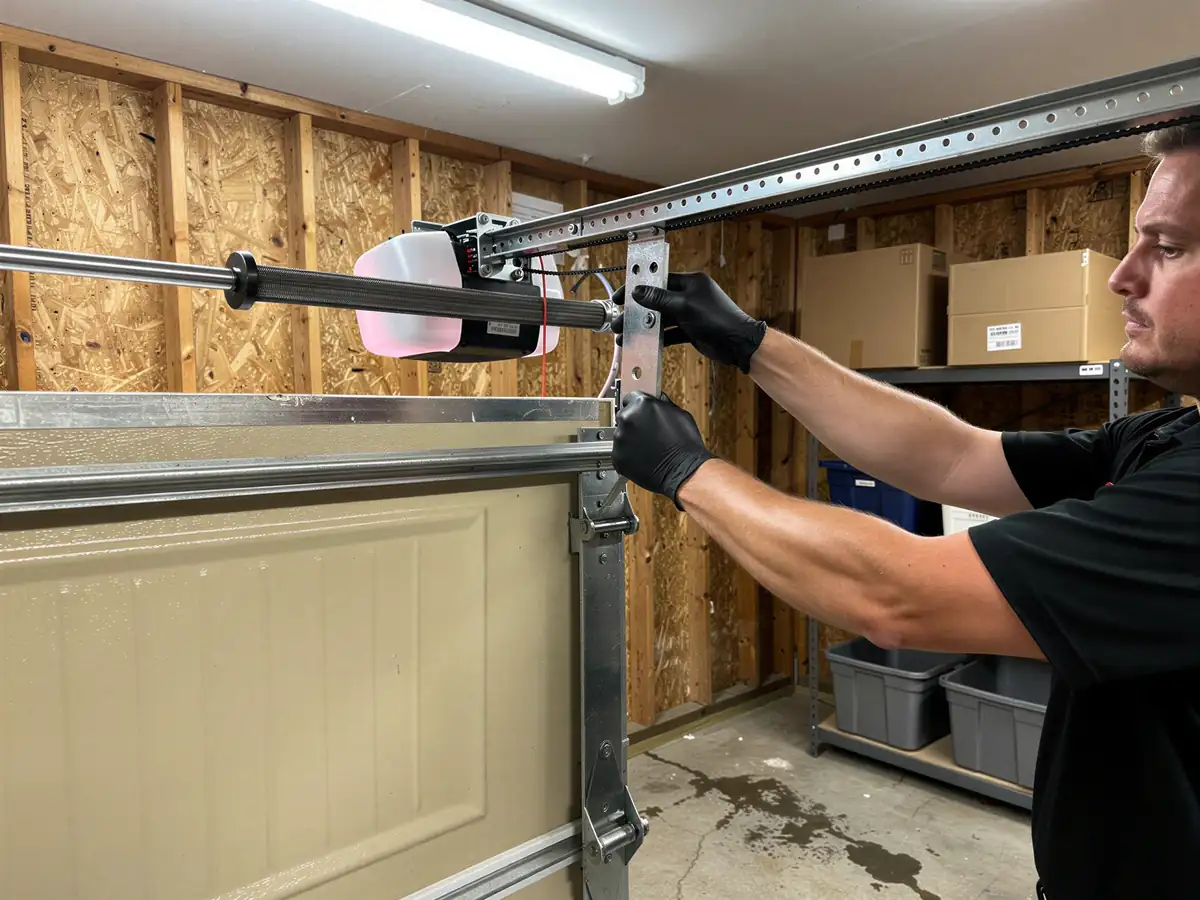
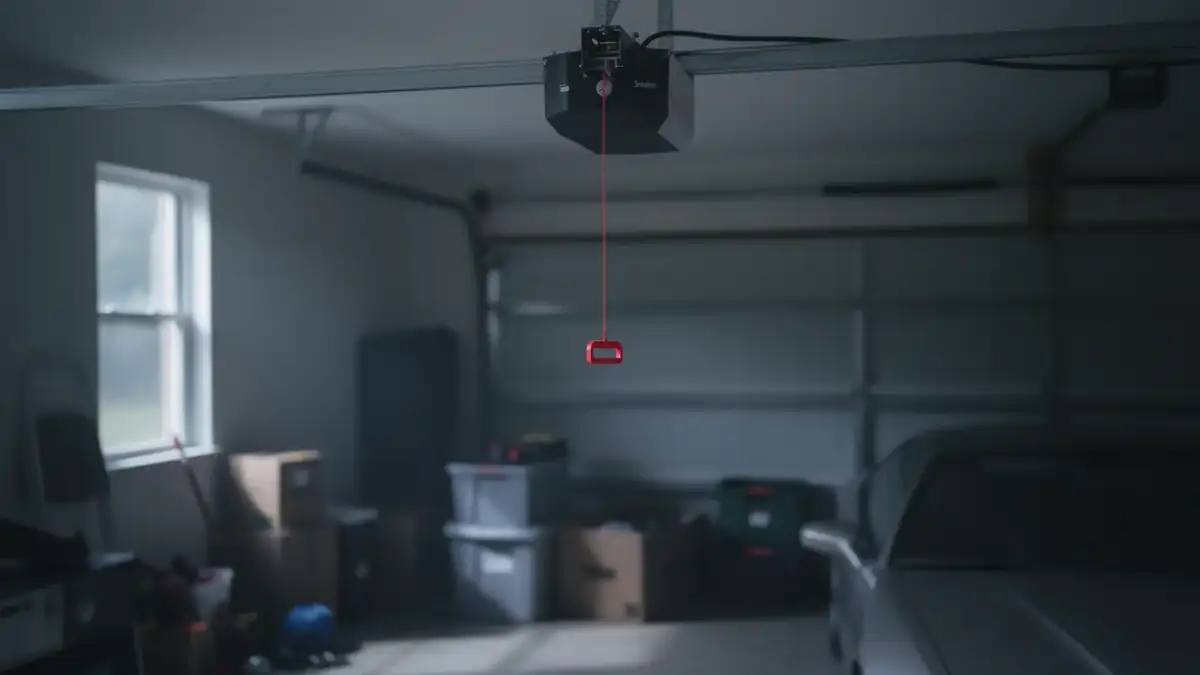
Find the manual release cord - the red handle hanging from a track near the opener head. Pull it straight down, not at an angle, and the carriage should disengage with a solid click. If it doesn't move or moves with a grinding resistance, that's cold-stiffened grease or a worn release mechanism, and it's worth dealing with before you need it in a cut.
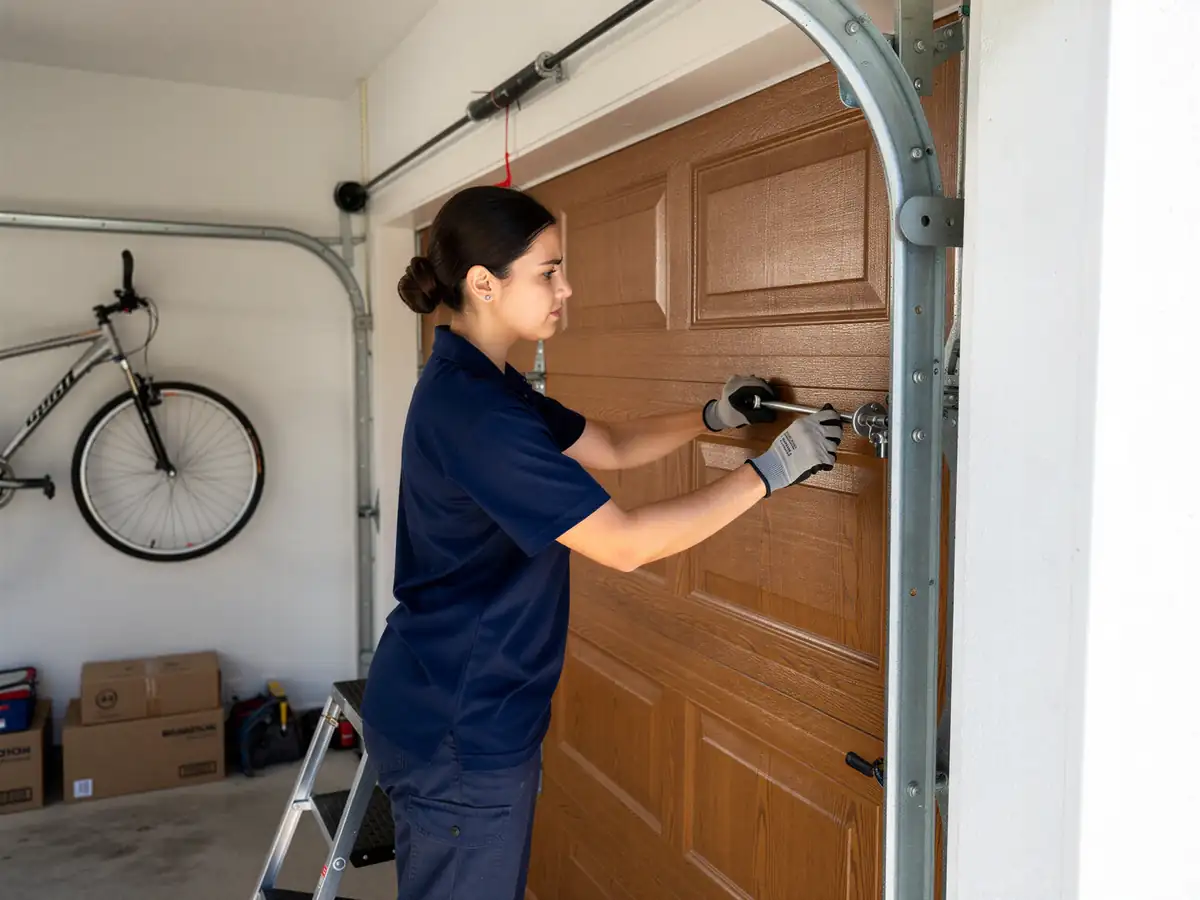
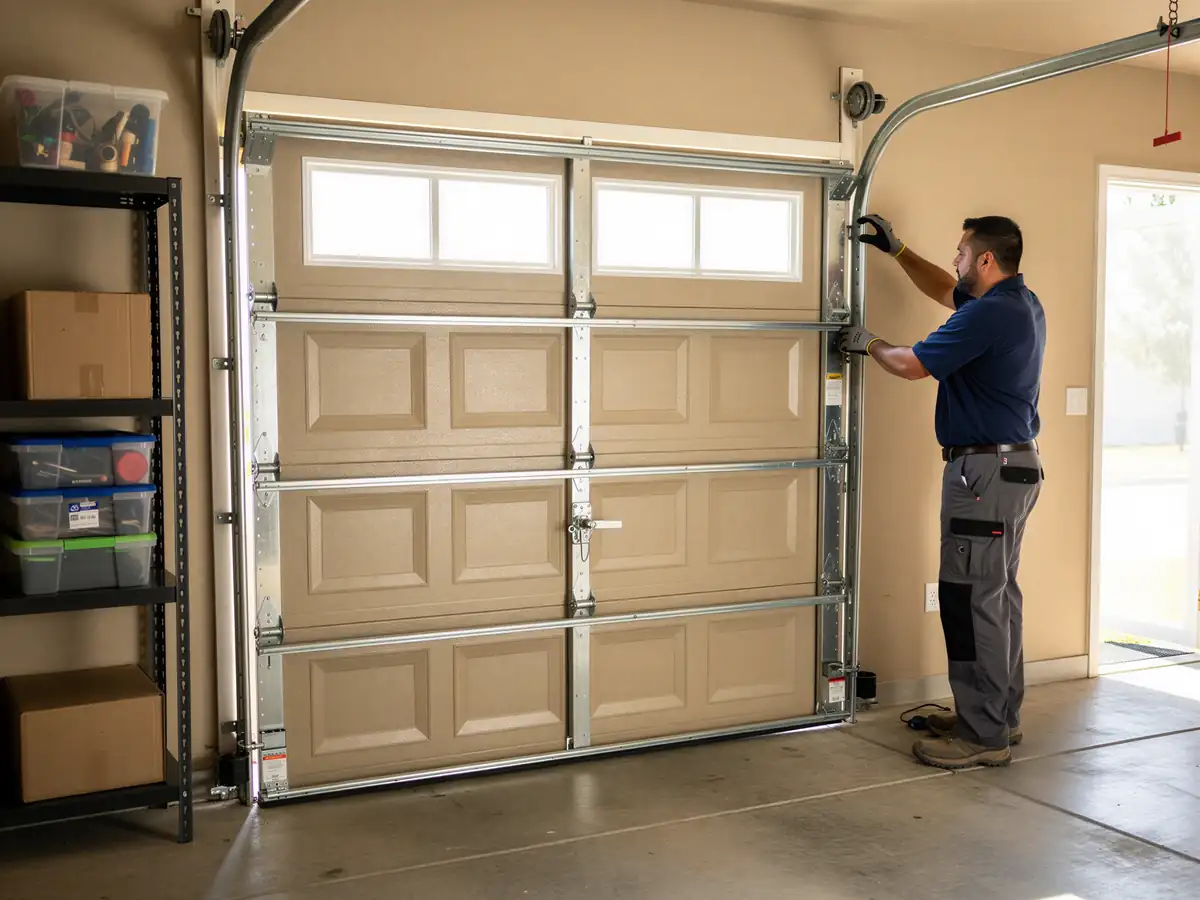
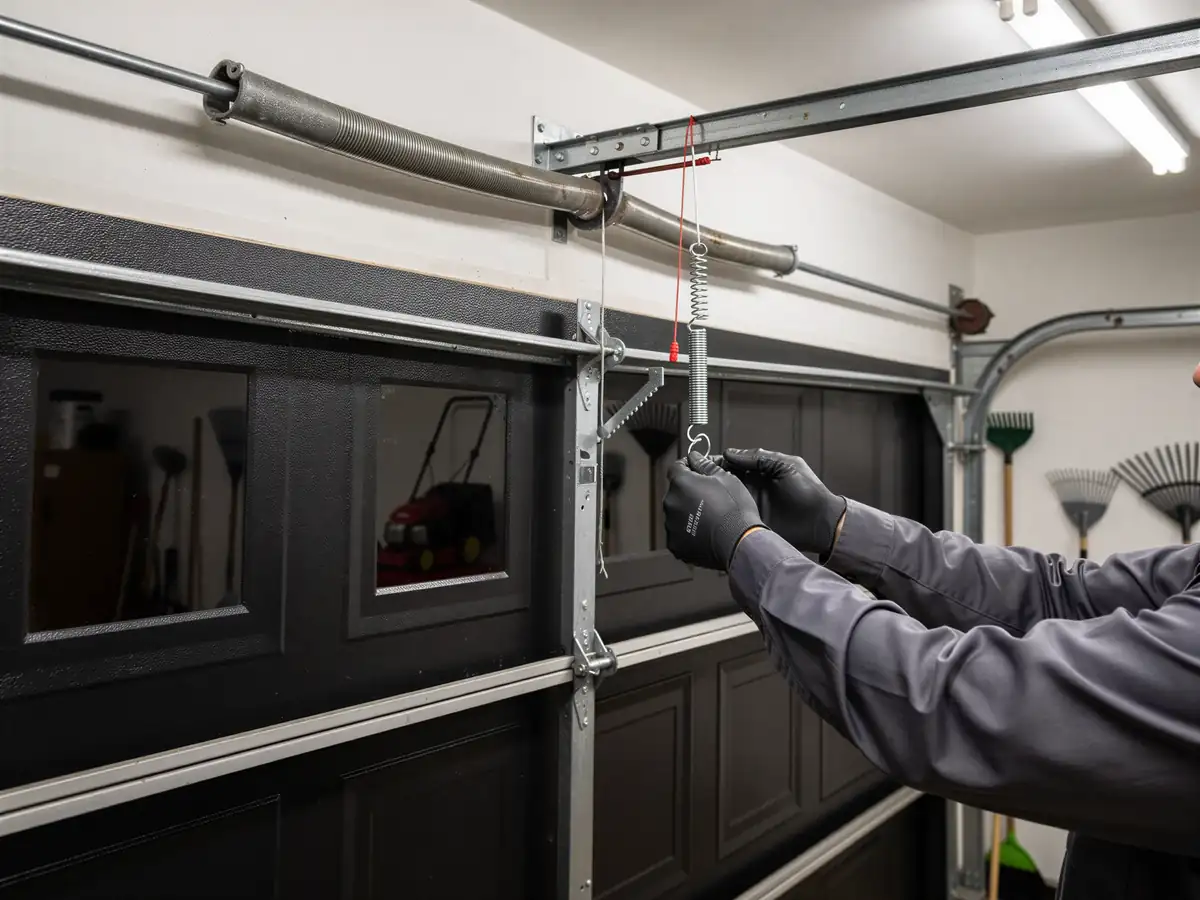
With the opener disengaged, lift the door by hand. It should move smoothly and stay put at waist height on its own. If it drops or you have to fight it, the springs are carrying less of the door's weight than they should, which is common in houses built before 1960 still running original or early-replacement torsion hardware.
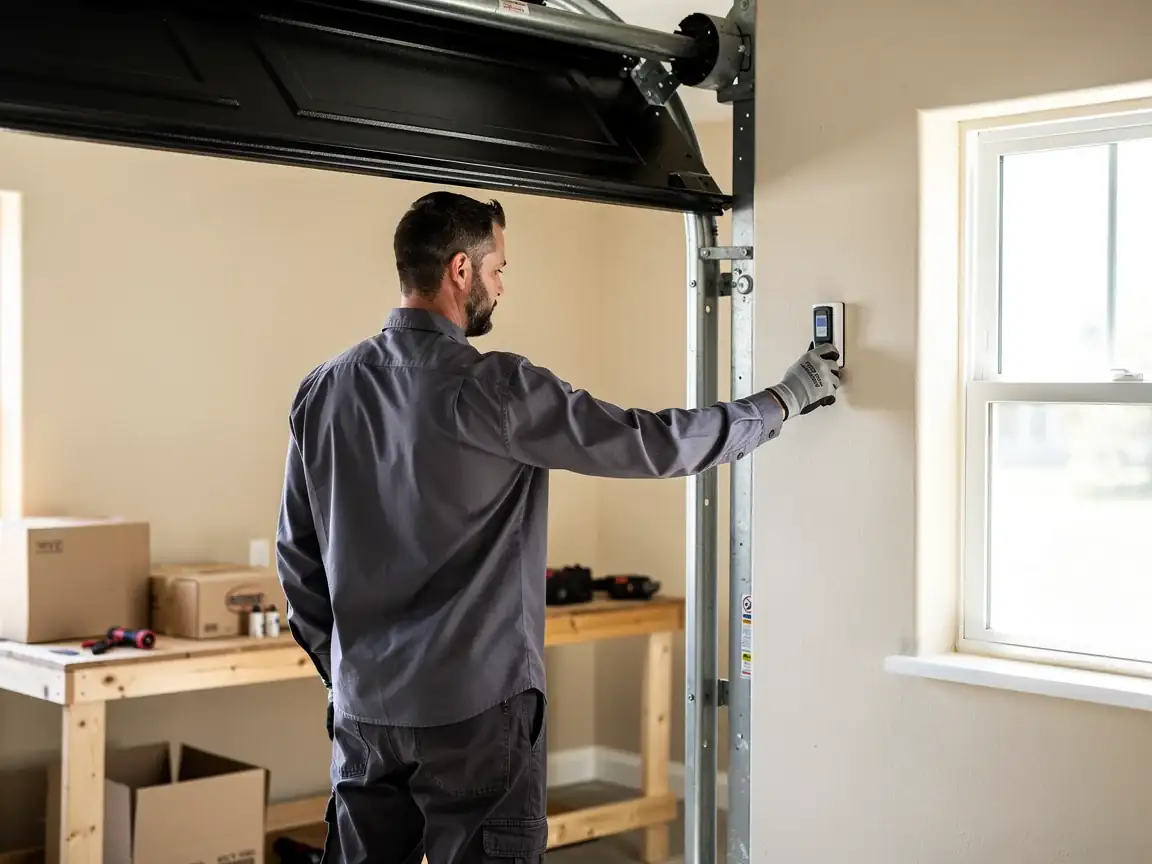
Check the wall station for a battery backup light. Many openers installed in this area over the past two decades have one; a lot of the ones installed before that don't. If there's no light at all, your unit likely has no backup, which means a power cut leaves you with the manual release as your only option until power returns.
The Seasonal Bit
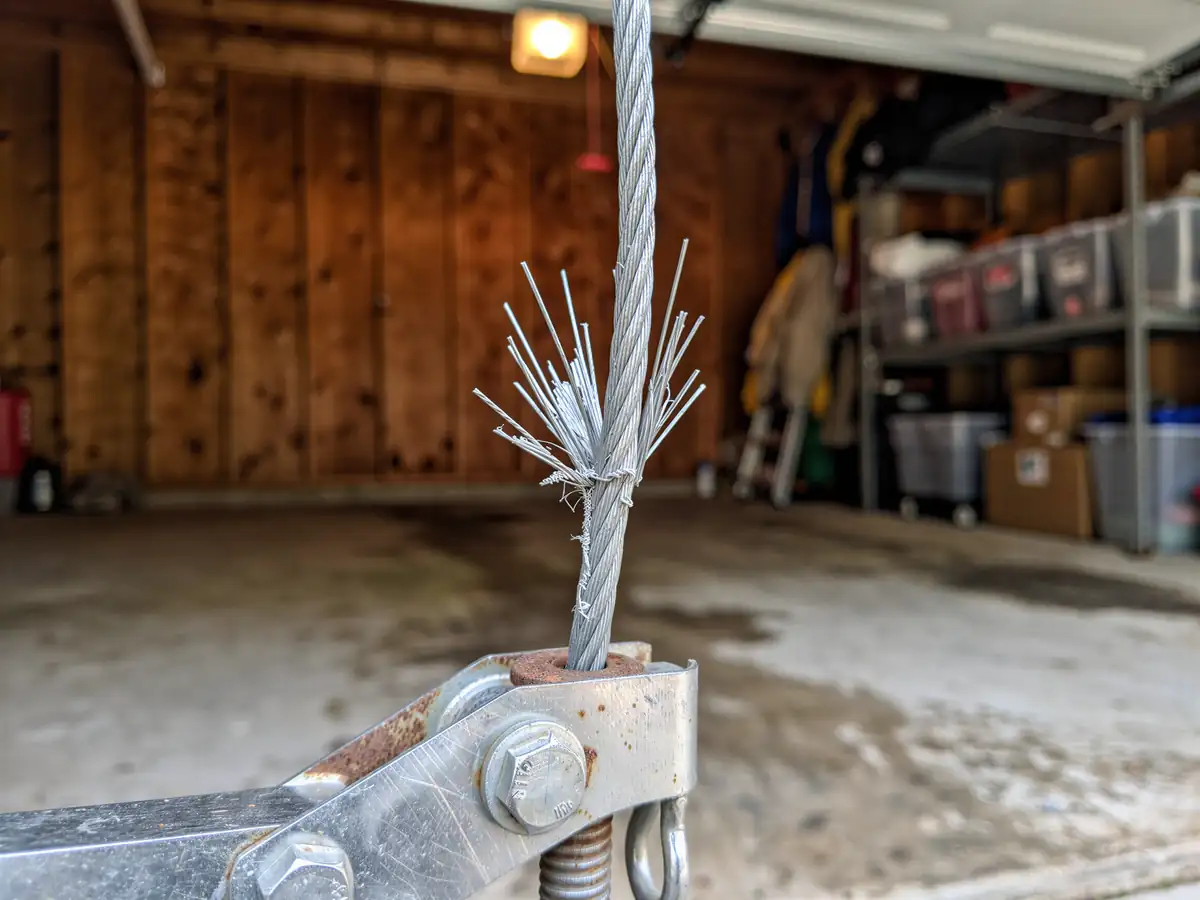
Cold-severe winters push two failure modes at once: batteries (in units that have backup) lose capacity fast below freezing, and steel springs and cables contract, changing the tension balance on a door that was set up decades ago for a different climate baseline. In a service area with 358,096 owner-occupied houses, most sitting on housing stock dating to a 1958 median build year, this isn't a rare combination - it's the seasonal norm.
If your opener's backup battery hasn't been swapped in a few years, a hard freeze is when it fails, usually during the same storm that cuts your power in the first place. Test it on a cold night on purpose: kill the breaker to the garage circuit and see if the opener still responds. If it doesn't, you've found the problem before a storm does.
The Problem
The honest issue is that a battery backup won't help a door that's already unbalanced
And plenty of the openers we see on original torsion setups from the 1950s and 60s are carrying springs that are undersized for the door by today's standards - they just haven't failed yet. Adding a backup battery to that kind of setup buys you power during a cut, but it doesn't fix the strain that's shortening the life of the cable and the opener's drive gear.
We don't recommend bolting a battery backup onto a unit mounted to a bracket that's already pulling loose from old framing
That's a mount repair first, backup second, and we'll tell you that straight if we see it. Across Newark and nearby areas like Harrison, Irvington, Kearny, East Orange, and Hillside, the pattern repeats enough that we treat opener calls after a cold-weather power cut as a two-part question: what failed, and what was already failing before the lights went out.