What Actually Happens During a Newark Garage Door Service Call
A straight look at what a garage door service call covers in Newark's pre-1960 homes, from spring and cable checks to the cold-weather calls owners get here.
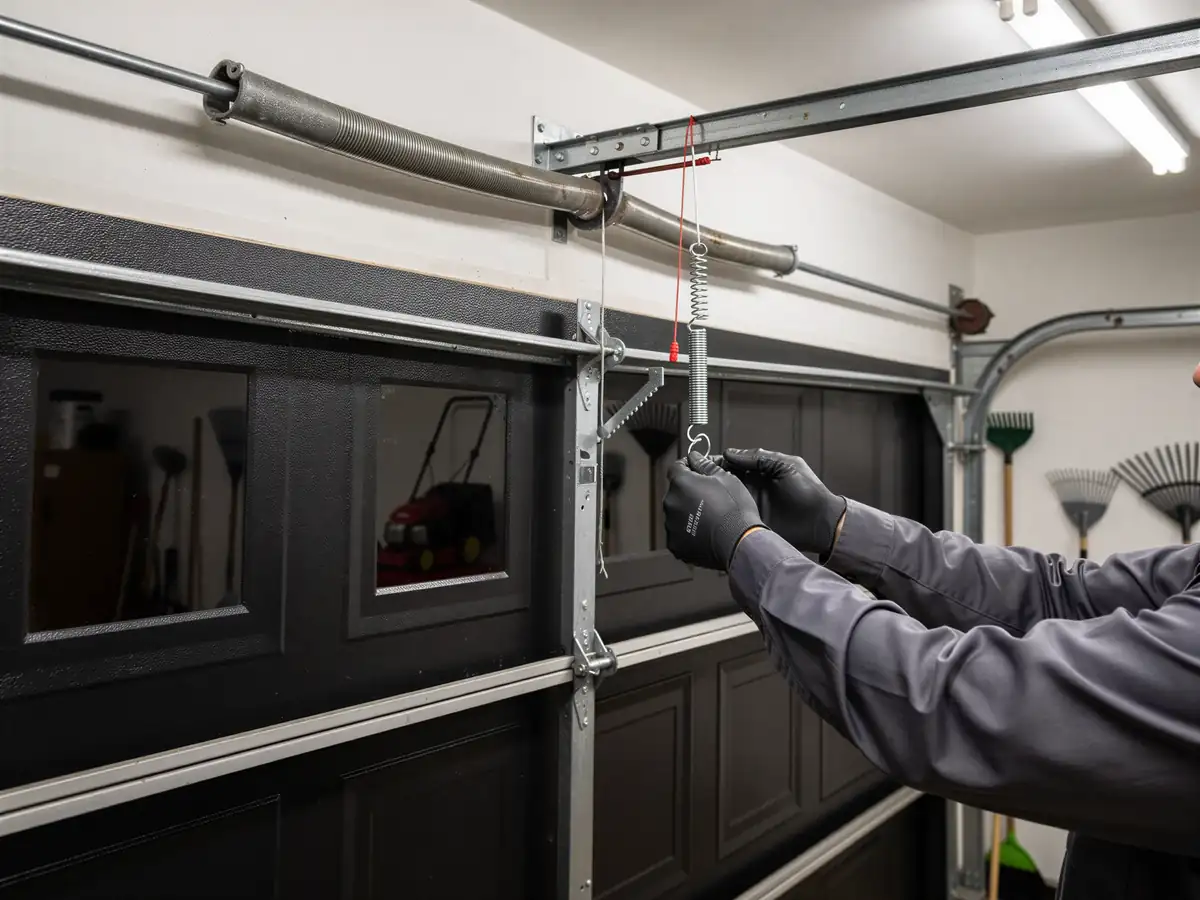
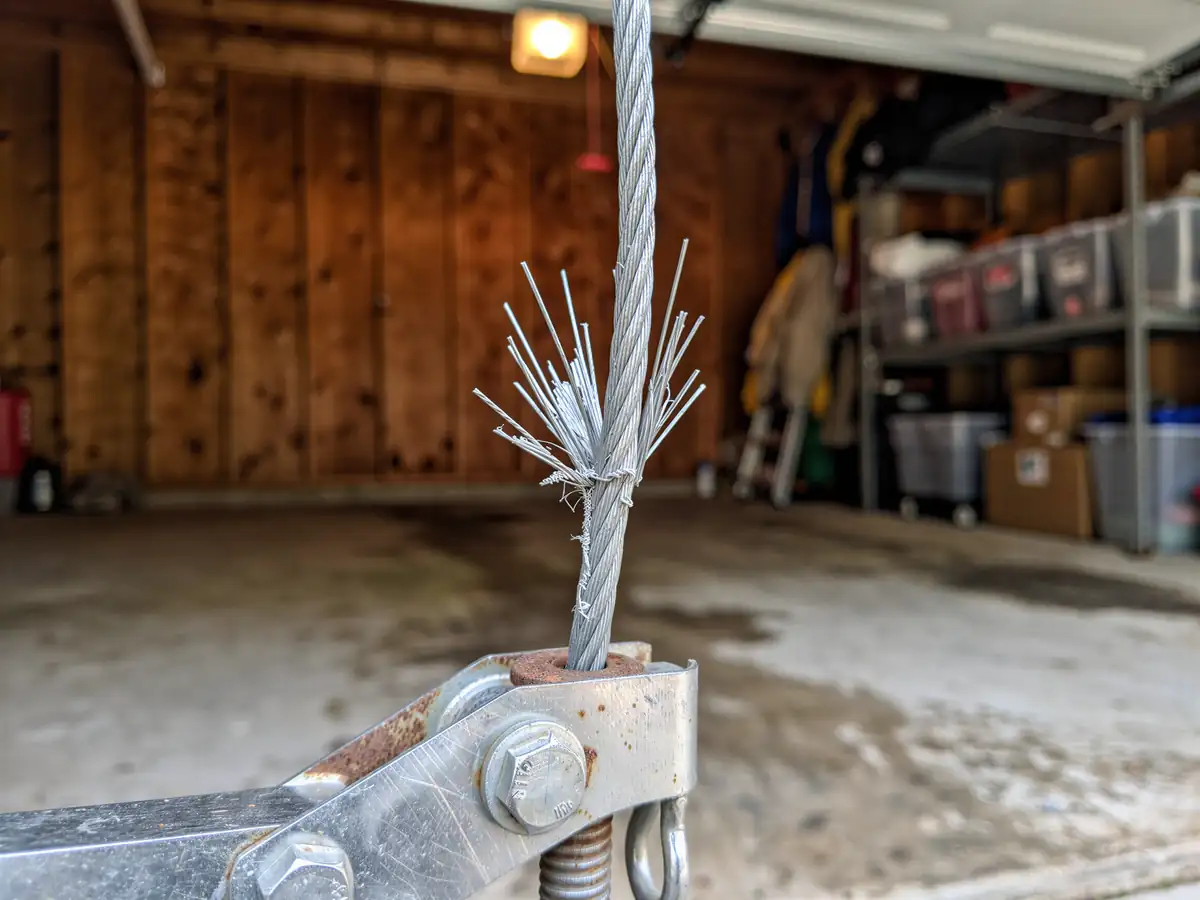
Newark's winters sit in a climate band rated cold-severe, and that matters more than people think for a garage door. Steel panels contract in deep cold, which tightens tolerances at the track and makes a door that rolled fine in October bind by January. Across the 156 named areas that make up this service area, the housing stock is mostly pre-1960, which is why spring failures cluster the way they do once a cold month sets in - the original torsion springs were wound for a lighter door and a milder temperature swing than what shows up here now, and cold makes that spring work harder on every cycle. Dried-out factory lubricant is another piece of it: a dry roller in a 20-degree garage sounds like a shopping cart and strains the opener motor pulling it along. We also see cables rusted enough to fray at the drum, especially on doors that have never had the cable swapped since install. None of this is dramatic weather - no named storm, just a long cold stretch doing slow damage to hardware that was never replaced. A winter call here usually starts with "it's stiff" or "it's loud," and more often than not the answer is cold-stressed hardware that's been due for replacement since before the last hard winter.
Checking It Yourself
Before you call anyone, there's a few things worth looking at, especially if your house is on the older side of Newark's stock, where the median build year lands around 1958. Stand the door halfway up by hand with the opener disconnected - a properly balanced door should hold there on its own. If it drops or shoots up, the spring tension is off, and that's not a DIY fix; springs under load are the one thing in this trade that put people in the ER. Check the cables running down each side of the track for rust bloom or any strand that's splayed rather than tight-wound - on a door this old, that cable has likely never been replaced. Look at the weatherstrip along the bottom; on a lot of these older builds the stop was added after the fact and doesn't seal the way a modern bottom seal does, letting in more cold than the door was built to handle. Listen to the opener chain or belt under load - grinding usually means dry, not failing. If the door reverses randomly or won't close all the way, check the photo-eye sensors near the floor track; on older installs these were sometimes added after the original opener and the wiring isn't always clean. None of this replaces a real inspection, but it tells you whether you're dealing with a five-minute lube job or something that needs a truck.
The Seasonal Bit
Newark's climate band is rated cold-severe, which in practice means the calls cluster by season rather than spreading evenly across the year. Fall is when people notice the door working harder as temperatures drop and hardware that limped through summer starts to give out. Deep winter brings the spring failures and the frozen-track calls, where ice at the bottom panel keeps the door from seating and the opener keeps straining against it until something breaks. Spring is catch-up season - a lot of what we see then is stuff people put off in January because the garage was too cold to deal with it or the part wasn't worth ordering mid-cold-snap. Summer is the quiet stretch, mostly openers and rollers rather than springs, since heat doesn't stress torsion hardware the way cold does. This isn't about one bad storm; it's about a climate that runs cold enough, long enough, that a marginal part doesn't get a break to recover before the next cold stretch hits it again. In a milder climate a weak spring might limp along another two or three years. Here, cold-stressed hardware tends to fail on its own schedule, often the same week as half a dozen other houses nearby - which usually just means those houses went up around the same decade.
The Problem
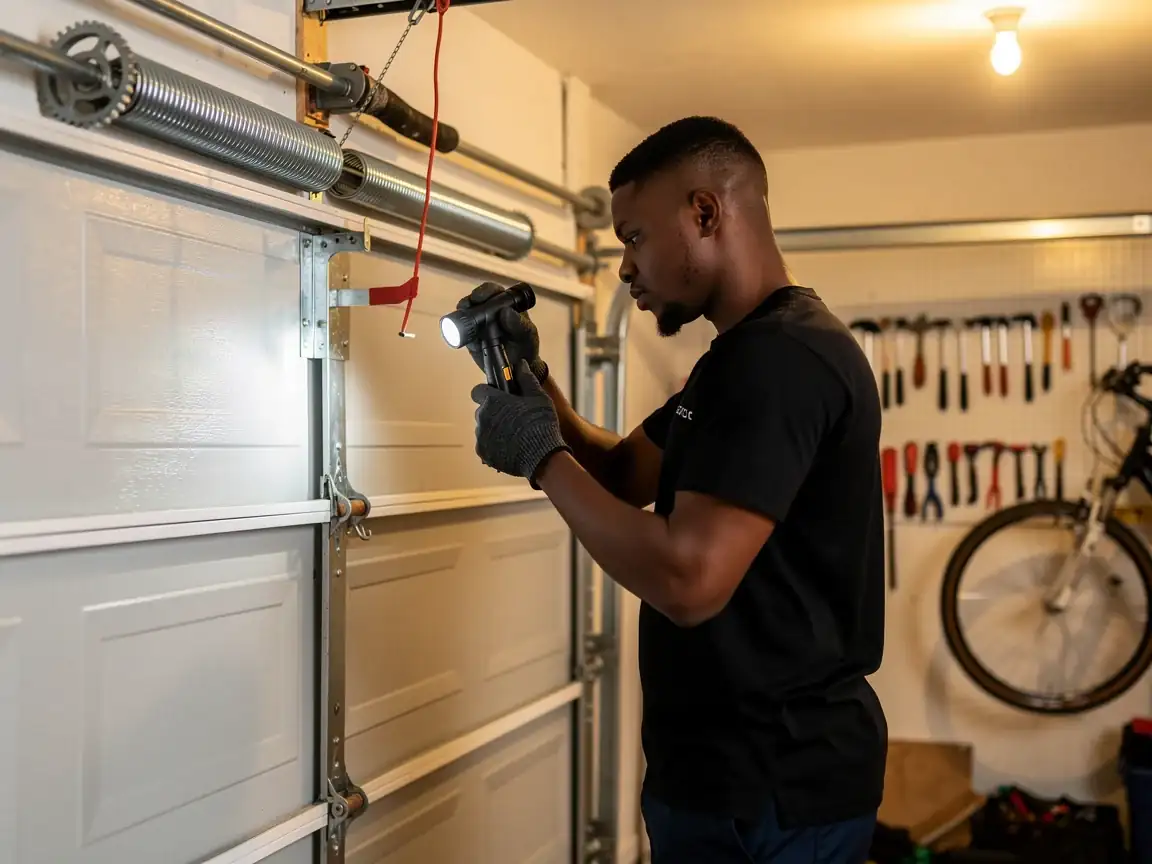
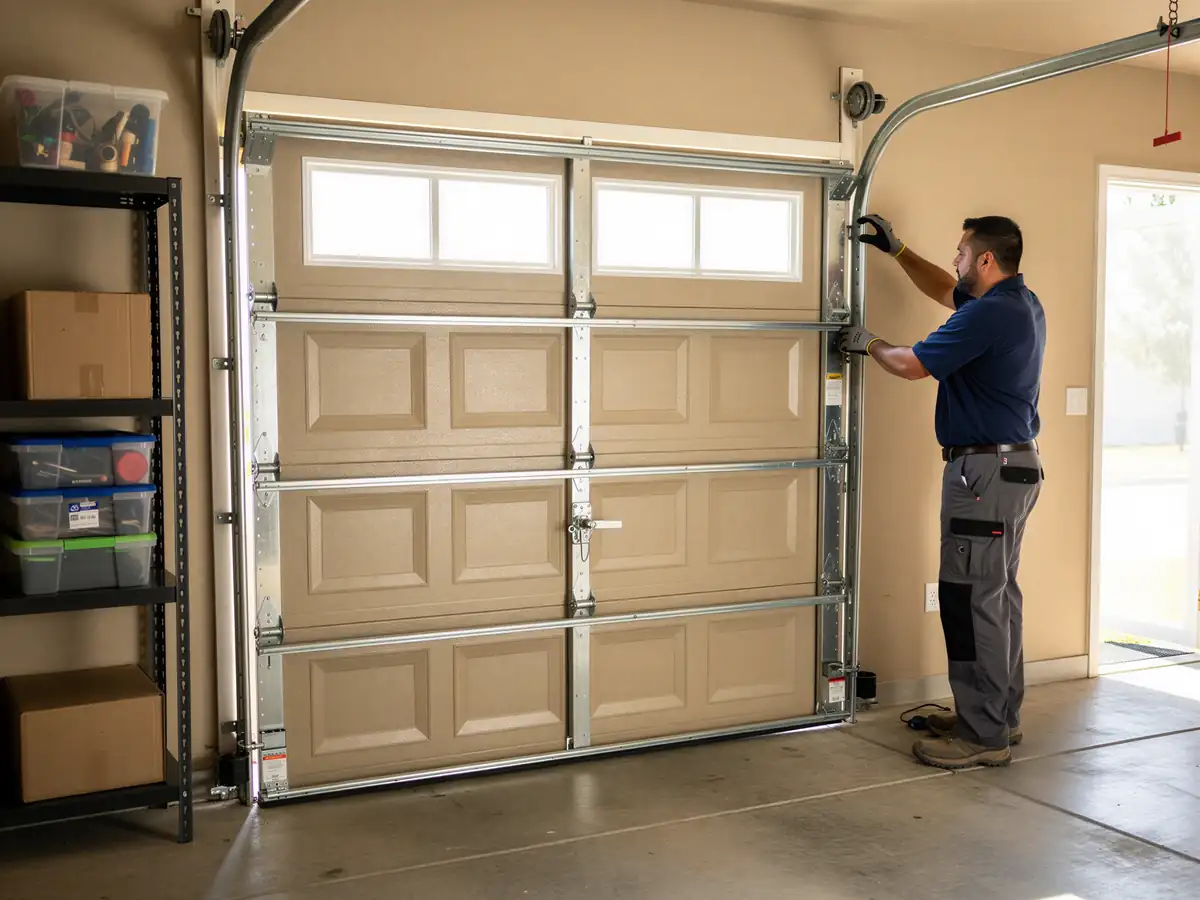
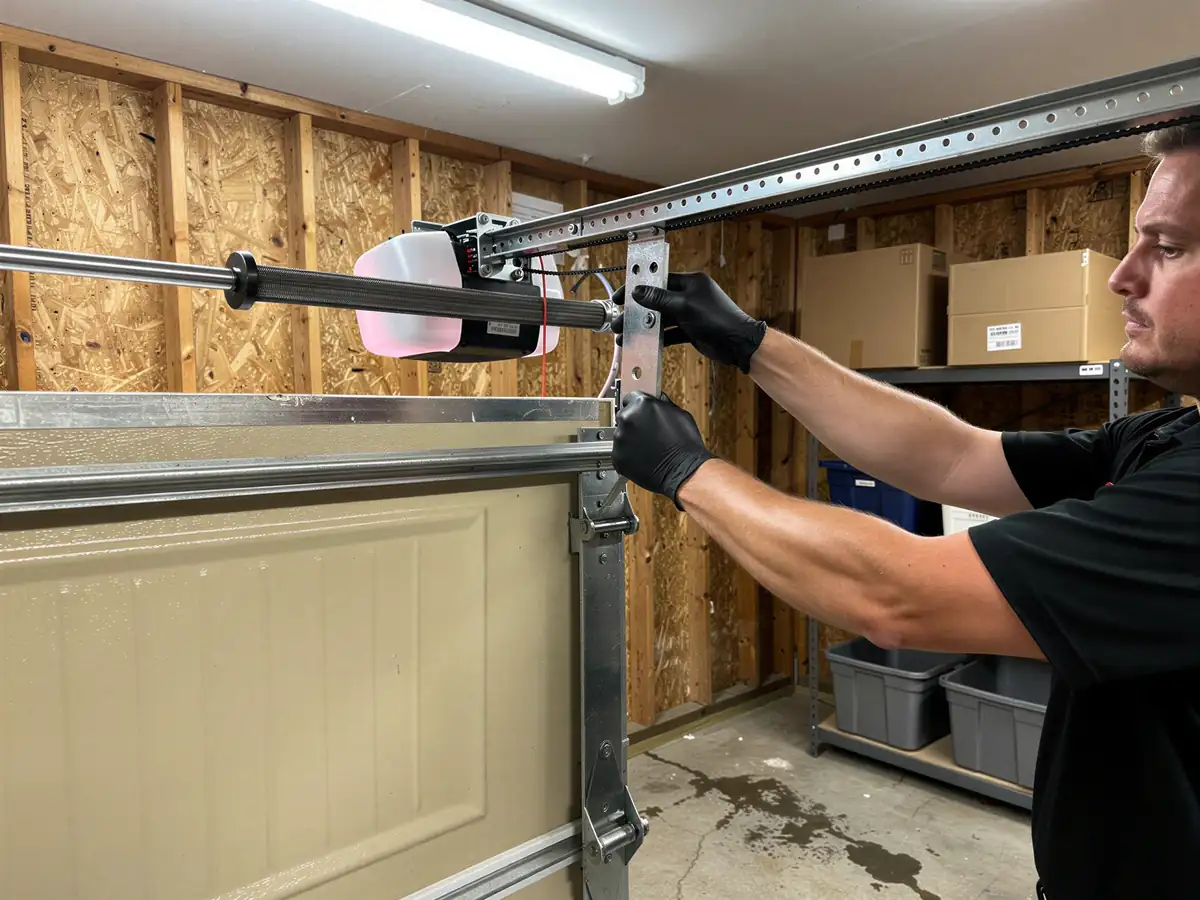
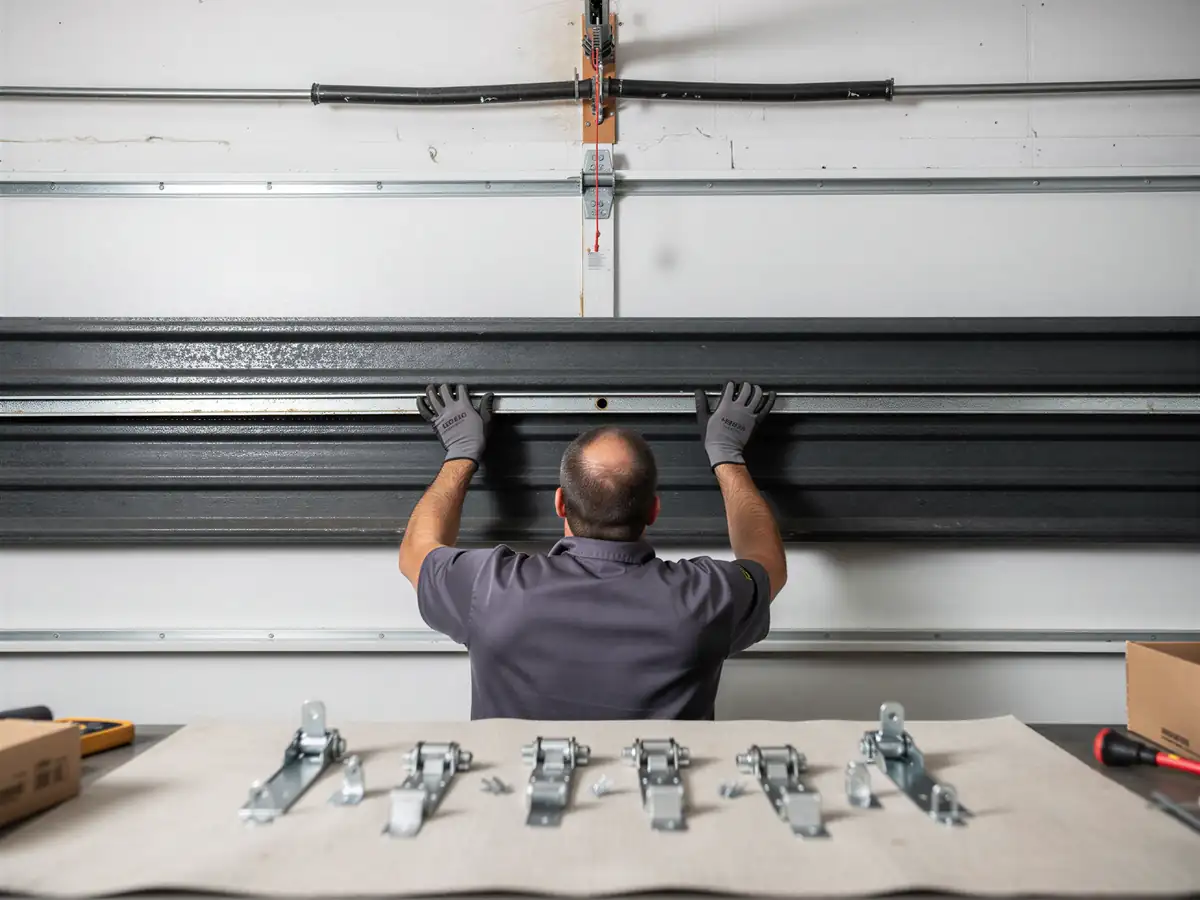
A service call from Newark Garage Door Pros starts with the same checks no matter the complaint: balance, spring tension, track alignment, cable condition, roller wear, and the opener's force and limit settings. We look at all of it before touching anything, because a door that "just needs a new spring" sometimes has a bent track that caused the spring to fail early, and swapping one without the other just buys a second call. We cover Newark and the close-in communities around it - Harrison two miles out, Irvington and Kearny at three, East Orange and Hillside at four - and the housing stock across that stretch runs old enough that original hardware shows up constantly, most of it going up between 1938 and 1996, with the median around 1958. Harrison sits two miles from Newark, and a job out that way still starts with the same spring and cable check we run downtown. What a call doesn't cover: full panel replacement for every door style, since enough different manufacturers are represented across housing this old that some parts have to be special-ordered rather than carried on the truck. We'll tell you straight if a repair is going to run more than half of what a new door costs, because on a door this old that's usually the point where fixing it stops making sense. We don't diagnose over the phone - the only way to know if it's the spring, the opener, or both is to watch the door move.
How it works
From “it’s stuck” to “it’s fixed”
01
Tell us what’s wrong
Describe the symptom - won’t open, loud bang, opener runs but the door won’t move.
02
On-site diagnosis
A technician tests the door under power and by hand and finds what actually failed.
03
Clear, up-front plan
You get the fix that’s needed and what drives the cost - before any work starts.
04
Repaired & tested
The repair is done, the door is set true and tested, and the work area left clean.
Not sure which repair your door needs in Newark, NJ? Describe what it’s doing - every job starts with a diagnosis.
How old is the average garage door hardware in Newark?
Most of the housing in the Newark area went up between 1938 and 1996, with the median around 1958, so a lot of the torsion springs, tracks, and bottom brackets we see on calls are original or close to it - decades past the point where they're rated to perform safely under load.
Why does my garage door act up more in winter here?
Newark's climate band is rated cold-severe. Steel contracts in the cold, which tightens the tolerance at the track and makes dry rollers and worn cable bind sooner than in a milder climate - that's why winter is when most of our spring-failure calls come in.
Do you cover towns outside Newark itself?
Yes. We cover close-in towns including Harrison, Irvington, Kearny, East Orange, and Hillside, all two to four miles out, along with the wider ring of communities out past Bayonne and Union.
Can you quote a repair price over the phone?
No. We don't quote a full repair or replacement price without watching the door move in person - a spring that looks fine can be masking a bent track, and guessing at that over the phone usually just means a second call later.