The Symptom
The call we get most from Newark homeowners starts the same way
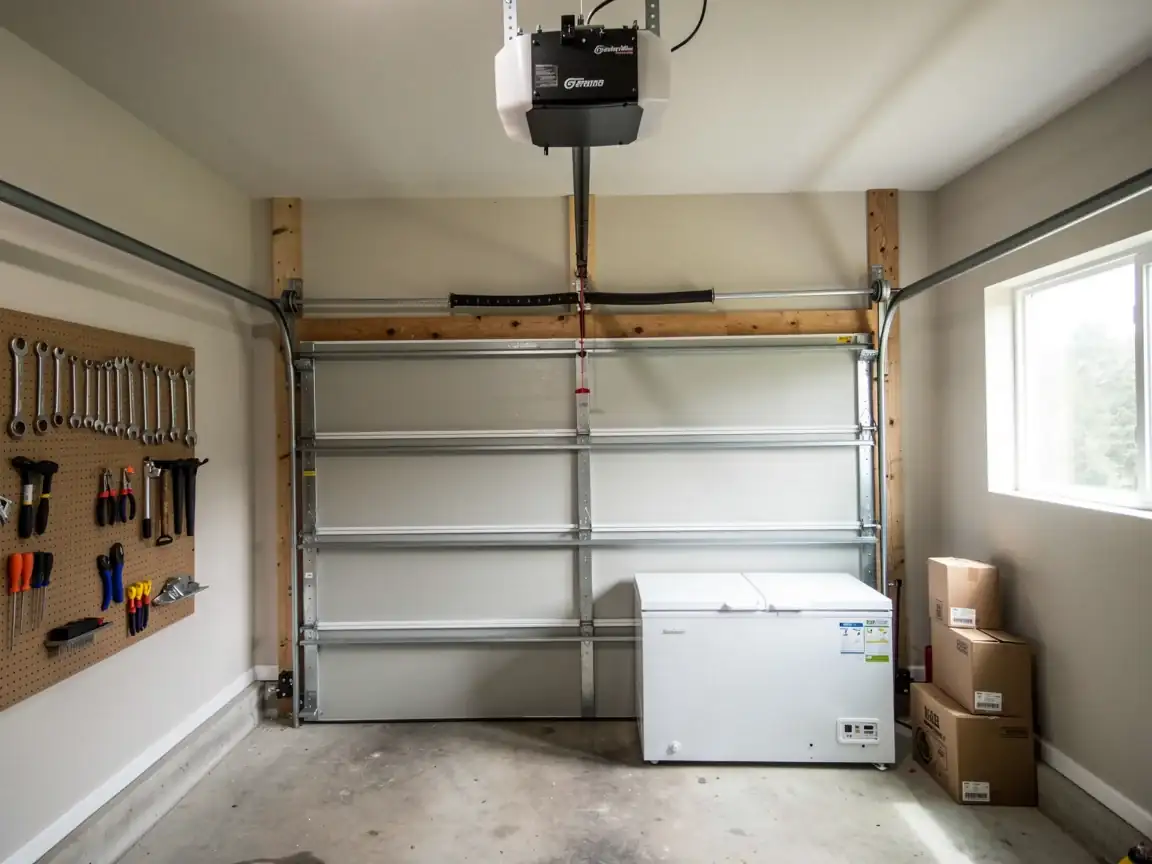
The door won't go up, or it goes up halfway and stops, or it slams down the last foot like the cable let go. Sometimes it's a loud bang from the garage followed by a door that won't budge at all - that's usually a torsion spring snapping under tension. Other times it's a slow grind, a door that shudders on the track, or an opener that runs but the door doesn't move, which points to a stripped gear or a cable off its drum.
What's notable in Newark is how many of these calls come from houses with original hardware
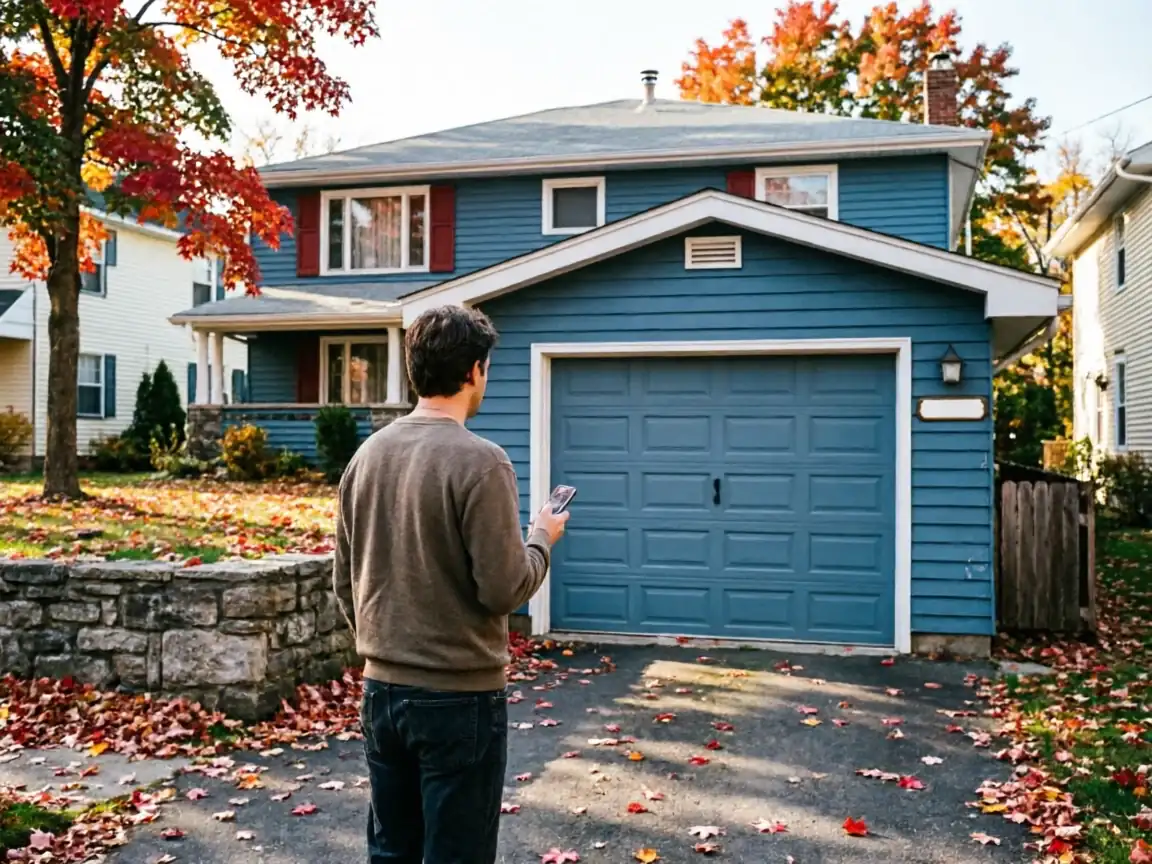
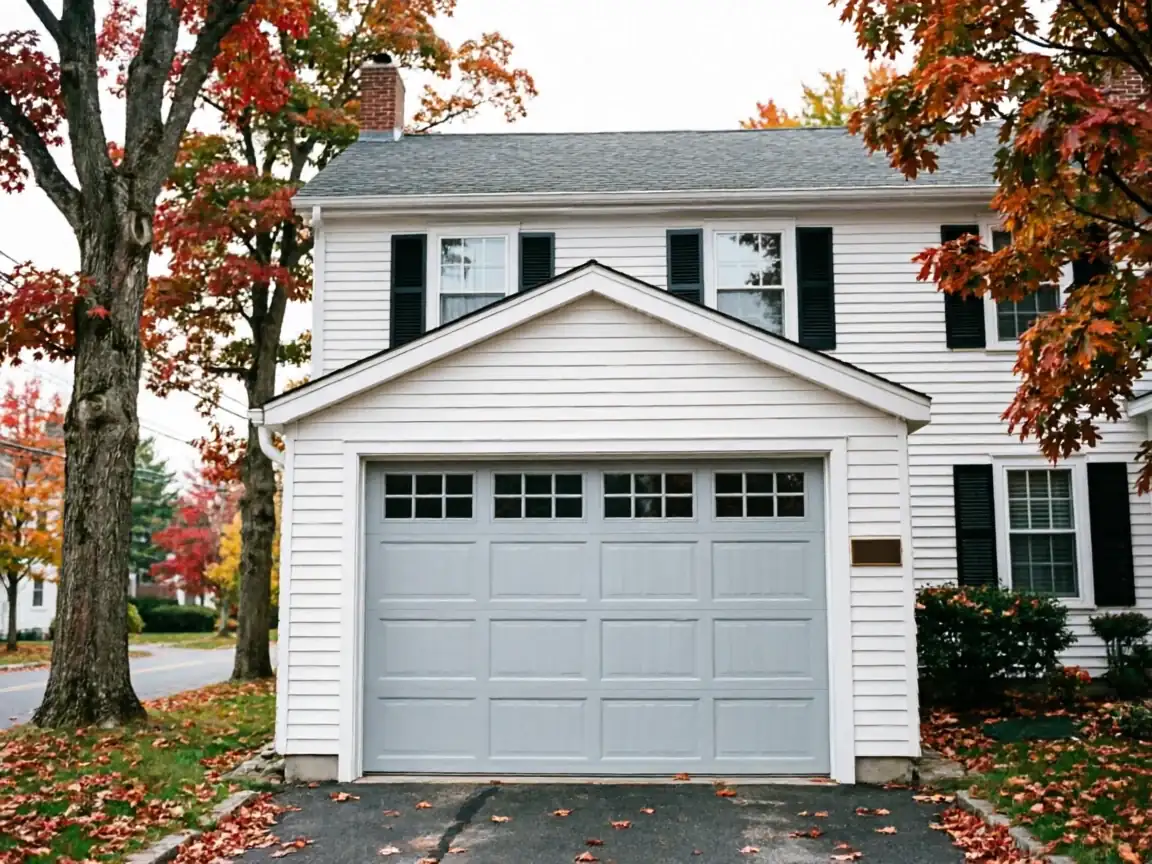
Housing in this area was built mostly between 1938 and 1996, with a median build year of 1958, and the bulk of the stock across the 156 named areas in this region predates 1960. That means a lot of garages still have the torsion or extension spring setup and the steel track that came with the house, not a replacement installed in the last decade. Old hardware fails in predictable, specific ways, and that's what we're built to fix.
If your door is dead silent and won't respond to the wall button or remote at all, that's a different problem
Usually the opener itself, not the door. We sort out which one you've got before we quote anything.
How We Fix It
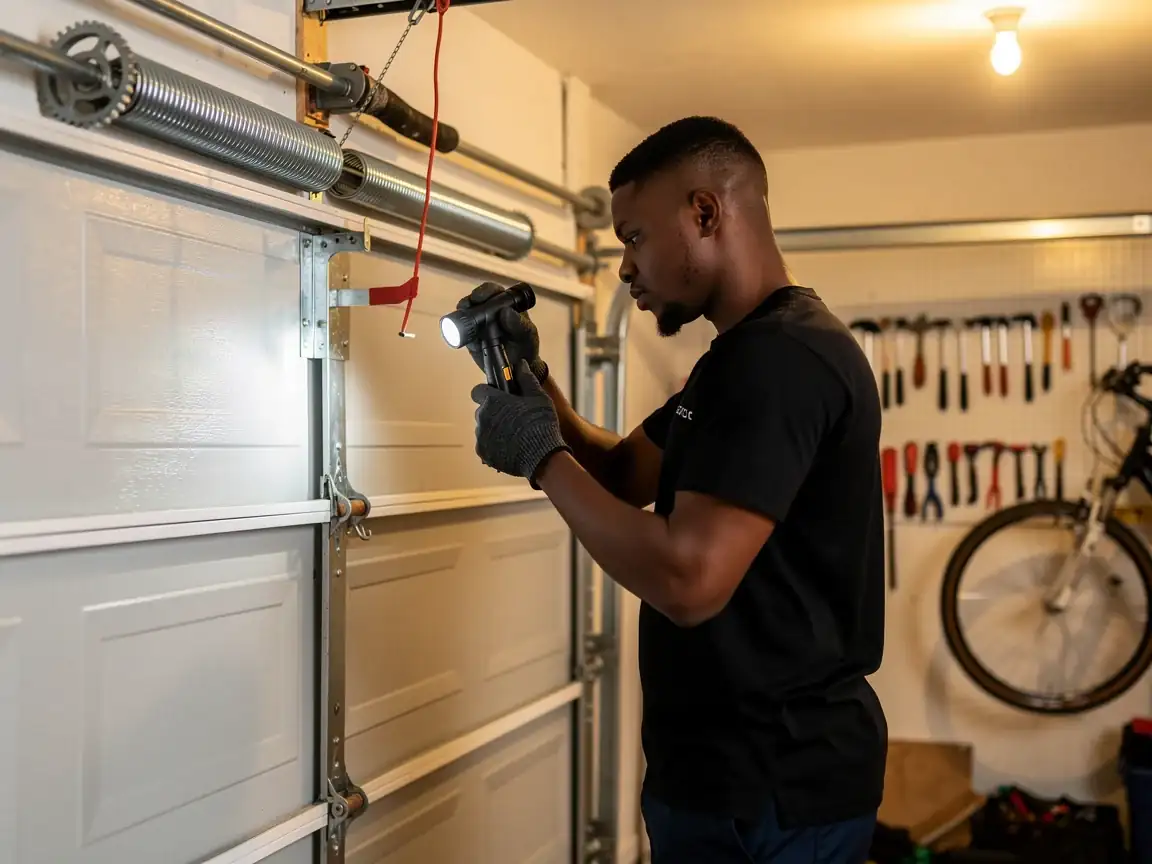
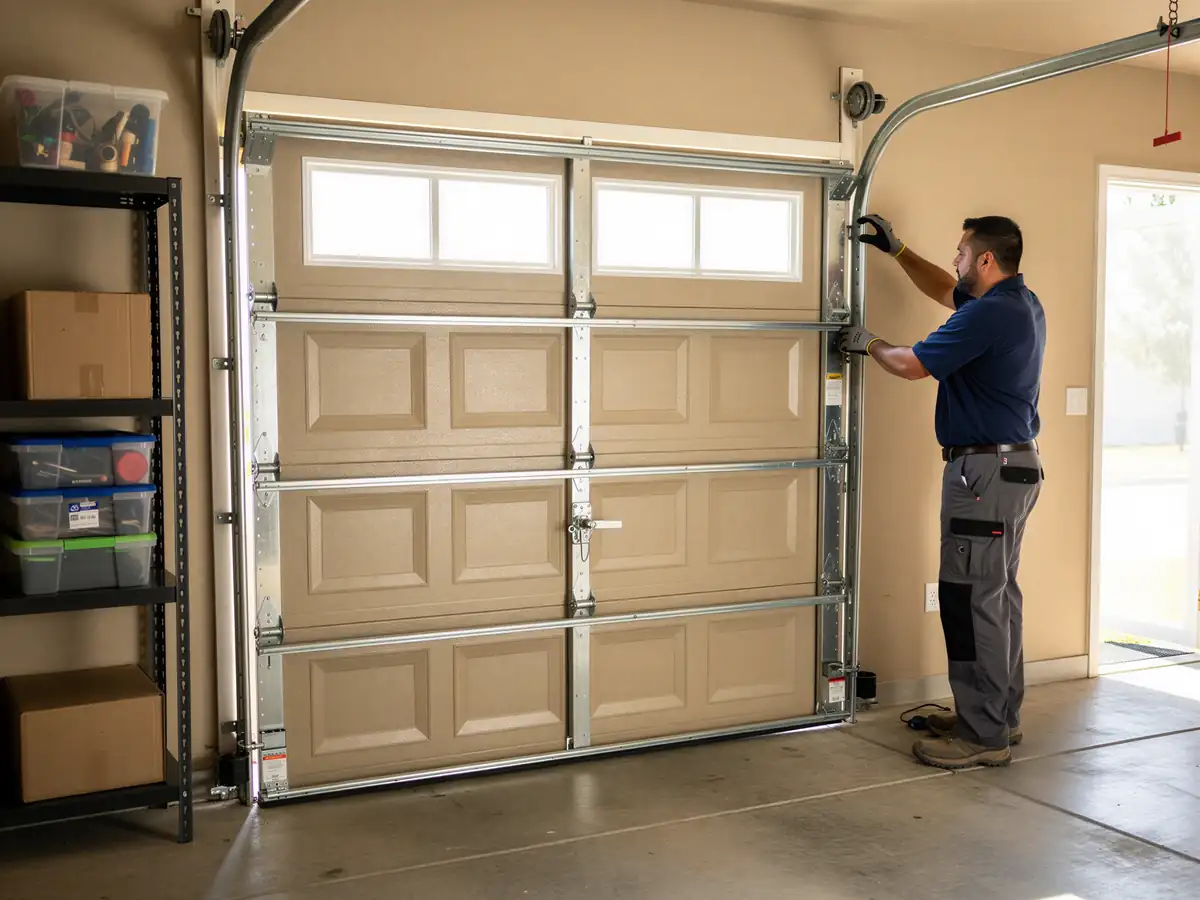
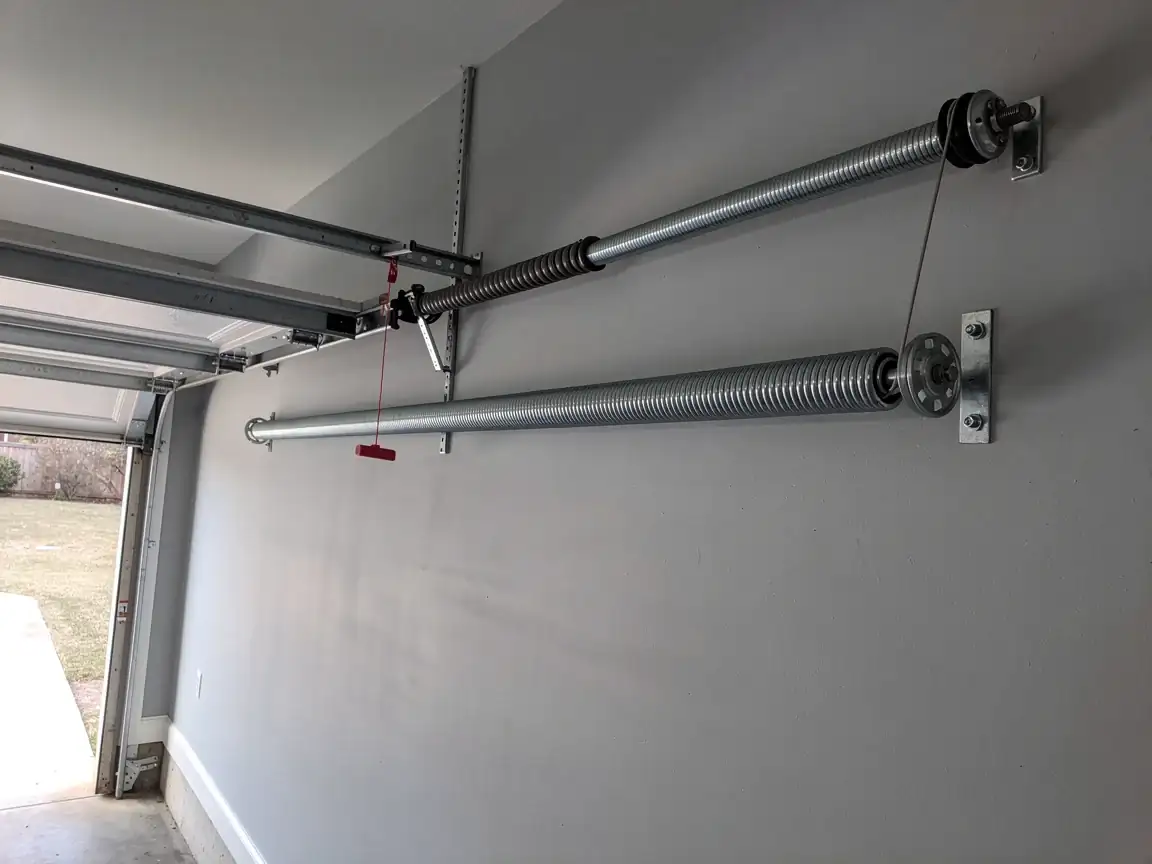
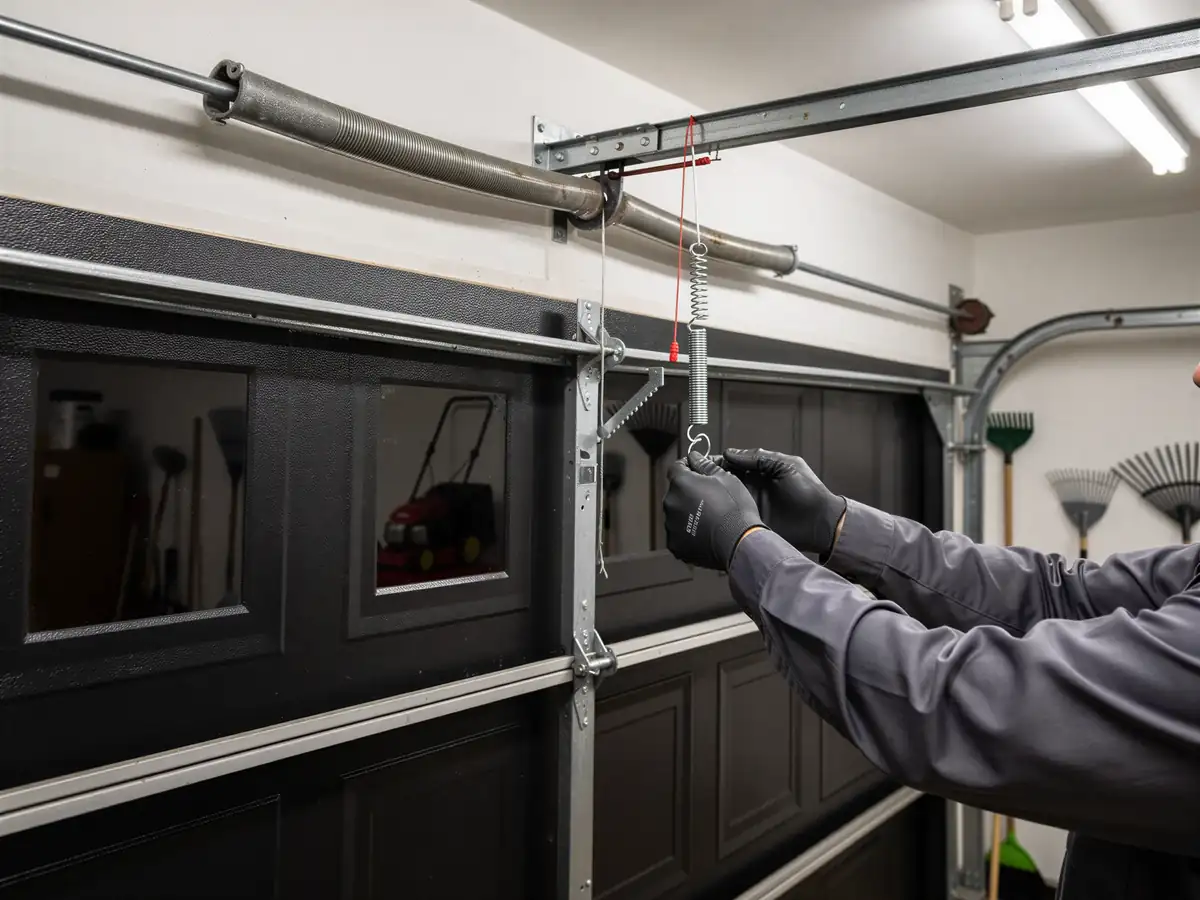
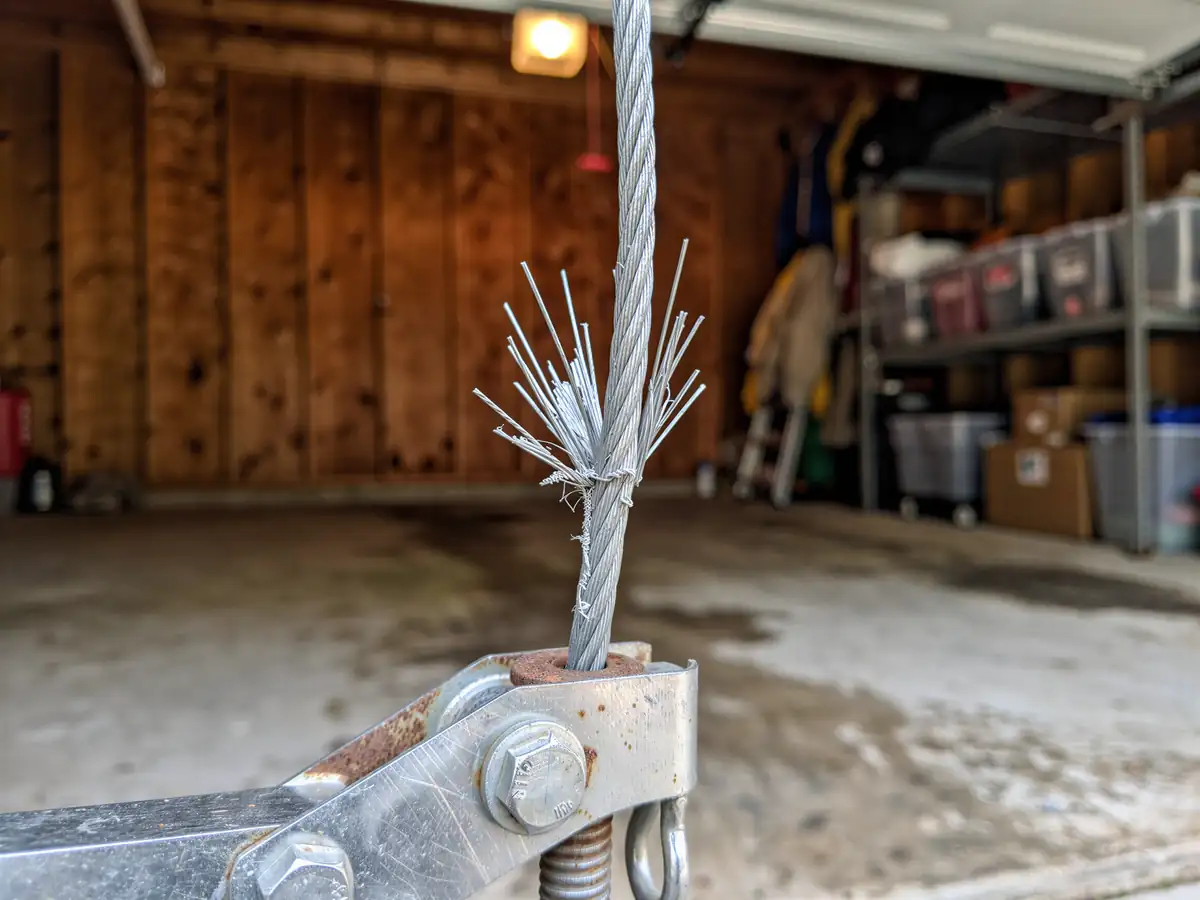
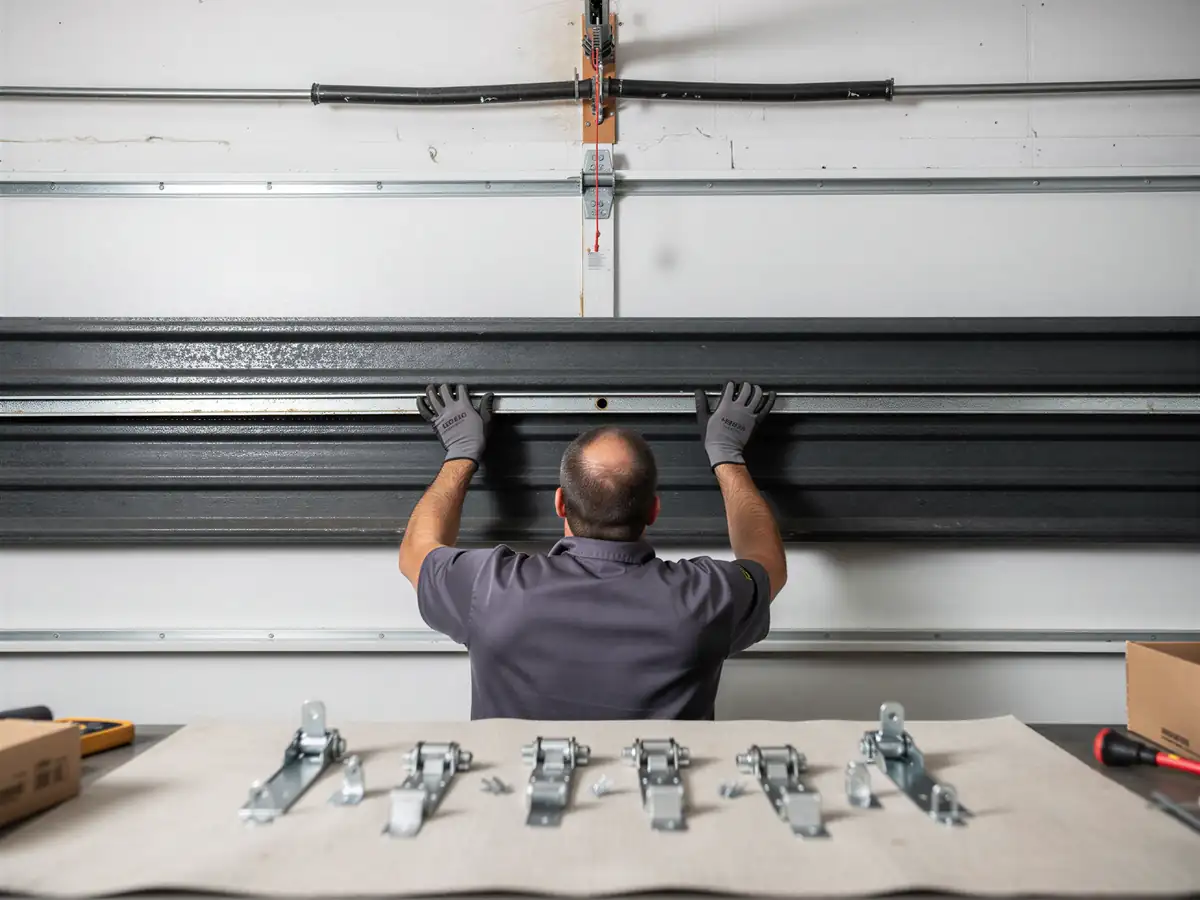
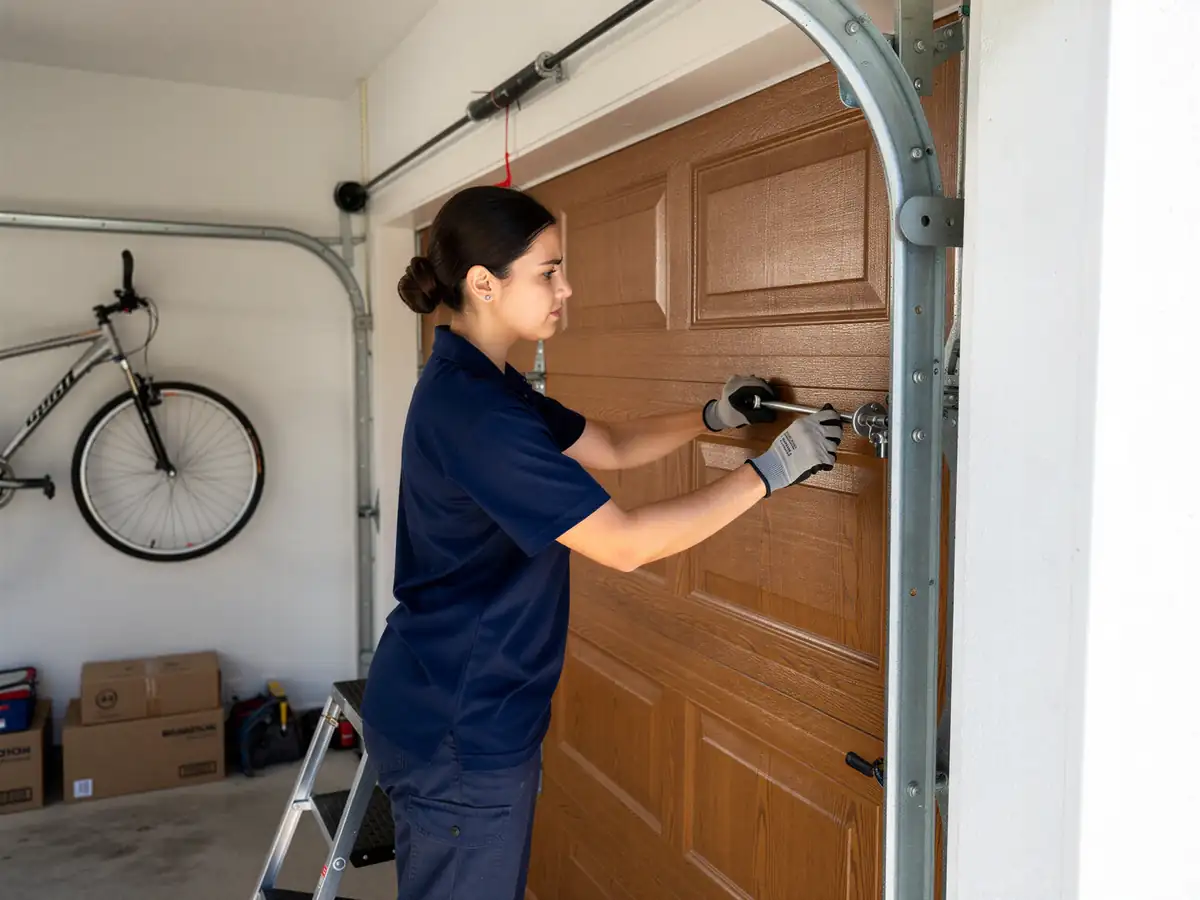
For a broken torsion spring, we don't patch it - we replace the spring (or both, if the second one is close behind) sized correctly to the door's weight, since a mismatched spring is how a door ends up slamming again in a year. For cable and roller failures, we pull the old cable, check the drum and track for wear grooves, and replace rollers in sets, not one at a time, because a mix of old and new rollers on the same track wears unevenly.
For doors that move but bind or shudder, we check the track alignment first. On older frames in this area, decades of seasonal expansion and contraction can walk a track out of plumb by a quarter inch or more, which is enough to make a door bind at the same spot every time. We shim and re-anchor the track rather than just lubricating it, since lubricant on a misaligned track just delays the same call.
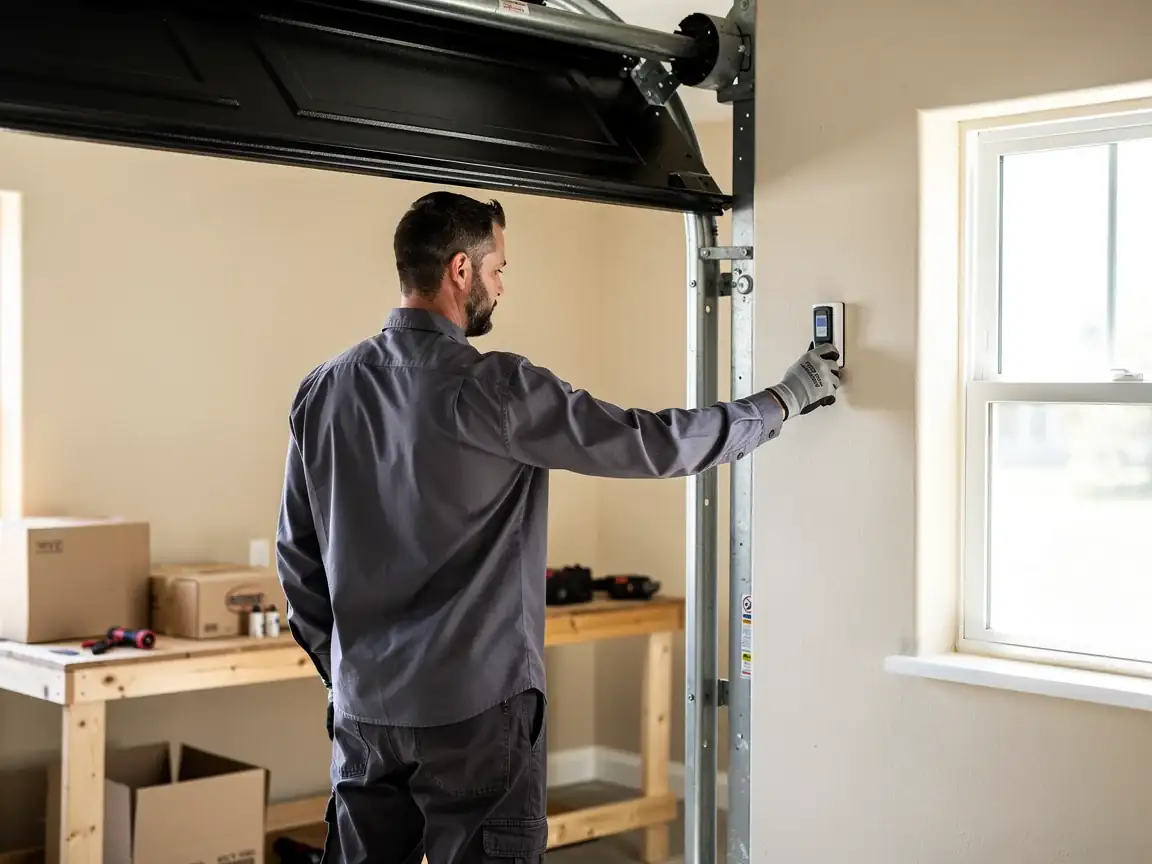
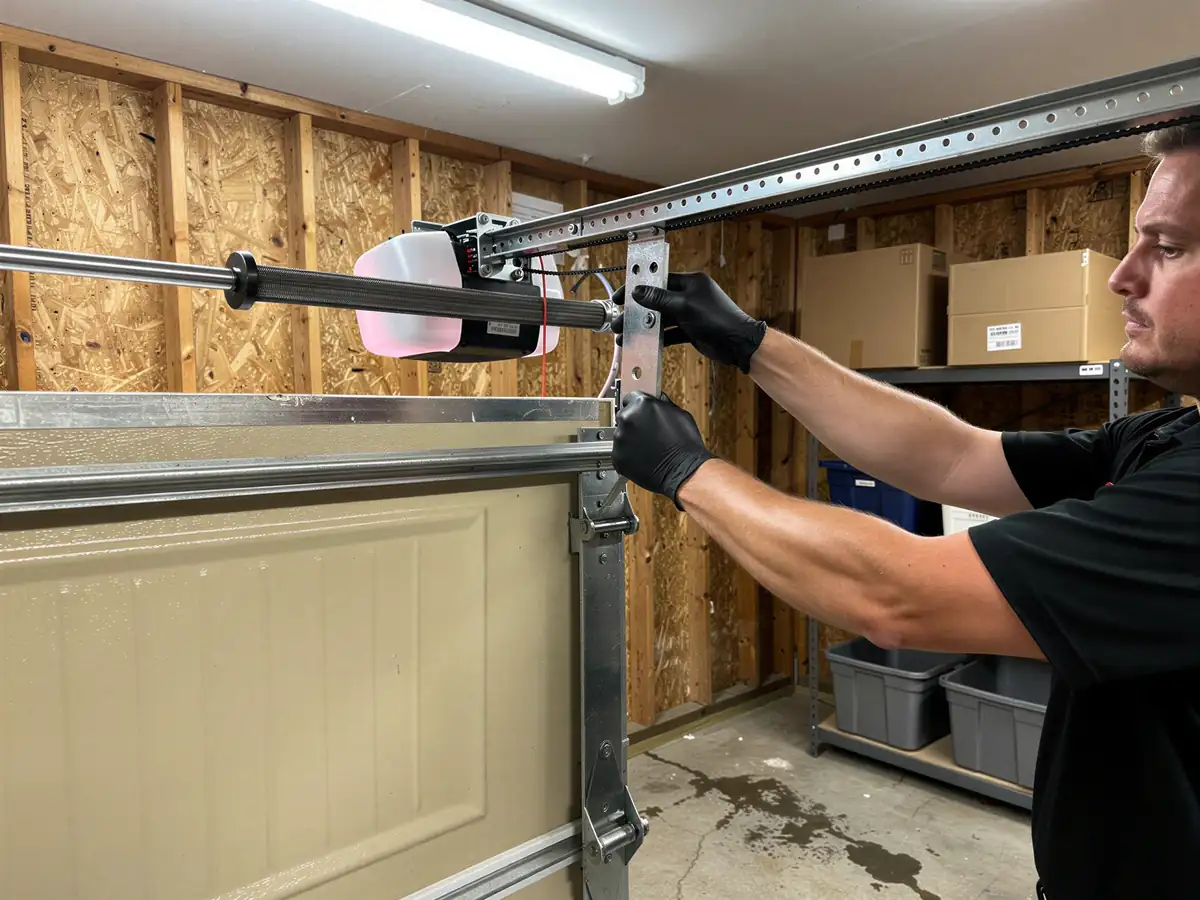
Opener issues get diagnosed separately from the door itself - gear sets, logic boards, and safety sensors each fail differently, and we test them in that order before replacing anything. One limitation worth saying plainly: if a door is original to a house built in the 1940s or 50s, matching hardware brackets sometimes isn't available new, and in those cases we tell you straight when a full hardware swap makes more sense than chasing an exact match.
Why This Fails Locally
Springs and cables don't fail at random - they fail under thermal cycling, and this region sits in a cold-severe climate band. Steel spring wire contracts in winter and expands in summer, and on a spring that's already decades old, that repeated flex is what finally snaps the coil, usually on the coldest mornings of the year when the metal is least forgiving. That's why late-winter spring failures are common on houses with original 1950s-era hardware in Newark neighborhoods like the Central Business District, where a lot of the housing stock dates to that same build era.
It's not just the spring. Steel tracks and brackets mounted directly to masonry or wood framing built before 1960 have had sixty-plus years of freeze-thaw cycles working the anchor points loose. A track that's slightly out of plumb on a newer house is a minor fix; on a house from this era, it's often the third or fourth time that bracket has been re-set, and the wood or masonry around the anchor is more worn each time. We see this pattern often enough across Newark's older blocks that it's rarely a surprise once we're on site.
The Cost of This Job
We don't post flat prices because the two biggest cost drivers
Spring size and hardware age - vary a lot house to house. A single torsion spring swap on a standard door is a different job than a full cable-and-drum replacement on a door with worn 1950s-era brackets that need re-anchoring before new hardware goes on.
What we can say is that repair almost always costs less than replacement, and for most of the spring, cable, and track failures we see on Newark's older housing stock
Repair is the right call - the door panel itself usually outlasts the hardware that runs it. Where we tell a homeowner to consider replacement instead is when the door itself is warped, rusted through at the bottom panel, or when the track and hardware are both failing at once and patching one just shifts the load to the other.
Given that median household income across this service area runs around $120,958
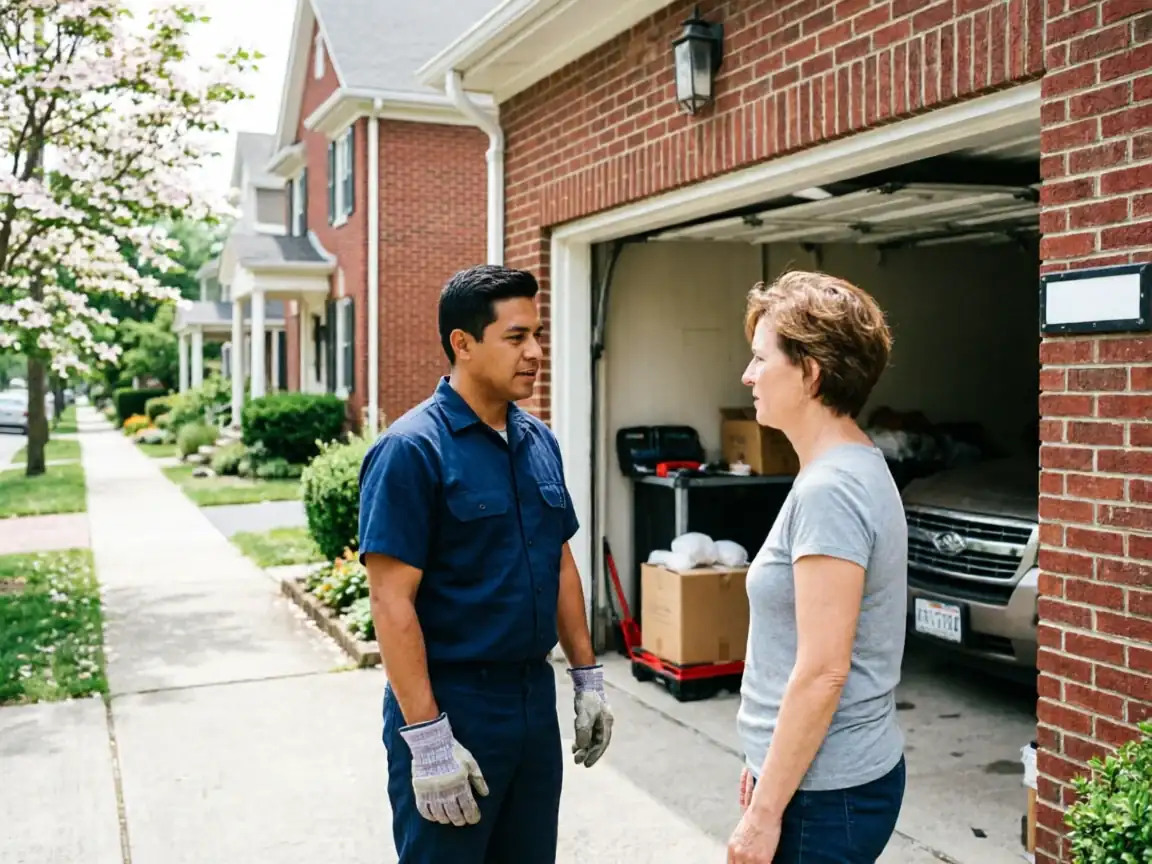
Most owners we talk to are weighing a repair bill against a mortgage or renovation budget, not treating a garage door as disposable. We quote the job on site, after we've seen the actual spring size, track condition, and opener, not over the phone.