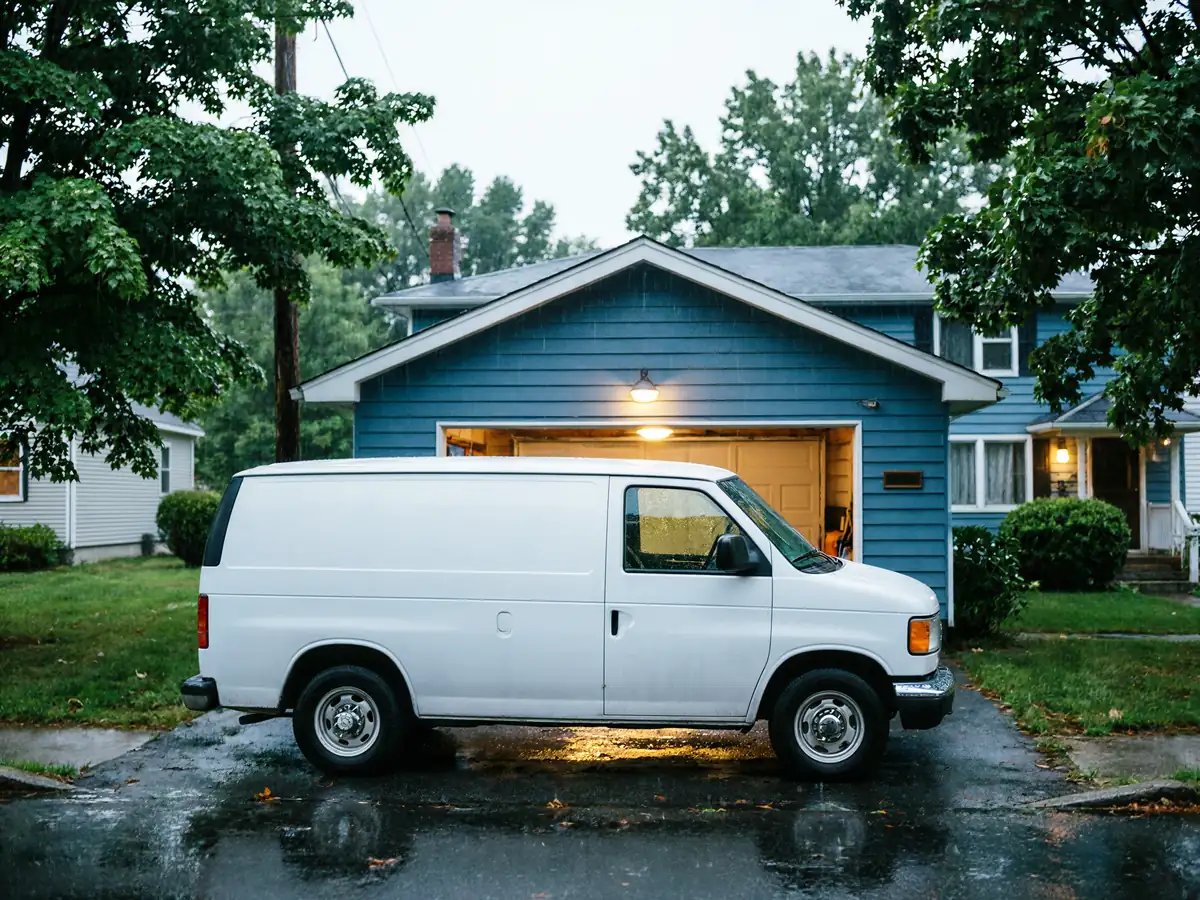
Knowing When Repair Stops Making Sense on a Newark Garage Door
Most Newark houses date to 1938-1996, median 1958, and cold winters hit old springs and tracks hard. Here's how to tell when a repair stops making sense.
Newark sits in a cold, severe climate band, and that matters more to a garage door than most people think. Steel contracts in the cold, torsion springs lose a little tension every freeze-thaw cycle, and nylon rollers that were fine in July start binding in January. Most houses in this area were built between 1938 and 1996, with the median landing around 1958, which means a lot of the doors and openers still in service are original or close to it. A door built for a 1958 house wasn't engineered with today's insulated steel sections or sealed bearings. On an older wood or single-layer steel door, cold snaps show up as a harder pull, a louder bang on close, or a spring that lets go on the coldest morning of the year - not because anything failed suddenly, but because decades of temperature swings finally caught up with fatigued metal. If your door gets noticeably stiffer every winter and loosens up again by spring, that's not your imagination. That's the climate working on old hardware.
Checking It Yourself
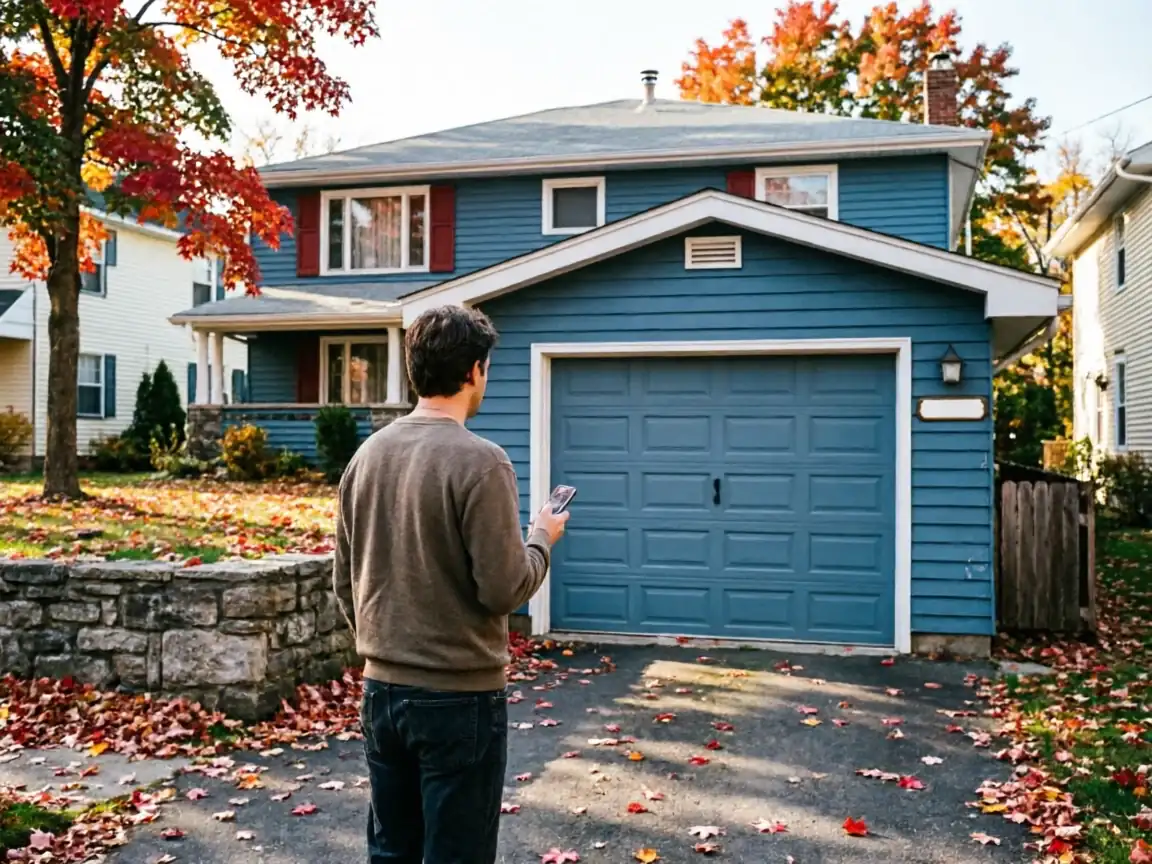
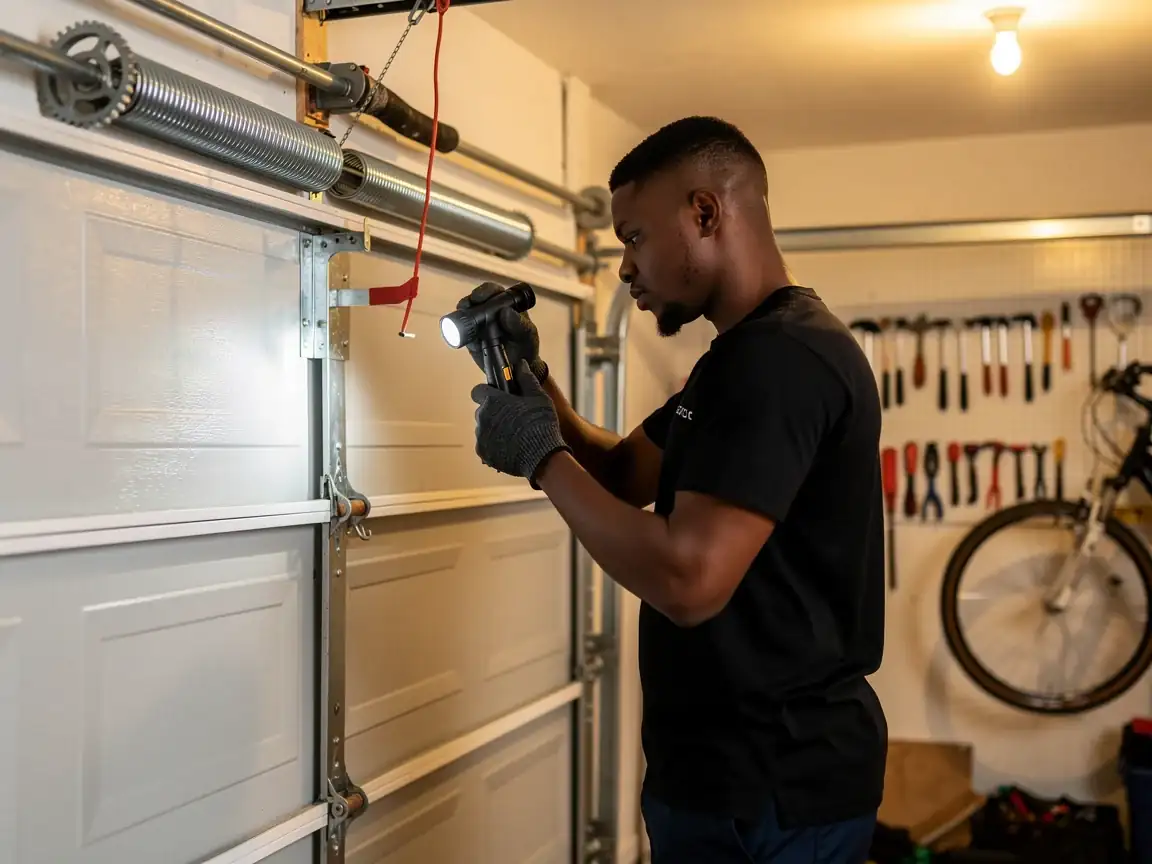
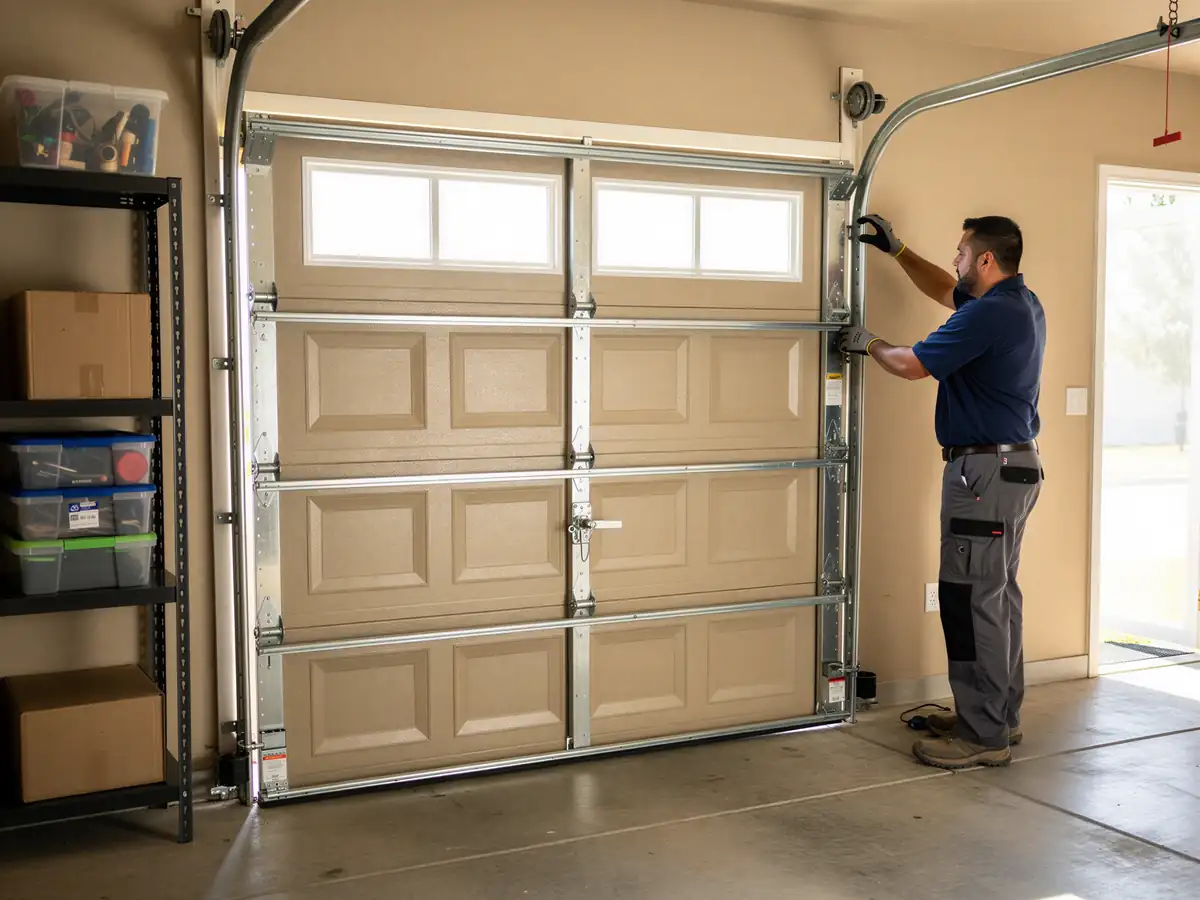
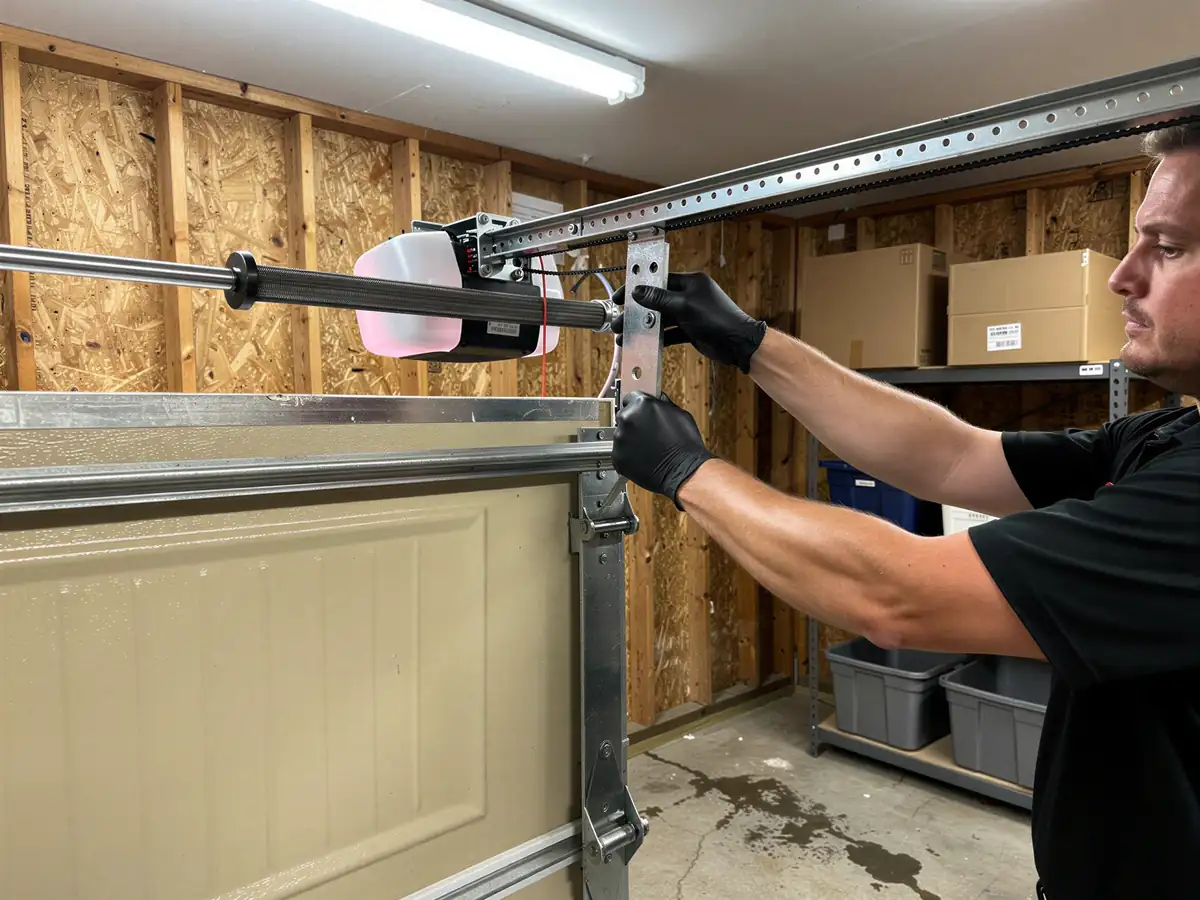
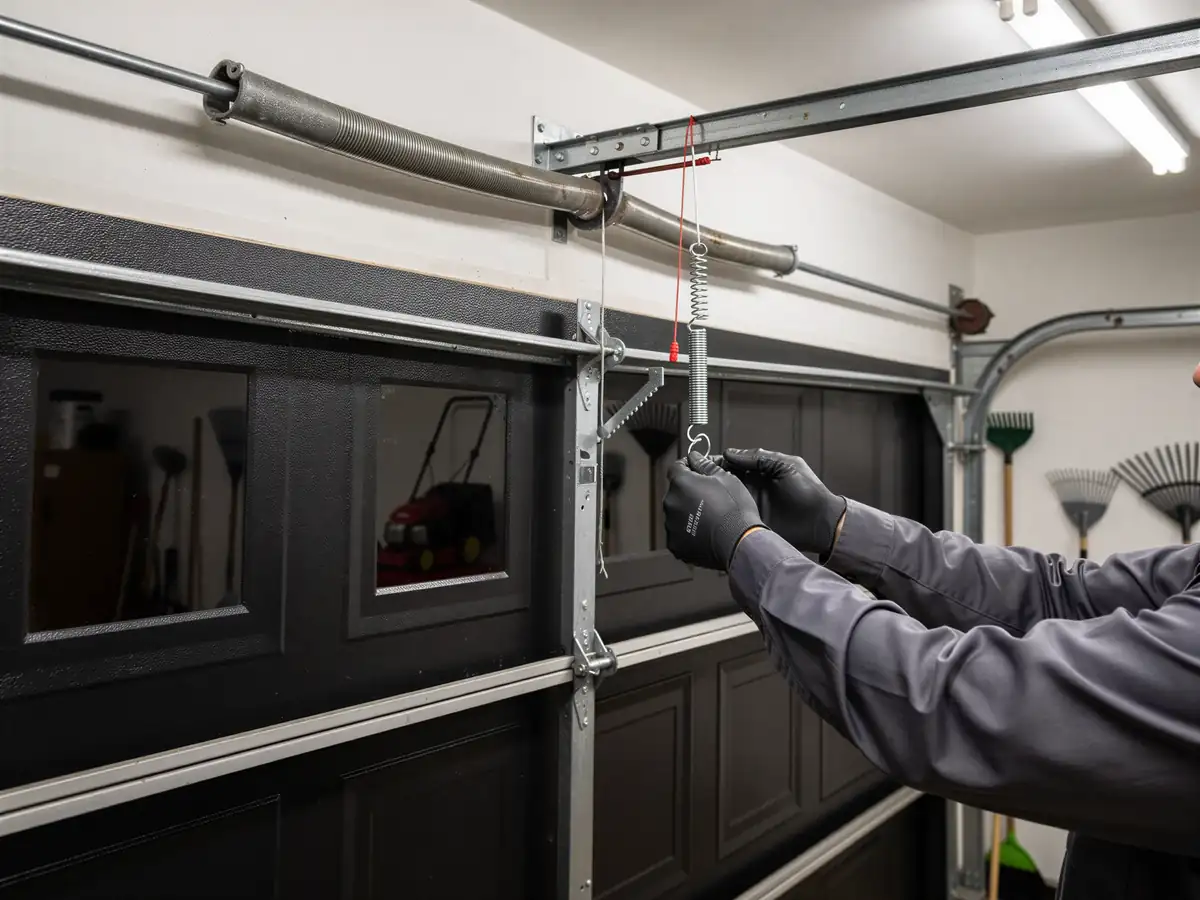
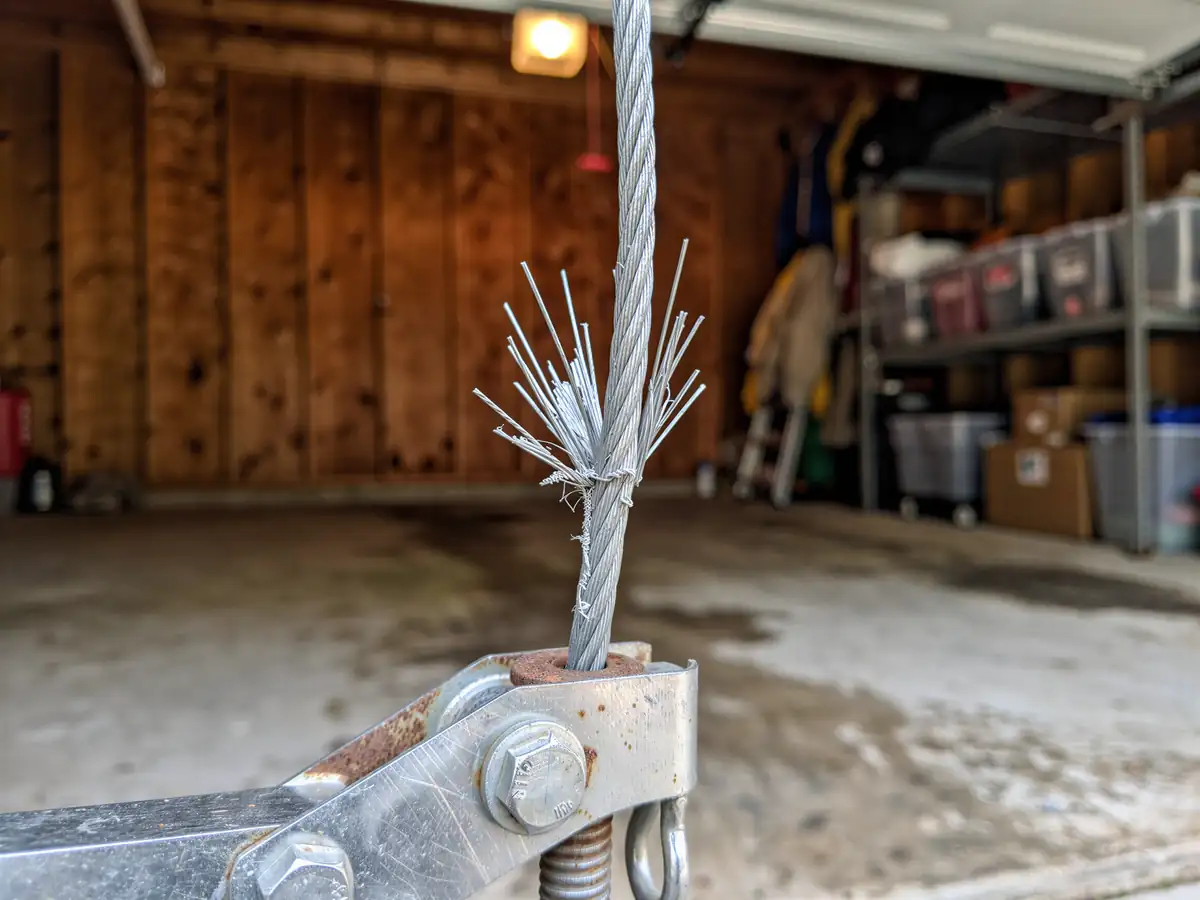
Before you call anyone, look at three things. First, the springs above the door - if one is stretched with a visible gap in the coil, or if you see a shiny crack line, that's a broken spring, not a worn one, and it needs replacing, not repairing. Second, the tracks - run a hand along them (door closed, power off) and feel for rust pitting or bends; in a lot of the pre-1960 housing stock around Newark's 156 named areas, original tracks are galvanized steel that's been through close to seventy winters. Third, the opener - if it's the chain-drive unit that came with the house, listen for grinding at start-up, which usually means the gear is going. None of this requires tools, just five minutes and a flashlight. What it won't tell you is whether the door is worth fixing at all - that's a judgment call based on the age of the unit and what's already failed, which we get into below.
The Seasonal Bit
A garage door in this climate works through two real stress seasons a year, not one. Winter cold tightens metal and thickens old lubricant, which is why openers strain hardest in January and February. Then summer humidity swells wood panels and softens weatherstripping, which is why doors that closed fine all winter suddenly don't seal in July and August. On a door that's already decades old - and given the 1938-1996 build range with a median around 1958, a lot of Newark garage doors are - that twice-yearly expansion and contraction cycle is what finishes off springs, hinges, and track alignment that a newer insulated door handles without complaint. If you've replaced the same spring or the same roller twice in two winters, that's the seasonal cycle telling you the door's margin is gone, not a run of bad luck.
The Problem
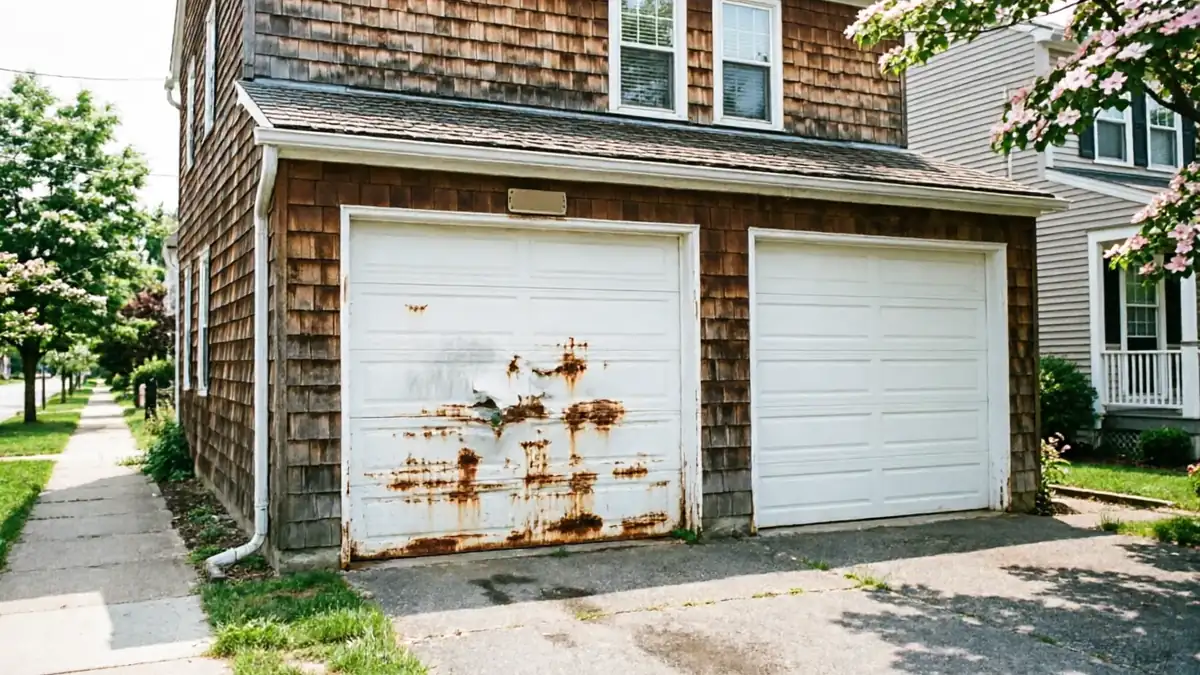
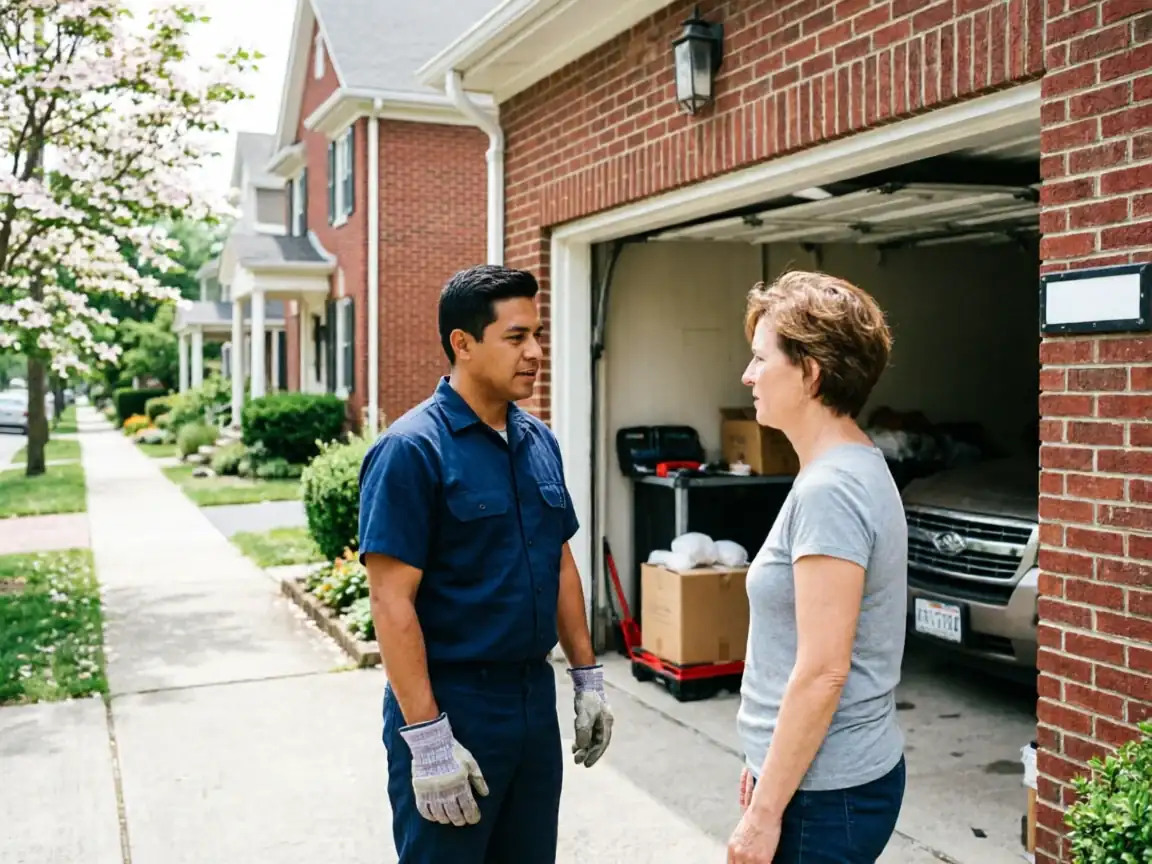
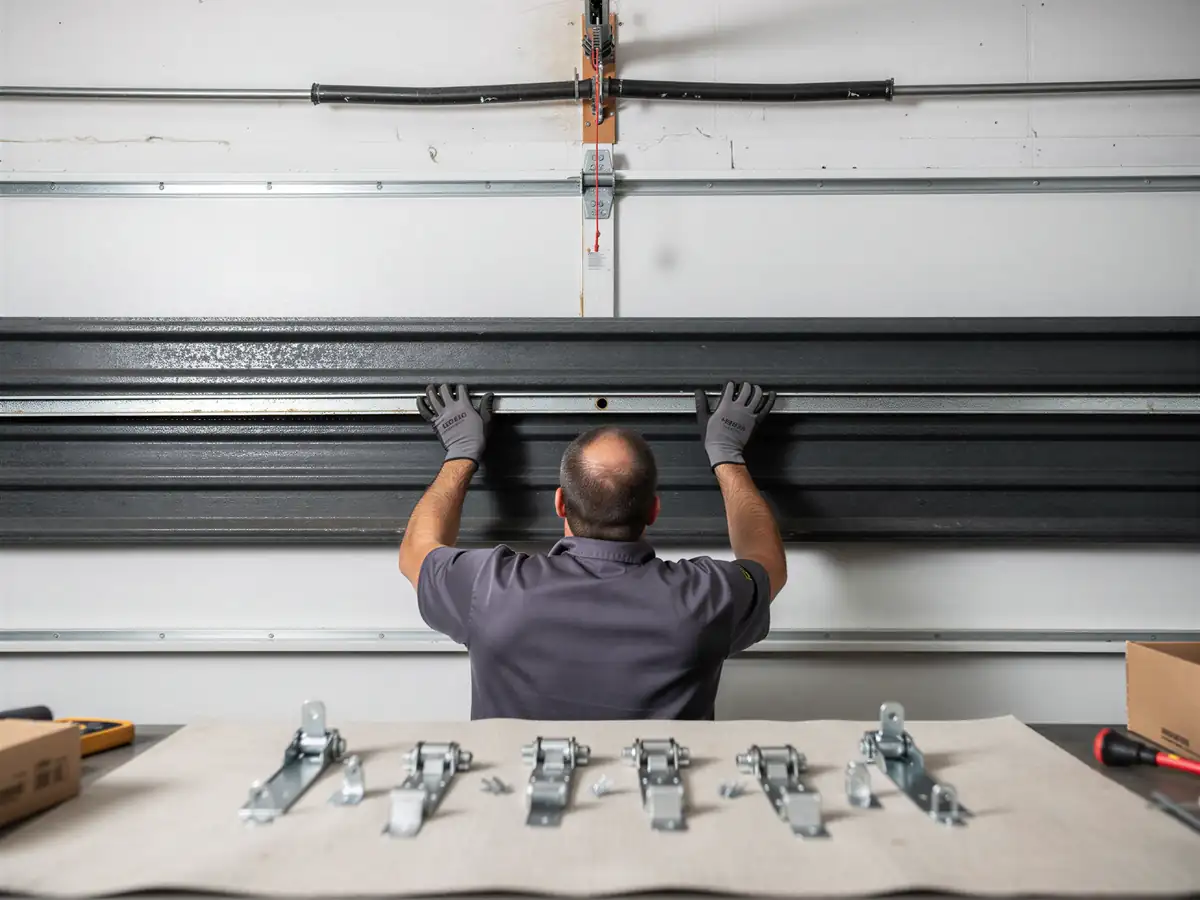
Here's the honest part: not every door is worth fixing, and we won't tell you it is just to get a job. If the door is original to a house from the 1958 median build era, the springs, tracks, and opener are likely original parts too, and once two of the three major systems have failed, a third failure is close behind - you're paying for repairs piecemeal instead of once. We also won't chase parts for openers and track hardware that stopped being made decades ago; sourcing them costs more in time than a new unit costs in money. A rough rule: if the repair bill is approaching half of what a comparable new door and opener would run, replacement wins, especially on a door that's already fifty-plus years old. We'll always tell you straight which side of that line your door is on before we touch it.
How it works
From “it’s stuck” to “it’s fixed”
01
Tell us what’s wrong
Describe the symptom - won’t open, loud bang, opener runs but the door won’t move.
02
On-site diagnosis
A technician tests the door under power and by hand and finds what actually failed.
03
Clear, up-front plan
You get the fix that’s needed and what drives the cost - before any work starts.
04
Repaired & tested
The repair is done, the door is set true and tested, and the work area left clean.
Not sure which repair your door needs in Newark, NJ? Describe what it’s doing - every job starts with a diagnosis.
My garage door opener is original to the house - is it worth repairing?
Depends what's wrong with it. A burnt-out circuit board or a stripped gear on an opener that's decades old usually isn't worth chasing parts for, since manufacturers stop stocking those components. A loose chain or a bad sensor, though, is a cheap fix on any opener regardless of age. We check the specific part before we quote anything.
Why does my spring keep breaking every winter?
Cold makes steel brittle and stiffens the lubricant inside the coil, so a spring that's already near the end of its cycle count tends to let go in the coldest stretch of the year. If you're replacing the same spring every winter, the spring isn't the real problem - it's usually a sign the whole unit is past its working life.
How old does a garage door have to be before replacement beats repair?
There's no fixed year, but a door from the 1958 median build era for this area, especially one on original tracks and hardware, is a strong candidate. Once you've had two major component failures - spring and track, or opener and panel - the math usually favors a new door over another round of parts.