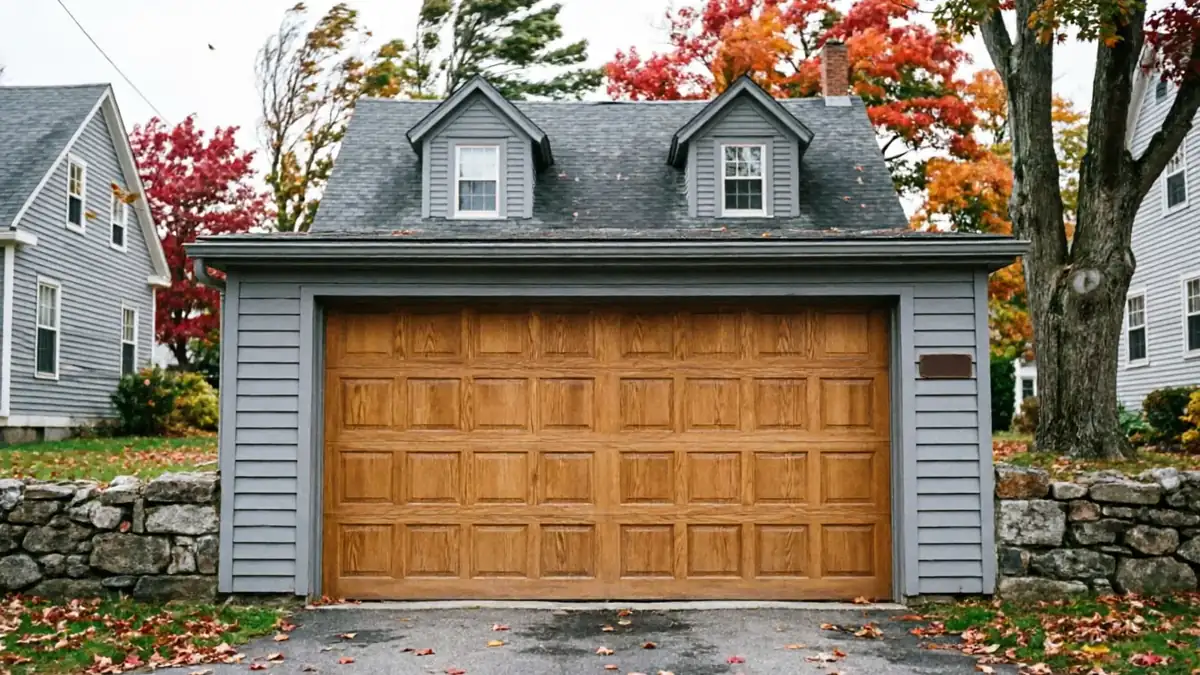
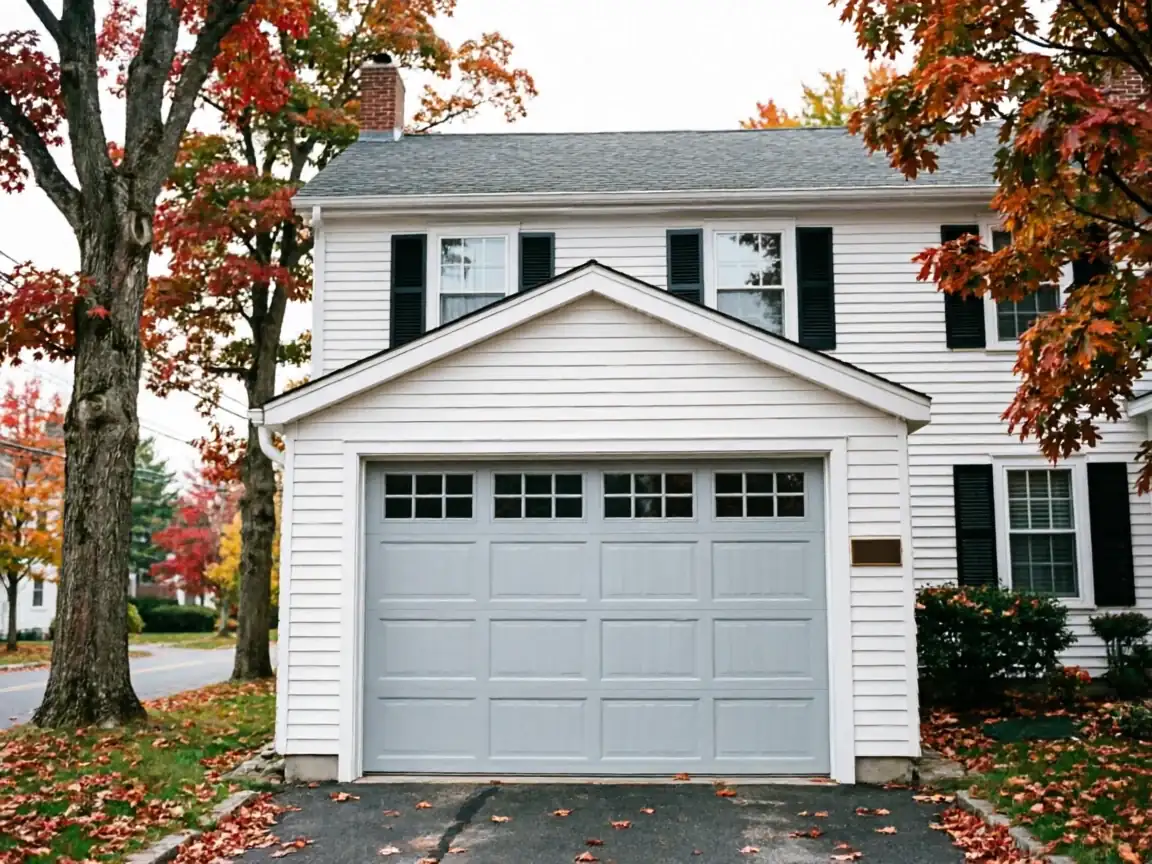
Most houses in this market went up between 1938 and 1996, with the typical build year sitting around 1958. That matters because a double garage opening on a house from that window is almost always a single wide door - one piece of steel or wood spanning two car widths, hung on a horizontal track that's long by design. A wide door has more surface for wind to push against than a single-car door, and more panel for that push to flex before the track or the end stiles give. Newark sits in a COLD severe climate band, which means the steel in that panel is already working through a wide temperature swing every winter - contracting hard in the cold, expanding again when it warms. Add wind load to a panel that's already stressed by temperature and the weak points show up where the track bolts meet the jamb, and at the center where a wide door has the least bracing. Across the 156 named areas that make up this part of the state, the housing stock is overwhelmingly pre-1960, so a lot of these doors are original hardware on homes never built with modern two-car garage doors in mind. That combination - old house, wide door, cold climate - is the specific thing we're talking about here, not garage doors in general.
Checking It Yourself
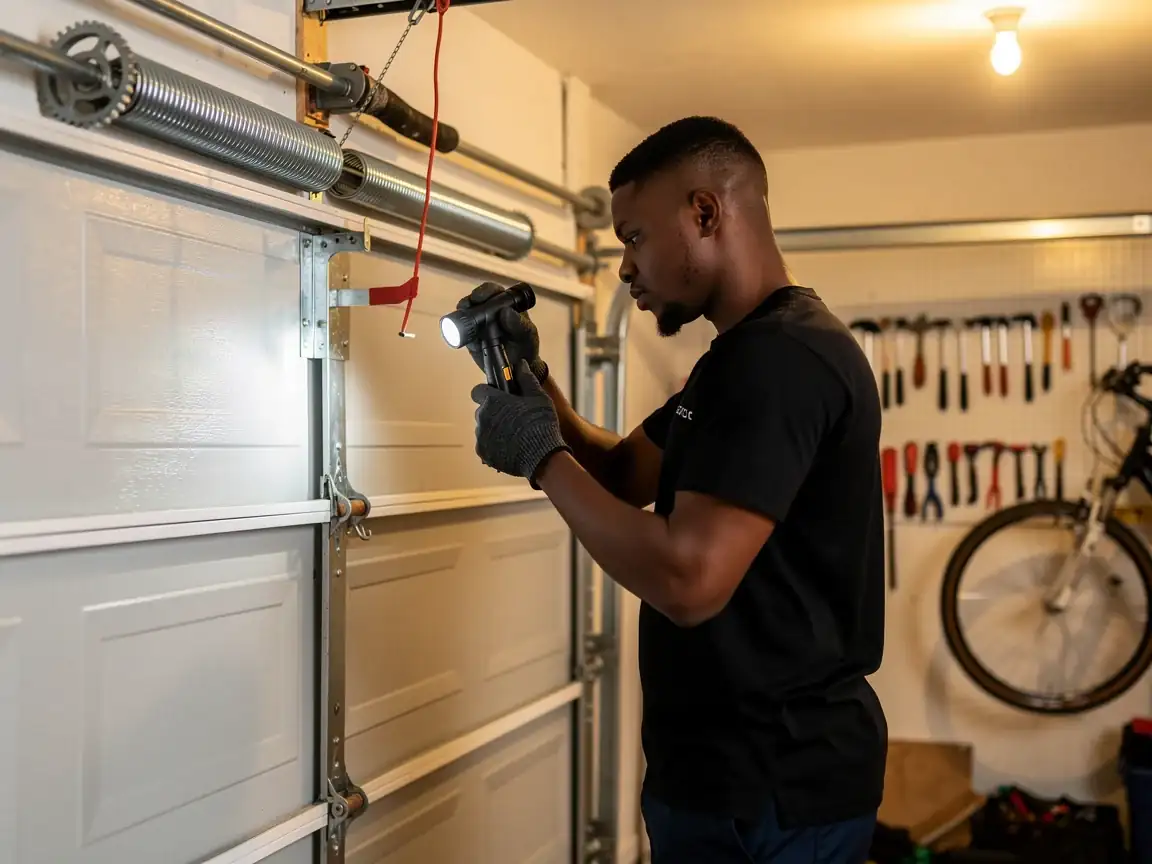
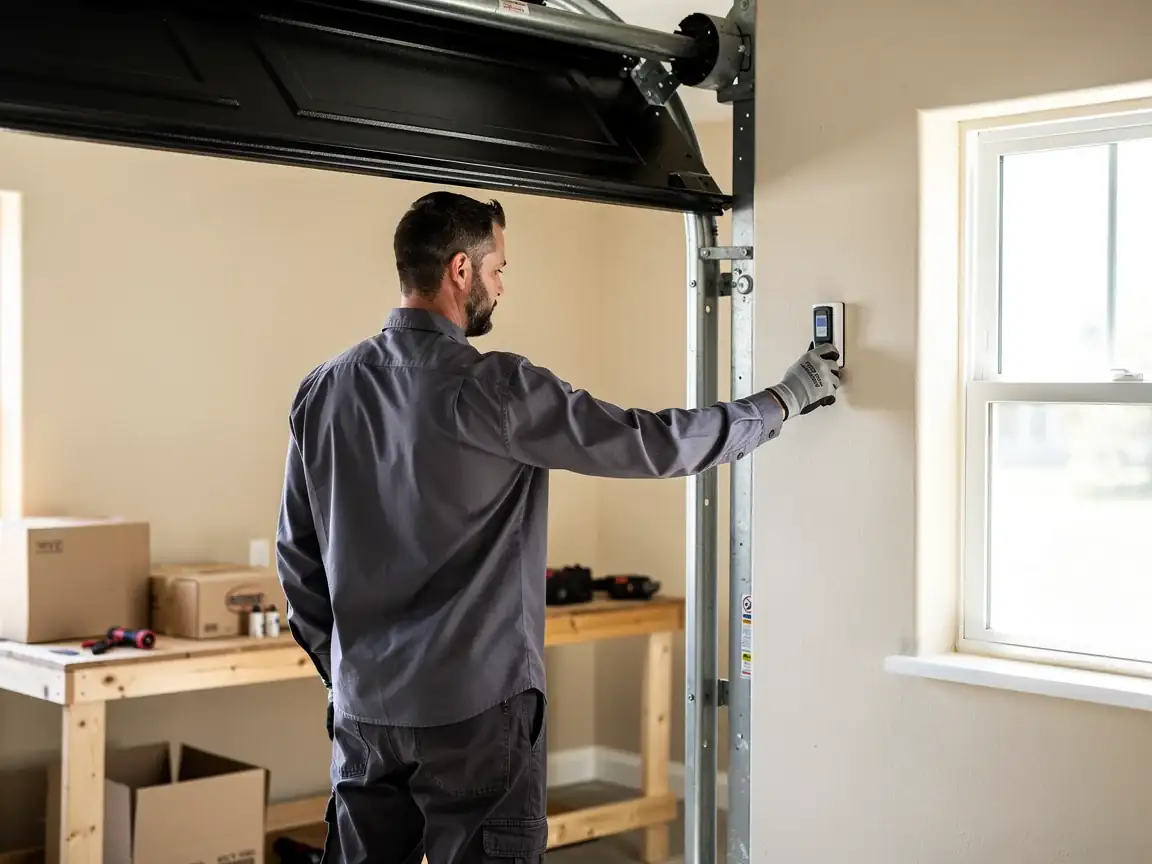
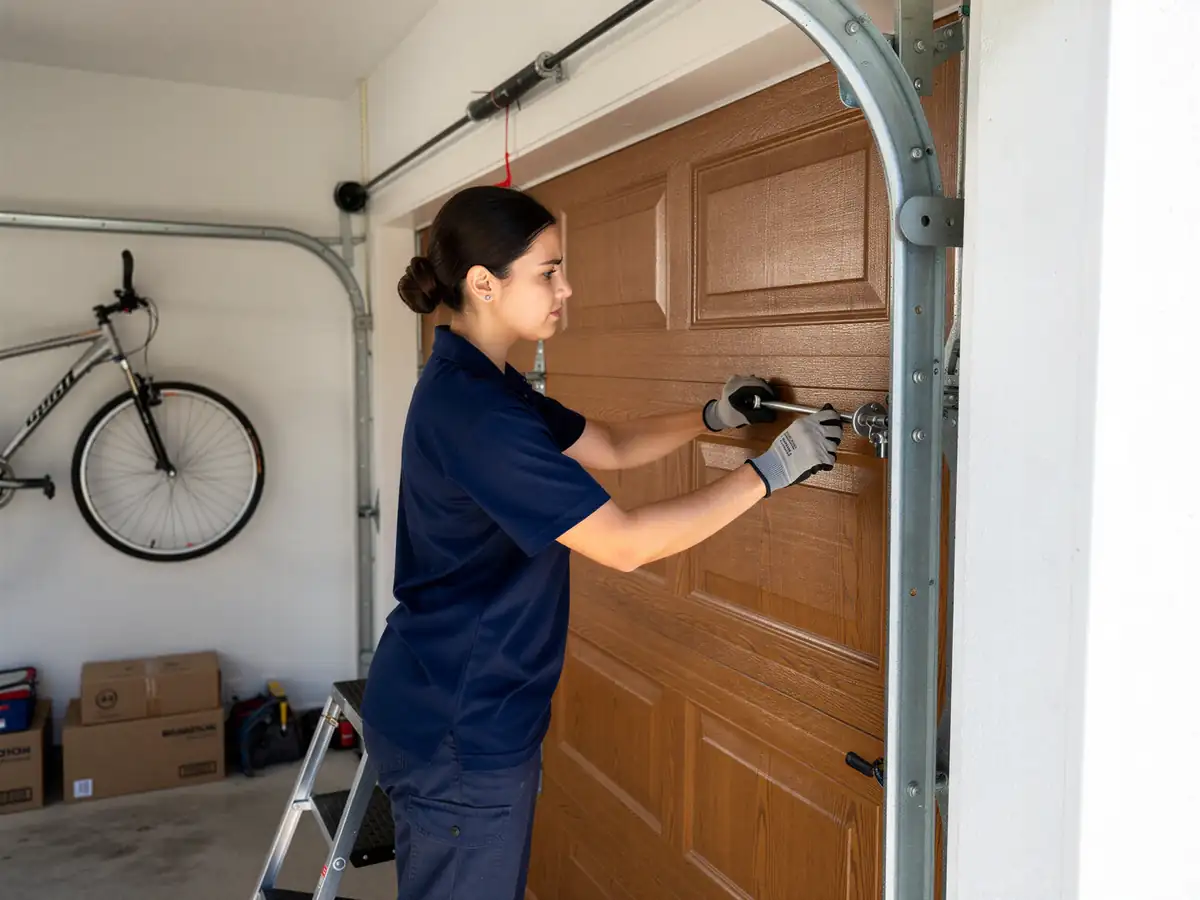
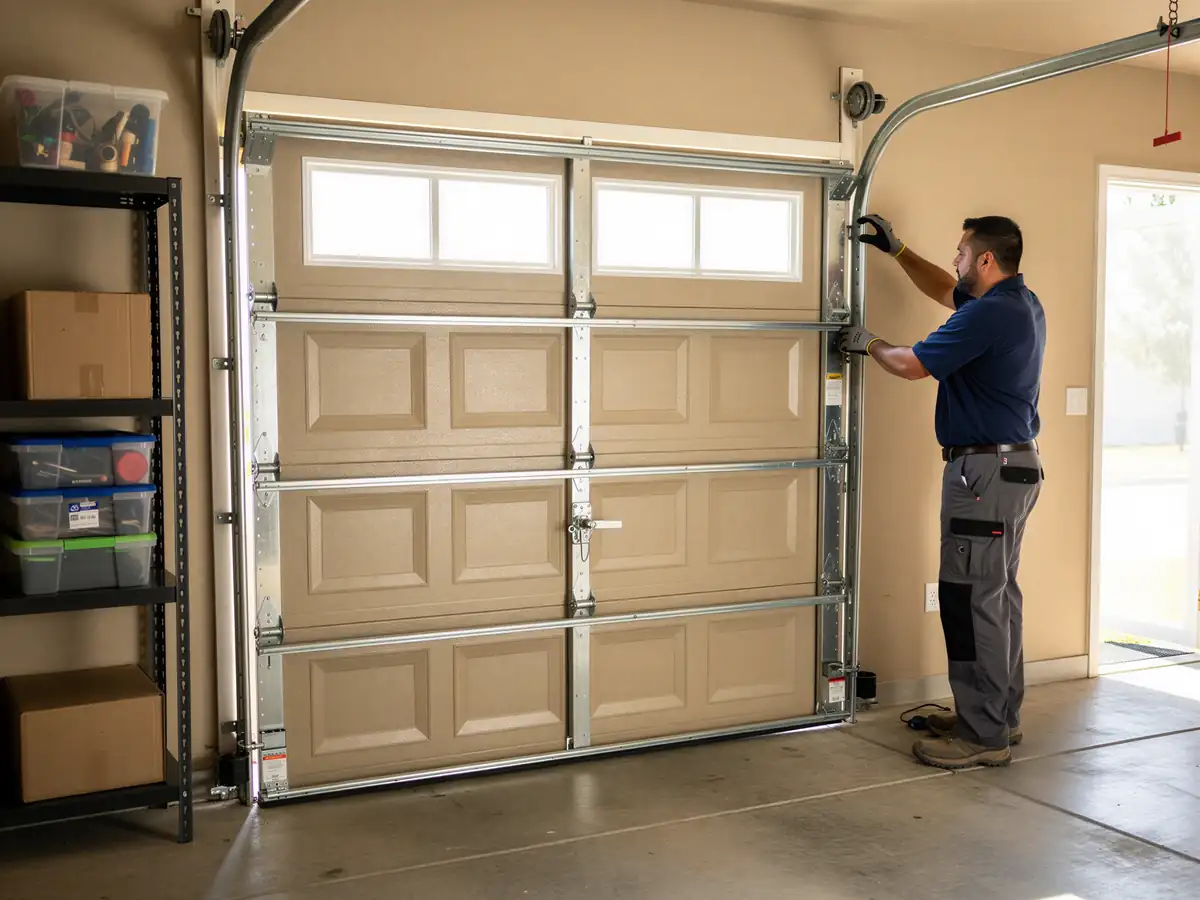
Start at the track. On a wide door, look at where the horizontal track bolts into the framing above the opening - on houses from the 1940s through the 1960s this is often the original lumber, and the lag bolts can work loose from decades of the door racking under wind pressure. Push on the center of a closed panel from inside the garage. If it gives more than about half an inch, the panel itself is flexing more than it should, which on an older single-panel door usually means the internal bracing has rusted or the panel has simply fatigued. Check the end stiles - the vertical edges where the door meets the track - for daylight gaps when the door's closed; a gap that widens near the top is often a sign the top corner has been pulled by wind load over the years. Look at the rollers too. On a lot of these pre-1960 houses the rollers were never upgraded from steel to nylon, and steel rollers bind under side load exactly the kind wind creates on a wide panel. None of this requires tools, just a flashlight and a few minutes before the door gets worse.
The Seasonal Bit
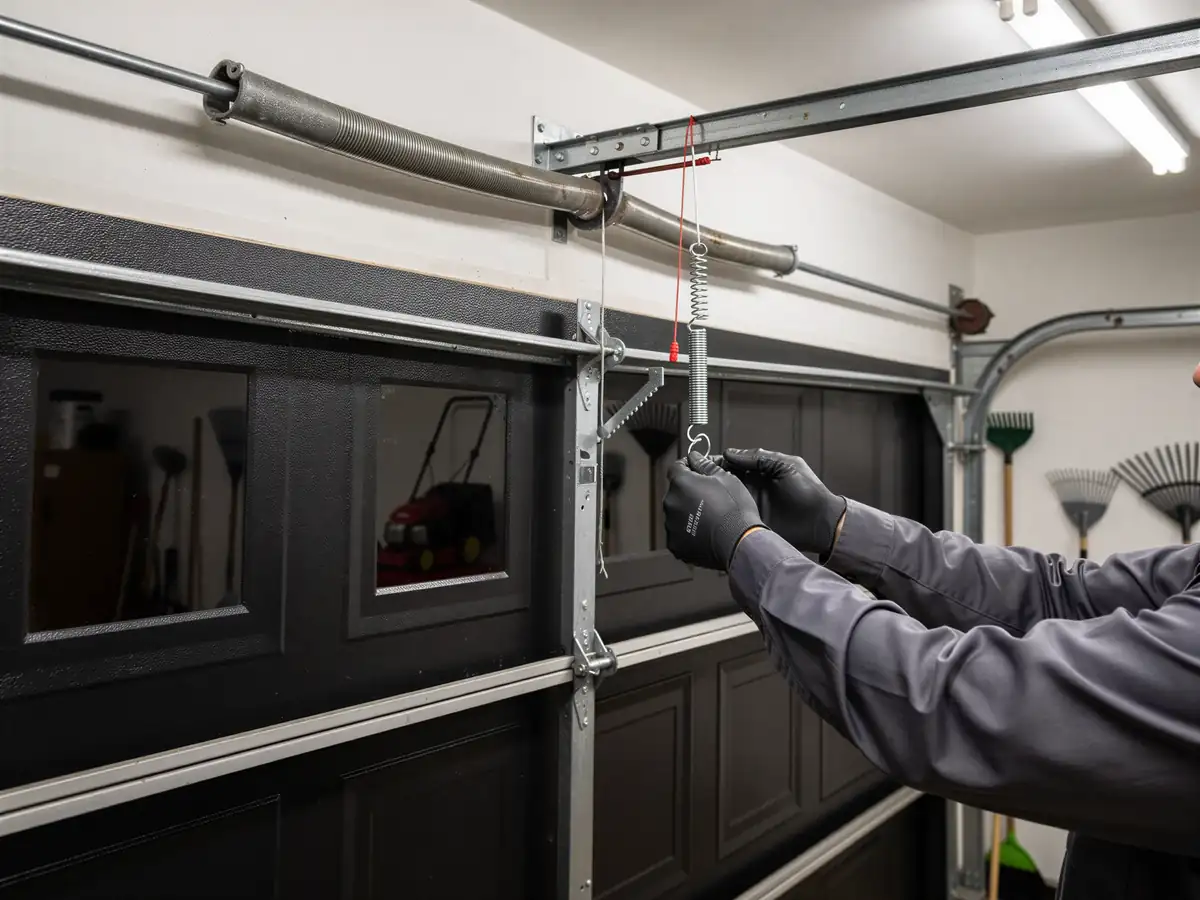
In a COLD severe climate, the door doesn't fail the same way in July as it does in January. Cold steel is brittle steel - a panel that flexes fine in warm weather can crack at a seam when it's below freezing and gets hit with a gust at the same time. On a wide door that's already carrying age from a 1958-median build year, the seams and the center post (on doors that have one) are the first things to go. We also see torsion springs on these older two-car doors lose tension faster in winter, because cold steel coils don't store energy as evenly, and a spring that's already under-tensioned gives a wide door even less resistance to wind pushing it out of its track. None of this is a one-season problem. It's a slow accumulation: one winter of flex, a summer of expansion, another winter of flex, until the hardware that held fine for fifty years starts to show it.
The Problem
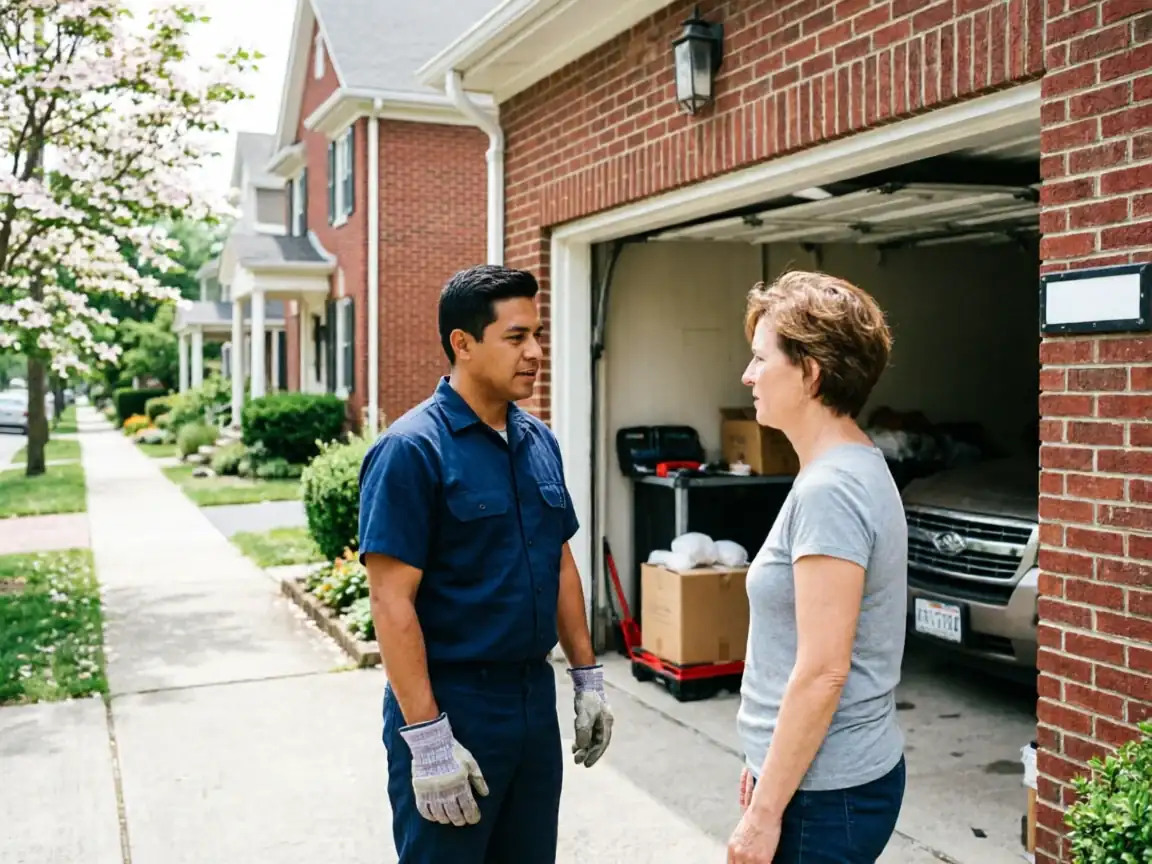
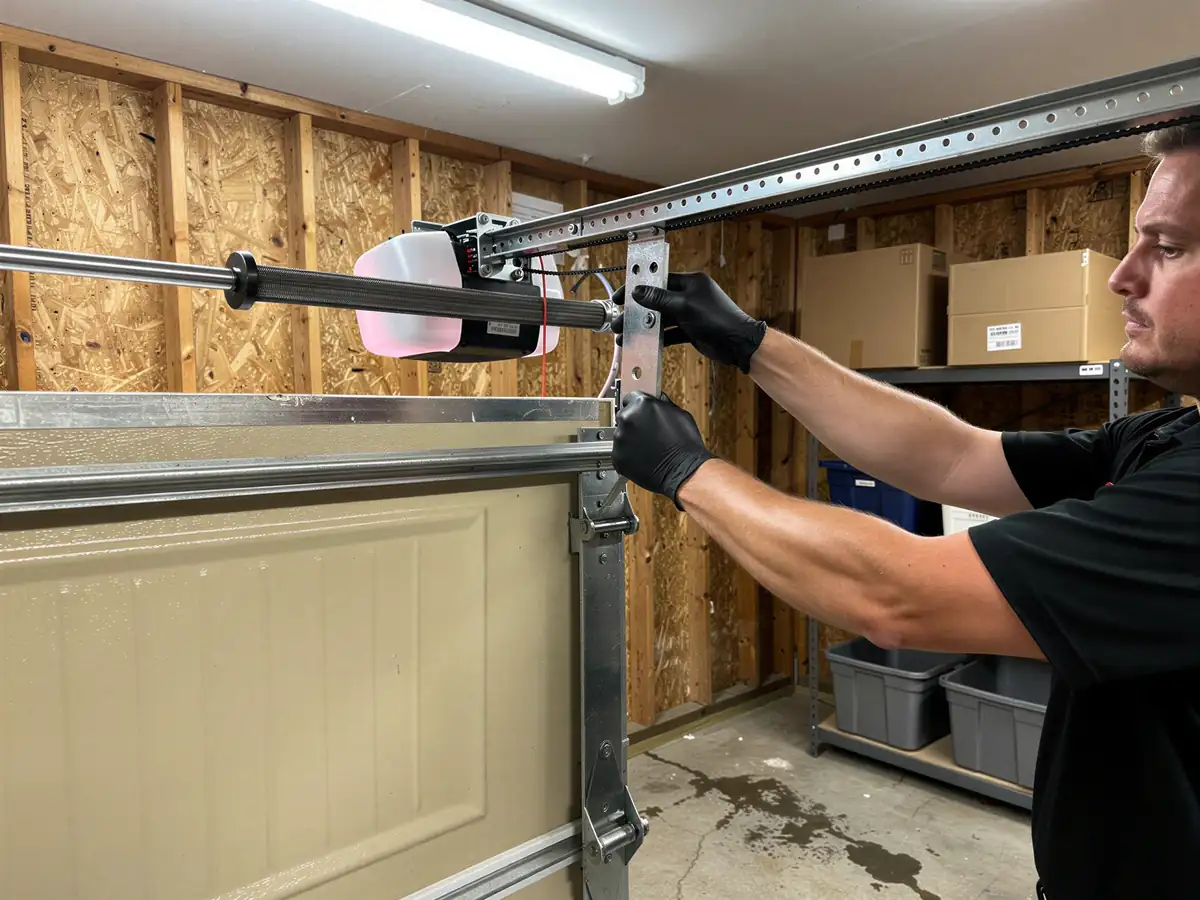
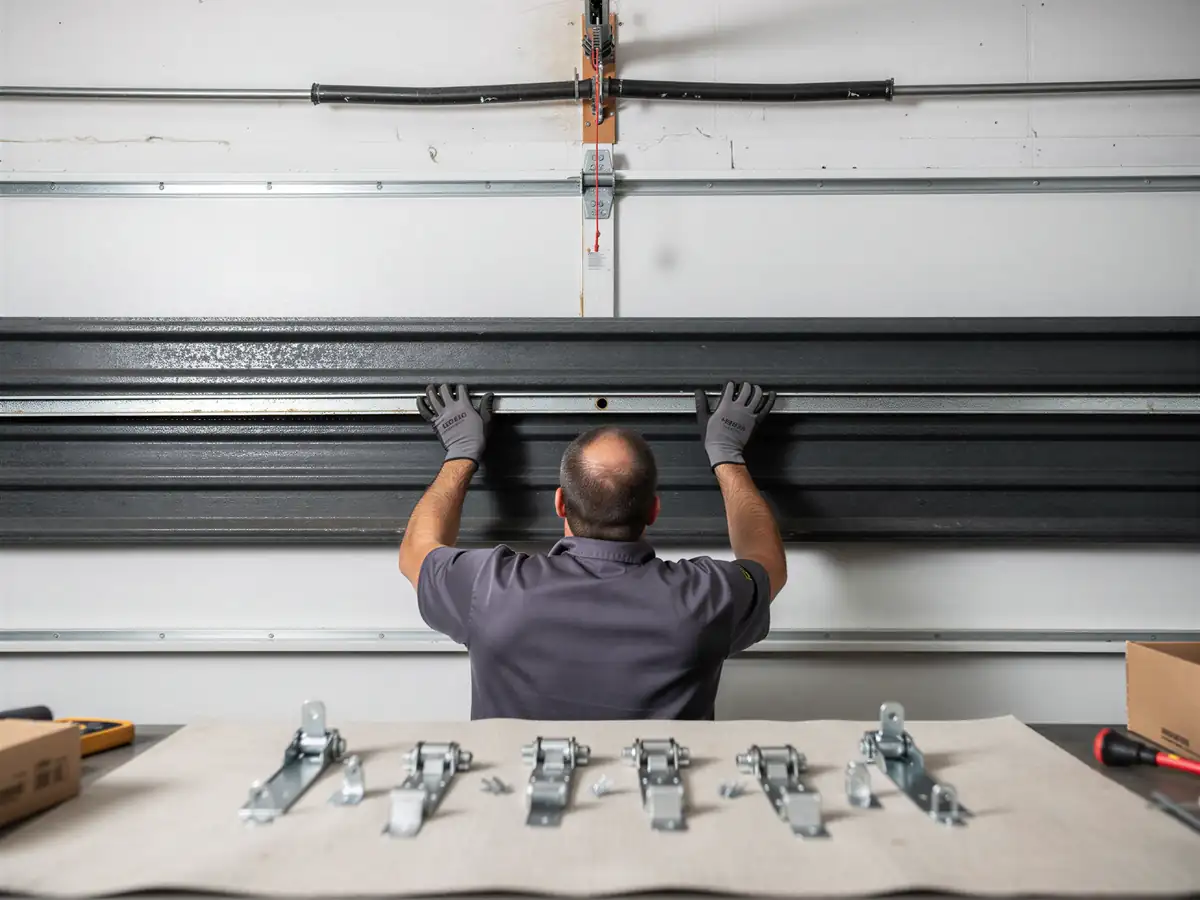
Here's the honest part: a wide door panel that's been pushed out of true by wind and cold over years of a pre-1960 build isn't always worth straightening. Steel doesn't return to flat once it's been bowed repeatedly, and on a door that's already at or past the age where parts match the house, patch repair on one panel usually just moves the stress to the next weak point. We'll tell you when a repair makes sense and when it doesn't - replacing a track or a set of rollers is a different job than trying to true up a bowed panel on a door built for a house from the 1950s. We work this part of the state, from the Central Business District out through Harrison, Irvington, Kearny, East Orange, Hillside, Elizabeth, City of Orange, Belleville, and the surrounding towns within a few miles. If you're not sure which side of that line your job falls on, say so when you call and we'll be straight with you about it.
Why does my garage door shake more on a windy day than it used to?
If your house dates to the common build window here, 1938 to 1996 with a lot of stock from around 1958, the door is likely a wide single panel on an original track. Years of temperature swings in a cold-severe climate make the steel and the bolted connections looser over time, so wind that didn't bother the door ten years ago now sets it rattling.
Can a bowed garage door panel be straightened instead of replaced?
Sometimes, if the bow is shallow and recent. But on an older panel that's absorbed repeated wind flex and winter contraction over decades, the steel has usually fatigued past the point where straightening holds. We'll look at the panel and tell you straight whether it's worth the labor or whether a new panel is the better money.
Do older Newark-area homes need different garage door hardware?
A lot of the two-car openings in this market were built for doors and track systems common from the 1940s through the 1960s, which weren't engineered with today's wind-load standards in mind. We don't have a code figure to quote you, but original hardware on a wide door is worth a look if you've never had it inspected.