Why Newark Garage Doors Let in Cold Air (and What Actually Helps)
Newark homes mostly date to 1938-1996 with a cold-severe climate, so weatherstripping fails in specific, predictable ways. Here's what actually happens to the seal and track on this housing stock.
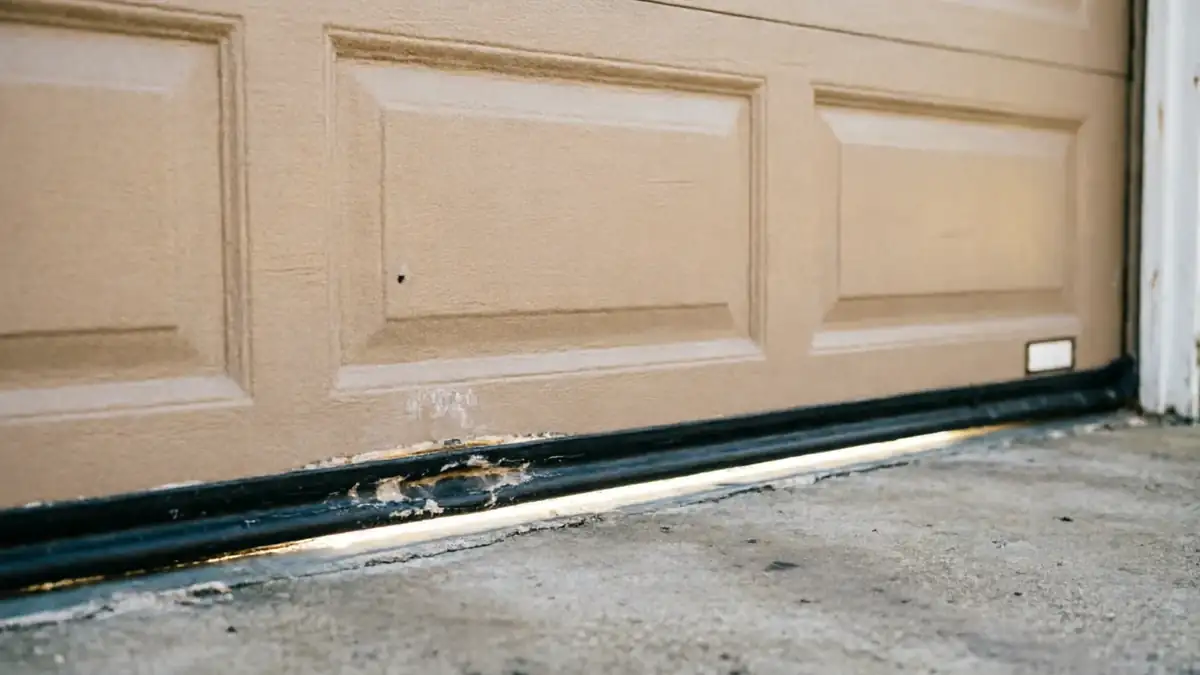
Newark sits in a cold-severe climate band, and that matters more for a garage door than people think. The door is the biggest moving opening in the house envelope, and it's the one part most owners never touch until it fails. Most of the housing stock in this service area went up between 1938 and 1996, with the median build year around 1958. Doors from that era, and even the replacement doors installed on those same openings since, were set into wood jambs that have shifted with decades of frost heave. The bottom seal compresses into a channel that was true when it was installed and isn't anymore. Across the 156 named areas that make up this region, most garage door stock predates 1960, which means a lot of these jambs have settled unevenly at the corners - usually worse on the side that gets more sun or more runoff. The draught you feel at floor level in January isn't the weatherstrip failing on its own. It's the weatherstrip doing its job against an opening that's no longer square. That's a framing issue wearing a seal's clothing, and no amount of new rubber fixes it by itself.
Checking It Yourself
You don't need tools for the first pass. Close the door at night and walk the inside perimeter with a flashlight off - any daylight or streetlight leaking through at the bottom corners or along one side tells you where the gap is. Run a hand along the bottom seal while someone else closes the door slowly; if it folds over instead of compressing flat, the track alignment is off, not just the rubber. Check the weatherstrip itself for cracking or a permanent set - a seal that's lost its spring-back won't re-seat no matter how you adjust the track. On older steel doors common to this area's pre-1960 stock, also check where the panel meets the frame at the top corners; those corner seals dry out first because they get the most sun exposure over a south or west-facing drive. I'll be honest about the limit here: if the gap is uneven because the slab itself has settled, no seal kit fixes that. That's a concrete problem, and we don't do slab work. At that point you're managing the draught, not eliminating it.
The Seasonal Bit
The freeze-thaw cycle is the real driver of seasonal failure, not just raw cold. Newark's cold-severe rating means the ground moves - it heaves when it freezes and settles back when it thaws, over and over through a winter. That cycling is what walks a garage door jamb out of square over years, a few millimeters at a time, on houses that have already been standing since the 1940s and 50s median build era. You'll usually notice the draught getting worse in two windows: early winter, right after the first hard freeze shifts the slab and jamb relative to each other, and again in March when the thaw loosens everything that froze tight. In between, the door often seals fine, which is why people assume the problem fixed itself. It didn't - it's just not actively moving that week. If you're going to replace weatherstrip, late fall before the first deep freeze is the better window, because you're sealing against a jamb position that's closer to what it'll hold for most of the winter rather than guessing at a mid-thaw gap.
The Problem
The real problem on most Newark jobs isn't a single bad seal - it's a door and frame combination that's been compensating for small shifts for sixty-plus years, long enough that the original weatherstrip channel doesn't match what current replacement kits are sized for. With 358,096 owner-occupied houses across this service area built mostly before 1960, that channel mismatch comes up often enough that it's not an edge case here, it's close to the norm. A generic big-box weatherstrip kit goes on, looks fine for a season, then peels or gaps again because it was never actually seated in a channel built for it. The honest fix usually means re-cutting or shimming the track before the new seal goes in, not just swapping rubber. That's more labor than a straight seal swap, and it's worth saying plainly: if your door is original to a house from that 1938-1996 window and the bottom corners have never been addressed, a seal alone won't hold through a full winter. It buys you a season, not a fix.
How it works
From “it’s stuck” to “it’s fixed”
01
Tell us what’s wrong
Describe the symptom - won’t open, loud bang, opener runs but the door won’t move.
02
On-site diagnosis
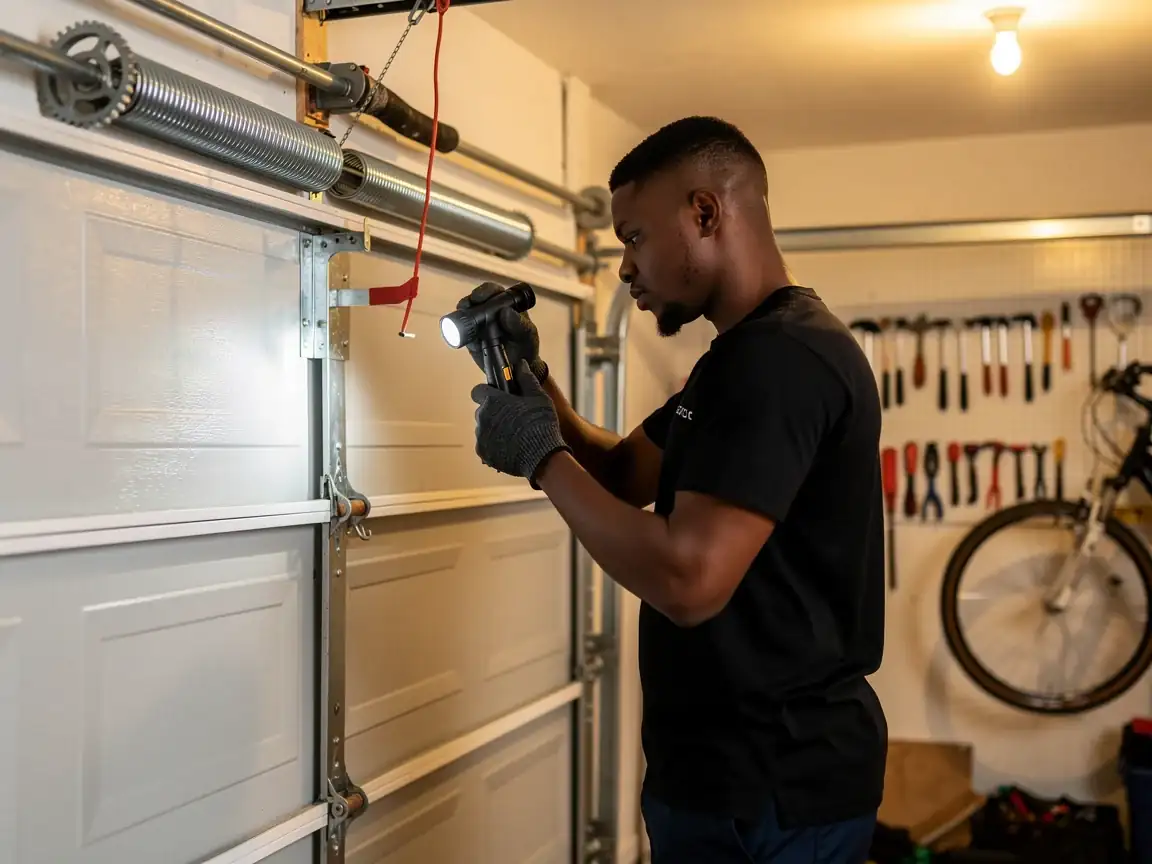
A technician tests the door under power and by hand and finds what actually failed.
03
Clear, up-front plan
You get the fix that’s needed and what drives the cost - before any work starts.
04
Repaired & tested
The repair is done, the door is set true and tested, and the work area left clean.
Not sure which repair your door needs in Newark, NJ? Describe what it’s doing - every job starts with a diagnosis.
Usually it's the jamb, not the seal. Houses in this area have been settling unevenly for decades, often worse on the side that gets more sun or drainage. The seal compresses fine on the square side and gaps on the shifted side. Replacing the weatherstrip helps a little, but the real fix is correcting the track alignment on that corner first.
Will new weatherstripping stop all the cold air?
It'll cut it a lot, but if your door is original to a house from the 1938-1996 era common around here, the channel the seal sits in may not match current kits exactly. You'll get real improvement, not a total seal. If the gap is from a settled slab rather than worn rubber, weatherstripping alone won't close it.
When's the best time to replace the seal?
Late fall, before the first hard freeze. The freeze-thaw cycle that comes with a cold-severe winter here shifts the jamb position through the season, so sealing right before that first freeze gets you a fit that holds closer to what the door will see most of the winter, instead of sealing against a mid-thaw gap.
Is it worth replacing the whole door instead of just the seal?
Depends on the door. If it's an original panel from the pre-1960 housing stock common in this area with rusted track hardware or a warped bottom panel, a new seal is a short-term patch. If the panel and track are sound and it's just worn weatherstrip, re-sealing is the cheaper, correct call. We can tell you which one you've got on a look.