What the Weather Here Does to It
Newark sits in a cold-climate band with real winter severity
And that matters more for a garage door than most people think. Steel track and torsion springs contract in deep cold, and the lubricant that was fine in August turns thick and slow by January. A door that rolled quiet all summer starts barking on the first hard freeze because the rollers are dragging through hardened grease instead of moving through it.
In a lot of the city's housing
Built between 1938 and 1996, with the typical home dating to around 1958 - the track and spring setups are original or close to it. That means steel that's been through sixty-plus winters of this same freeze-thaw cycle, with rust starting at every seam where moisture sits after a thaw. A squeal on cold mornings isn't just noise. It's usually the sound of metal that's been drying out and rusting a little more every winter since before most of us were born.
We can't tell you exactly which winter your springs give out
What we can tell you is that cold makes every existing problem louder and faster, and in a housing stock this old, there are usually existing problems.
Checking It Yourself
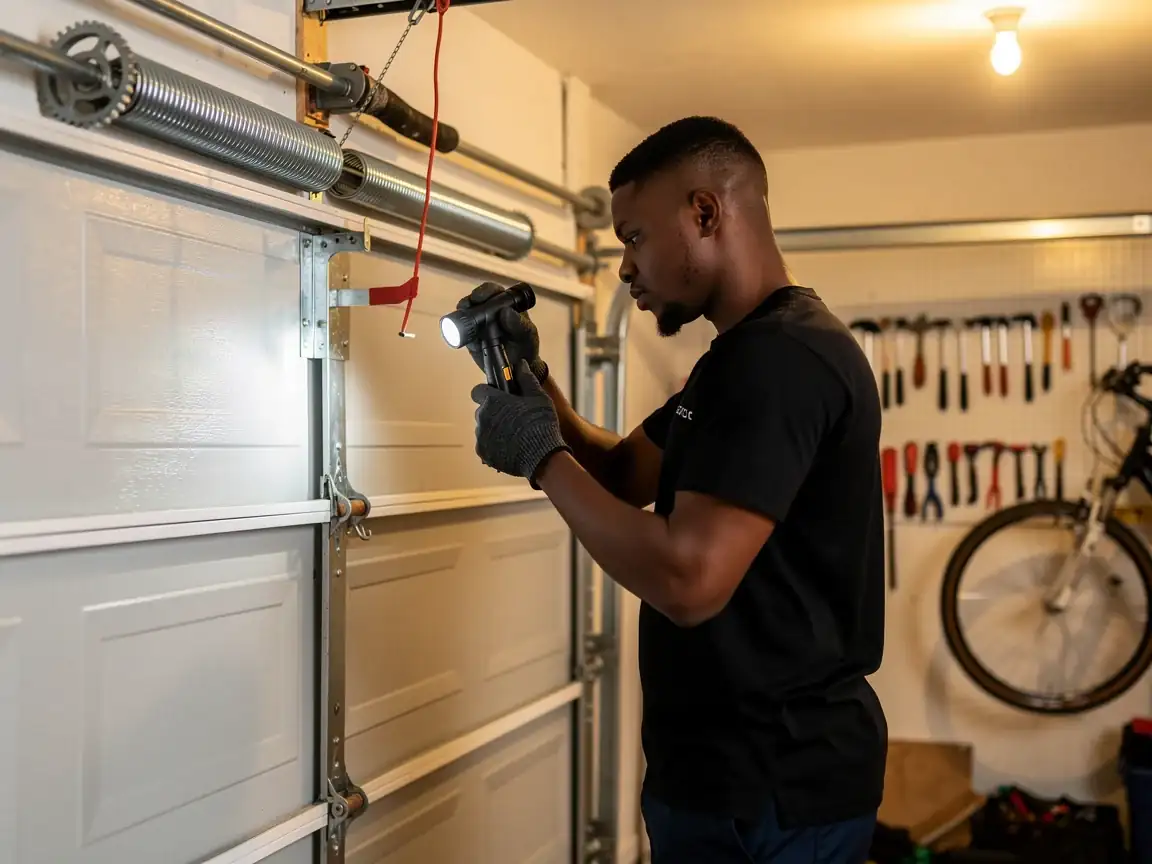
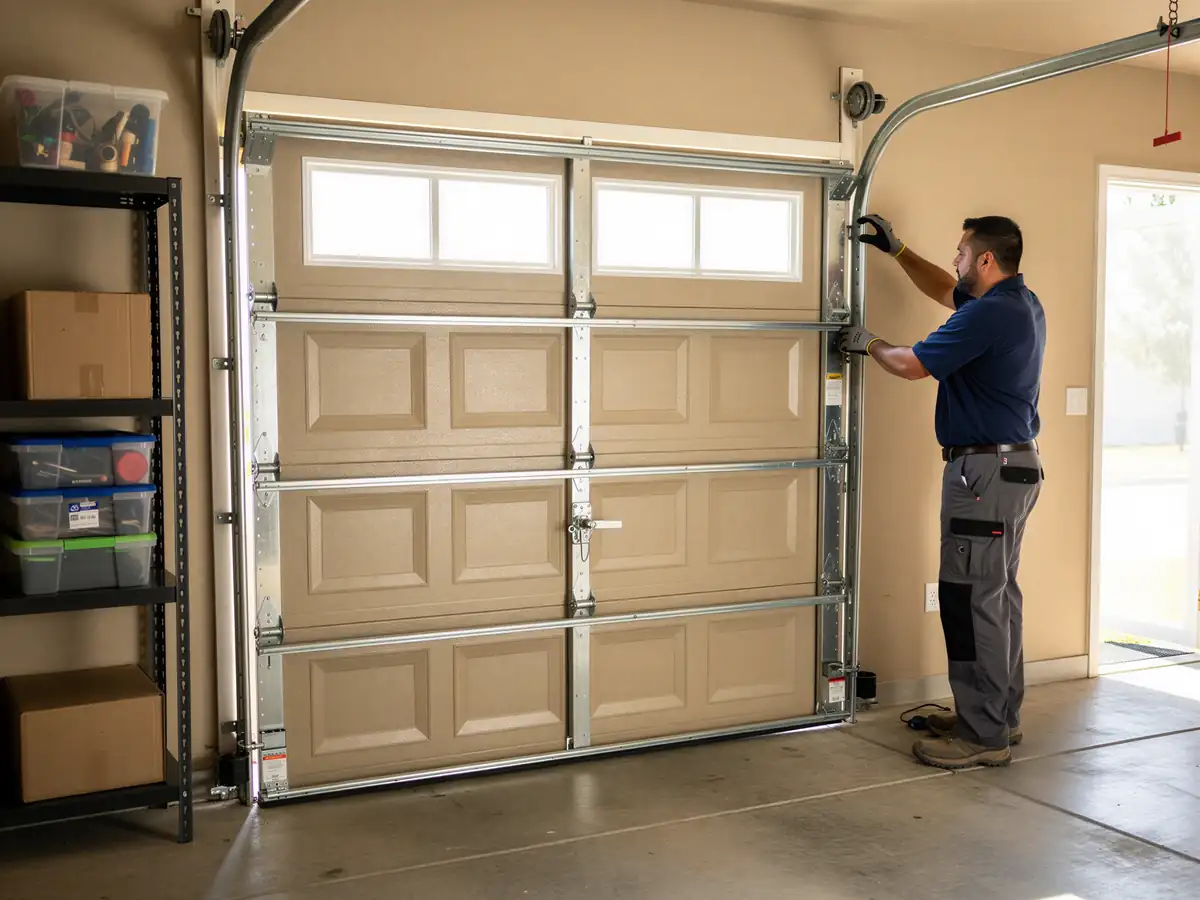
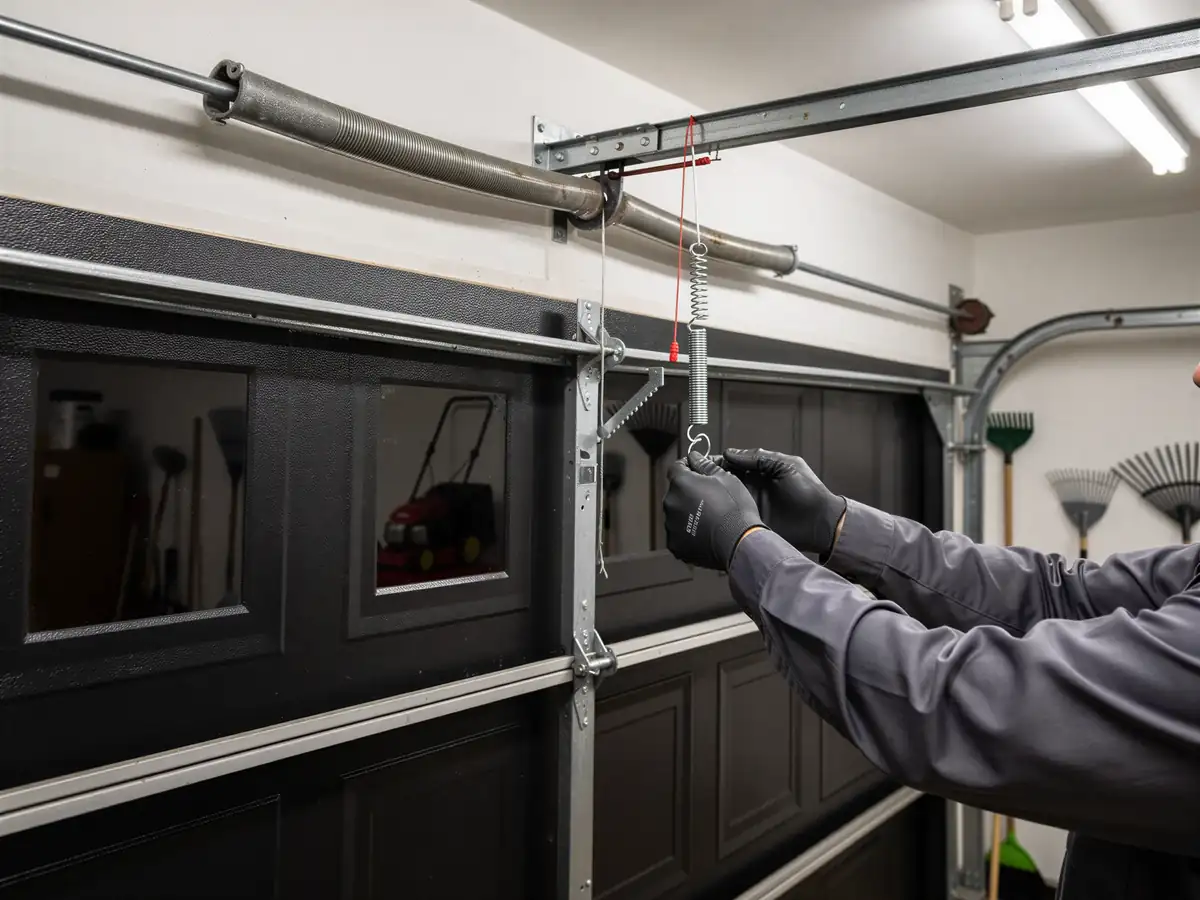
Pull the release cord, put the door in neutral, and lift it by hand. On original 1950s-era hardware this is still the single best diagnostic there is, because it tells you whether the springs are doing their job before you ever involve the opener motor. The door should lift with one hand and stay roughly where you put it. If it drops like dead weight, the springs have lost tension - age and cold both do this to torsion springs over time, and on a house from this era, the springs are likely original.
While it's up, look at the track where it bolts to the framing. In homes from the 1938-1996 build range, that framing has usually moved a little over the decades - settling, seasonal swelling, the ordinary life of a house - and track brackets that were square when installed aren't always square now. A grinding or scraping sound, as opposed to a squeal, often means the roller is fighting a track that's shifted out of true rather than a roller that's simply dry.
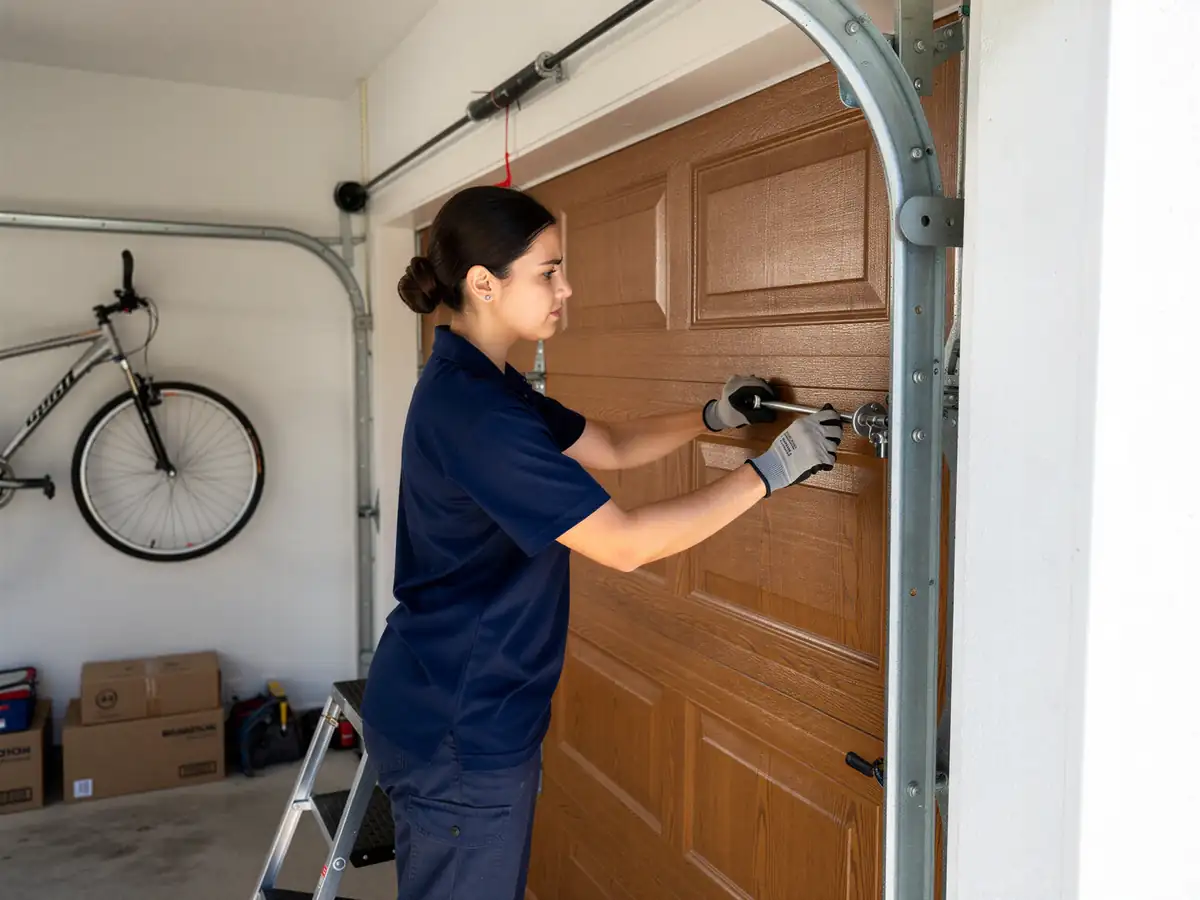
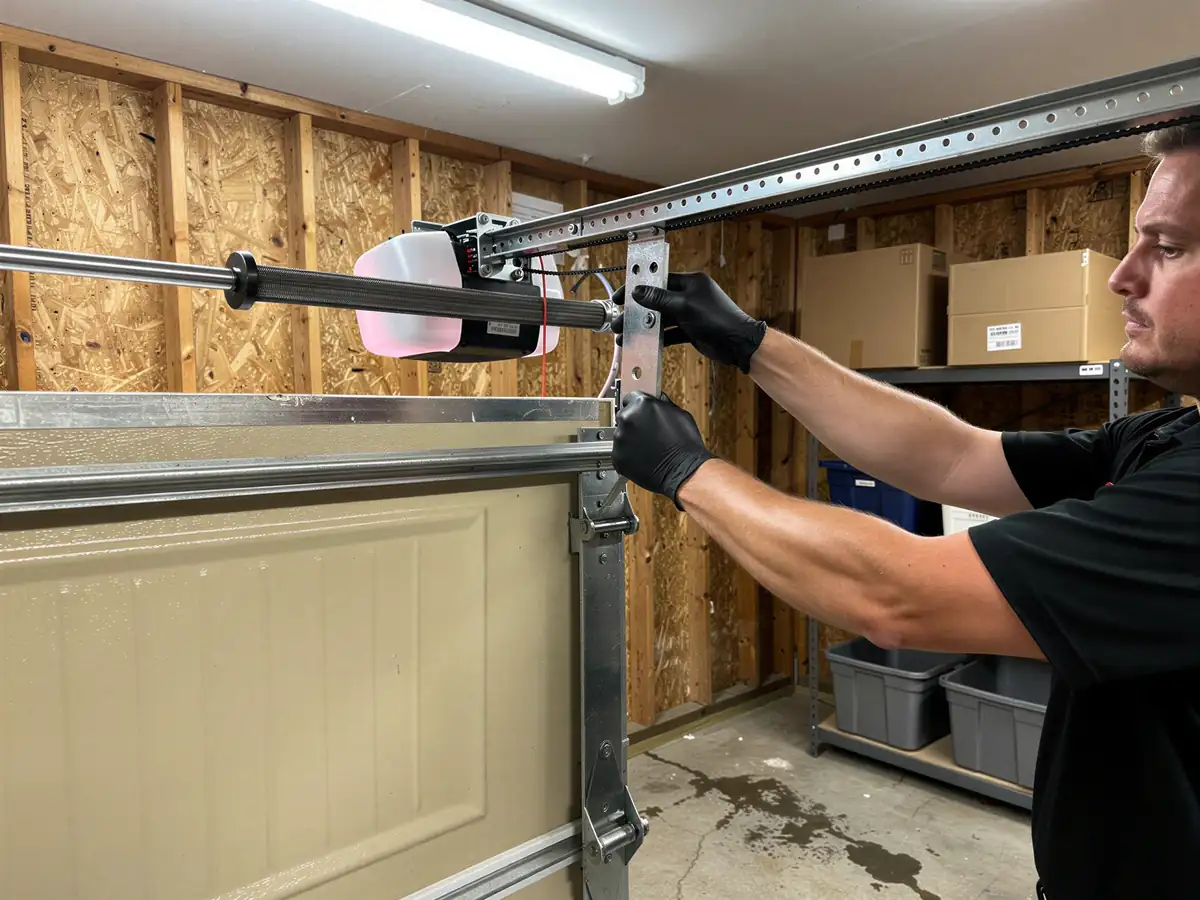
We won't tell you to disconnect torsion springs yourself. That part of the job is dangerous and it's also not where a DIY check should go - eyes and ears only, hands only on the parts that aren't under load.
The Seasonal Bit
The loudest complaints come in two windows: the first hard cold snap and the first real thaw. Cold tightens metal and thickens lubricant, which is when you hear the high squeal. Thaw brings moisture back into any rust that formed over the winter, which is when you start hearing a lower, gritty grind as rollers work against pitted track.
Given that most of the area's housing predates 1960, a huge share of doors in Newark are going through this cycle on hardware that's never been swapped, only serviced. That's not automatically a problem - steel built in the 1940s and 50s was often heavier gauge than what goes into a door today - but it does mean the fasteners, hinges, and track brackets have had decades to work loose through exactly this kind of seasonal metal movement.
If a noise shows up right as the weather turns and goes away once things stabilize, that's wear, not failure - annoying, not urgent. If it persists after the weather settles, something actually moved or cracked, and that's the one worth a call.
The Problem
The honest problem is that noise alone doesn't tell you what's loose, worn, or about to let go
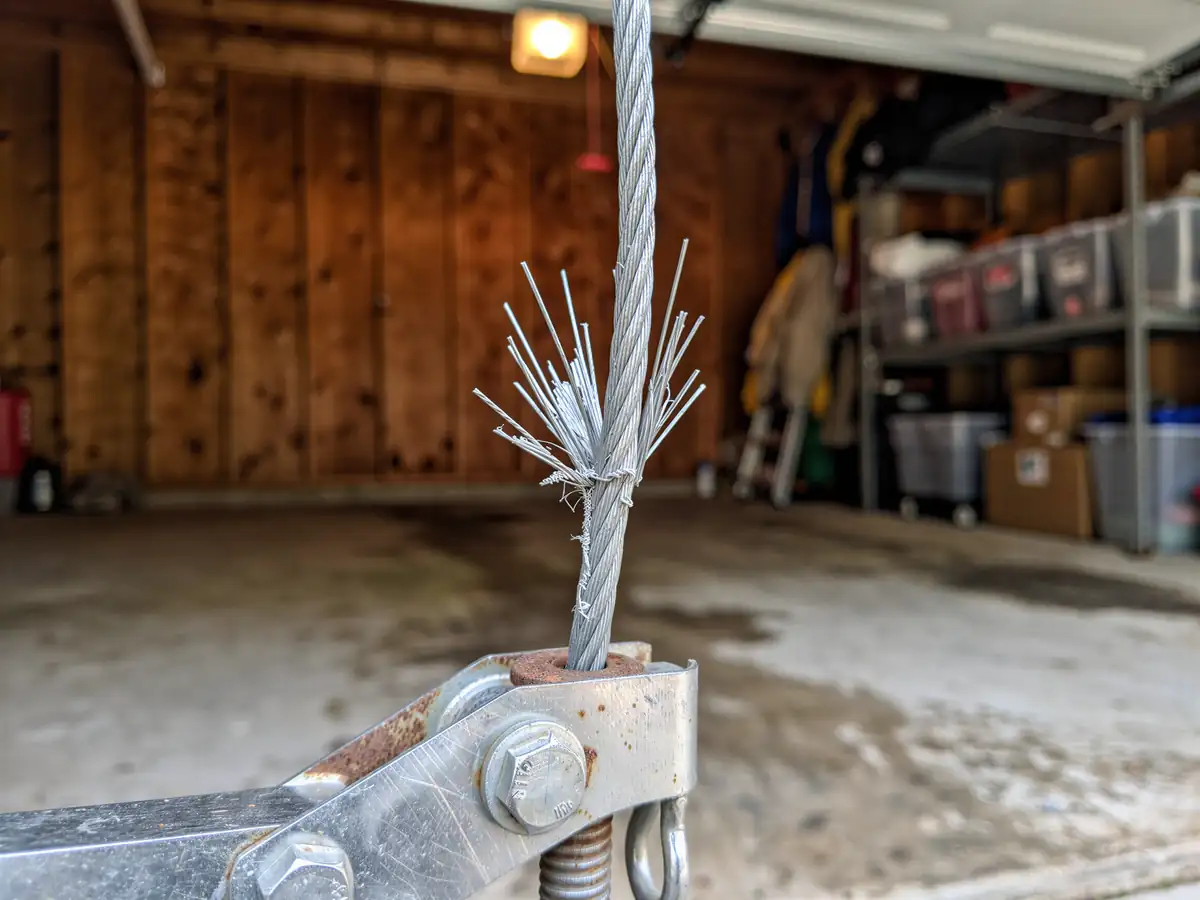
It tells you something is wrong, not what. On a house built in the median year for this area, around 1958, a grinding sound could be a dry hinge, a bent track, a worn roller, or a spring losing temper, and three of those are a ten-minute fix while one of them can put a sixty-pound door through someone's hand.
We'll say plainly what we don't do: we don't guess over the phone
A description of a sound tells us roughly what to expect, not what to quote, and anyone who gives you a firm price before seeing the door is guessing too.
We also won't push replacement on a door that's just loud
Plenty of original hardware in this area's older housing stock is sound underneath the noise - it needs lubrication, a bracket tightened, a roller swapped, not a new door. Replacement makes sense when the springs are shot and the track is pitted past saving, not just because a door is old enough to be noisy.