What the Weather Here Does to It
Newark sits in a climate band classed as cold and severe
And that matters more to a garage door spring than most people think. Steel contracts when it's cold, and a torsion spring that's already fatigued from years of cycling gets a lot less forgiving once the metal tightens up in a hard freeze. The spring doesn't know it's supposed to last one more winter - it just reaches its breaking point on whichever morning the temperature drop finishes the job the last ten thousand door cycles started.
This isn't an abstract risk in a city where most of the housing went up between 1938 and 1996
With a median build year of 1958. A door and spring system installed, or even replaced once, on a house from that era is old by any standard, and cold is what tends to finish off hardware that's already near the end. We see it most on the first real cold snap of the season, not in the deep middle of winter when everything's already adjusted - it's the sudden swing that does it.
One honest limitation: we can't tell you over the phone whether a spring is about to go
Fatigue in torsion springs doesn't show up as a visible crack until it's already too late. The only real indicators are age, cycle count, and how the door's been behaving - which is why the check below is worth five minutes.
Checking It Yourself
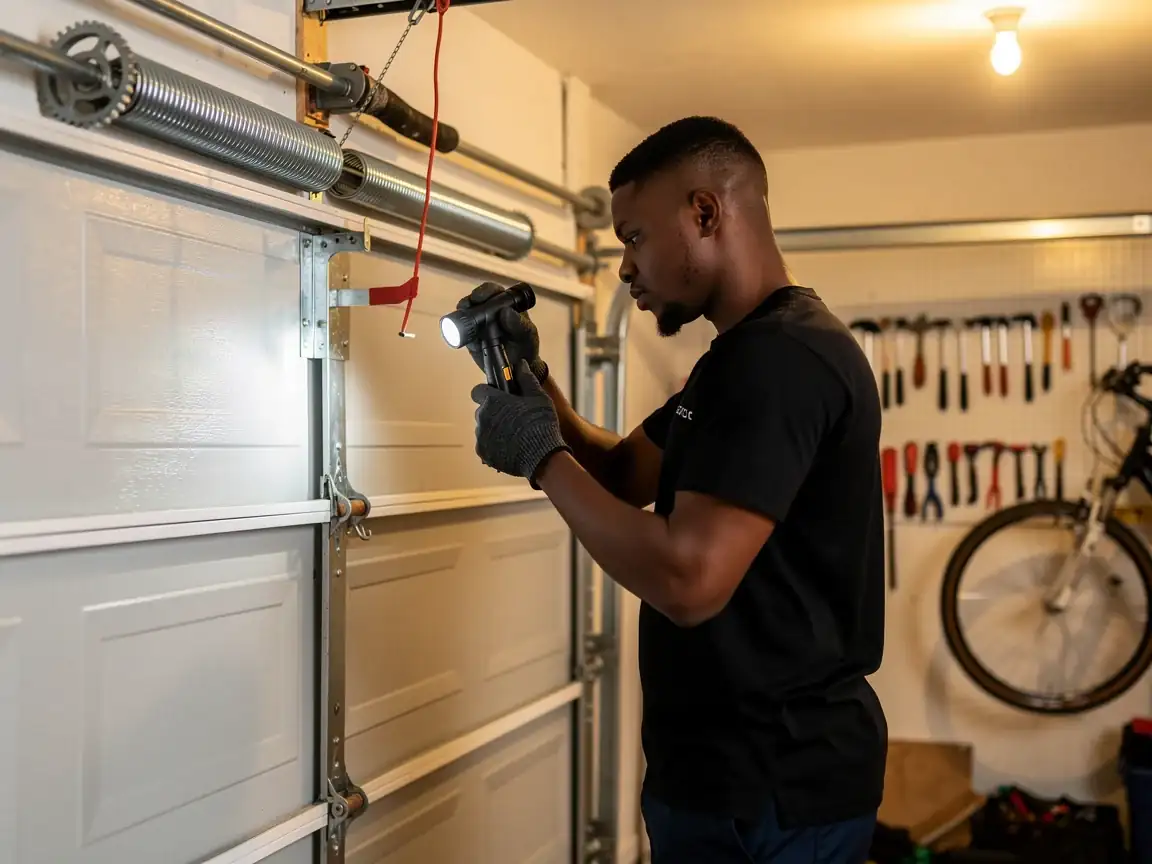
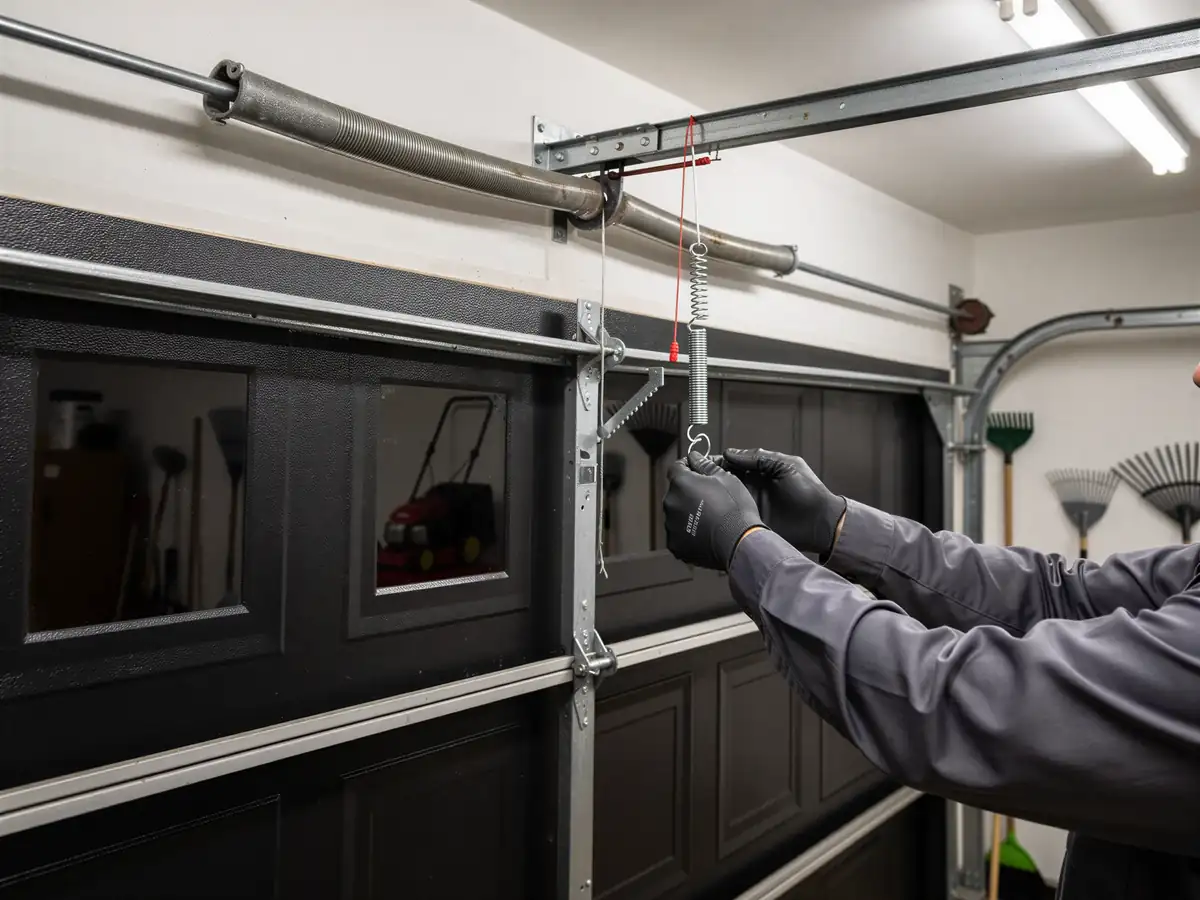
Stand inside the garage with the door down and look at the torsion spring above the door - it's the coiled spring on the shaft, not the long tension cables running down the sides. Look for a visible gap in the coil, which means it's already separated and the door is one lift away from a hard stop. That's not a maintenance item anymore; that's a call.
If the coil looks intact, open the door by hand (disconnect the opener first) and feel the weight. A balanced door should stay roughly level on its own, around waist height, without you holding it. If it drops or shoots up, the spring's lost tension, and cold weather will accelerate whatever's left of its life.
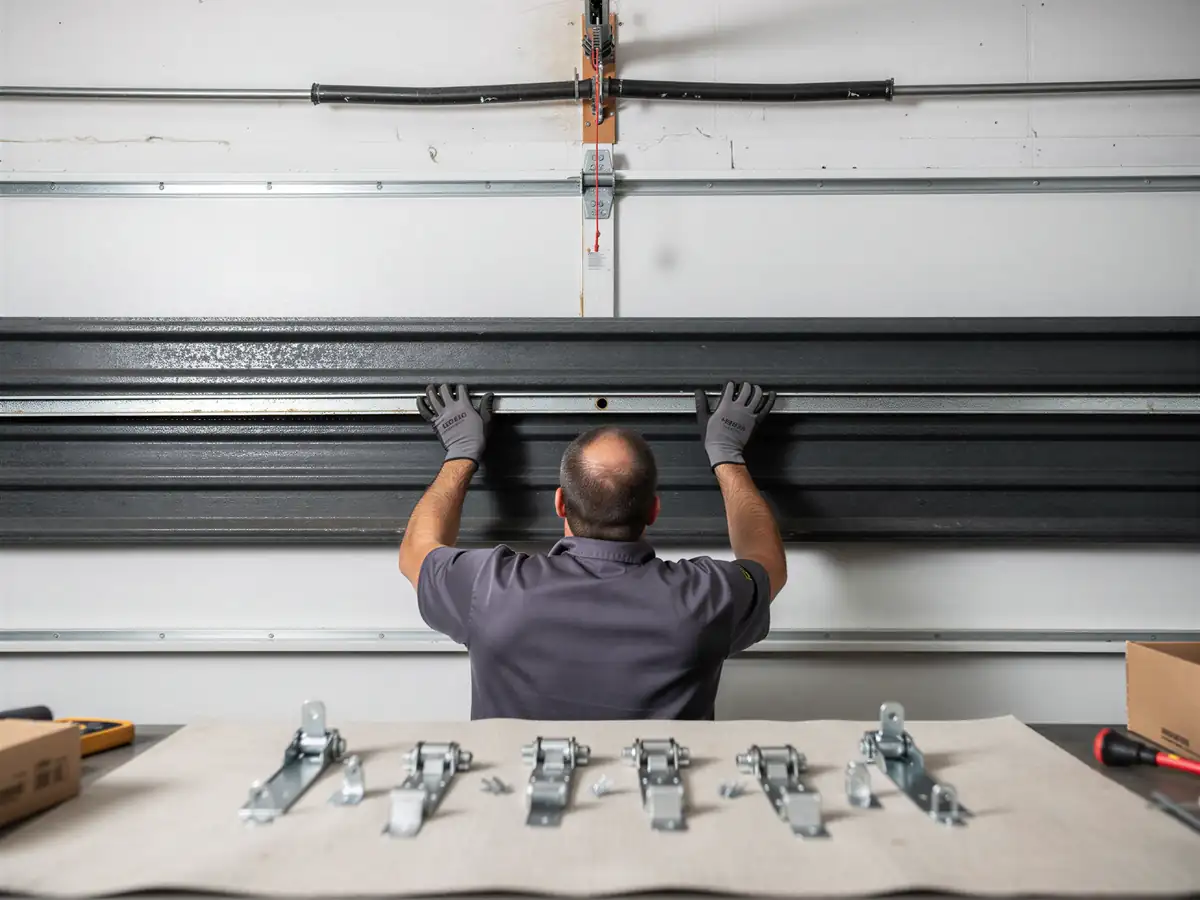
Given that most housing here predates 1960, a lot of these systems have had at least one spring replacement already, sometimes with hardware that doesn't match the original side-mounted torsion setup these older houses were built with. If your door looks like it's been patched before, that's worth mentioning when you call, not something to diagnose yourself.
The Seasonal Bit
The failures cluster. We don't get a steady trickle of broken springs through the year - we get a run of them whenever the temperature drops hard and stays down, because that's when the steel is least forgiving and when the door's getting used the most (nobody wants to stand outside fighting with a stuck door in severe cold, so people lean on the opener harder than they should).
Houses built in the 1938-to-1996 window that makes up most of Newark's stock are now old enough that original springs, if they're still in, are well past a normal service life regardless of the weather. Cold doesn't create the problem. It exposes it on a schedule.
There's no way to predict the exact week it'll happen for your specific door - we don't have data at that resolution and wouldn't pretend to. What we can say is that the pattern holds across the pre-1960 housing that dominates this area, and if your spring is original or unknown-age, the first hard freeze is a reasonable time to have it looked at rather than waited out.
The Problem
The core issue is a mismatch between how old the hardware is and how hard the cold is on it
A spring rated for a certain number of cycles doesn't get an exception because it's January - if anything it gets the opposite. And in a city where the median home was built in 1958, there are a lot of doors running on hardware nobody's touched since a prior owner had it swapped, if ever.
We're not going to tell you every older door needs full replacement
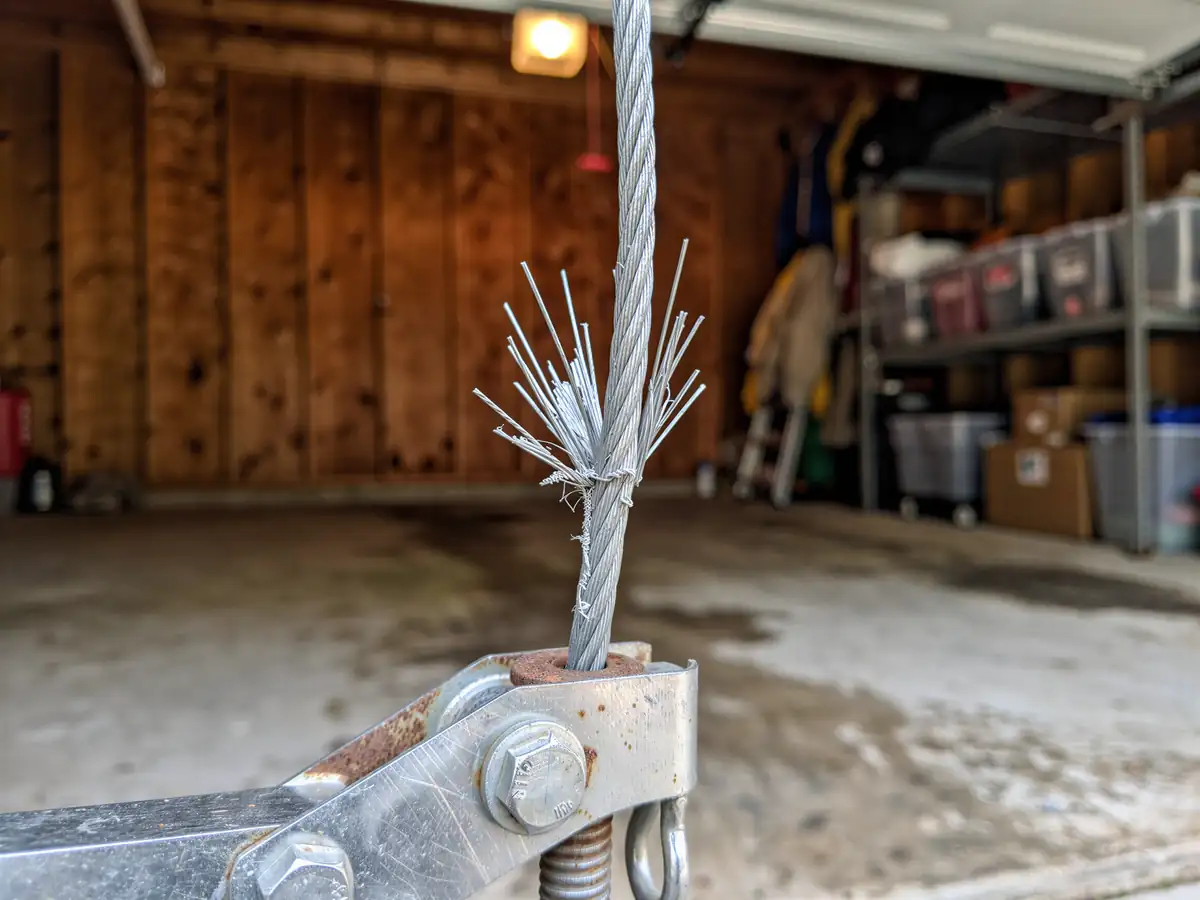
Plenty of torsion systems on houses from this era are fine with just a spring swap, and that's a far cheaper call than replacing the whole door and opener. But if the spring's already gone, the cables have frayed from running unbalanced, or the shaft bearings show wear from years of cold-stiffened steel grinding against them, a spring-only fix is just delaying the next breakdown by a season.
We work across Newark and the surrounding area
Including neighborhoods like the Central Business District, plus nearby towns such as Harrison, Irvington, and Kearny.