Why This Fails Locally
Elizabeth sits about four miles from Newark
Which is close enough that a cable call here doesn't turn into a half-day trip the way some stops further out in the service area do. That matters on a cable job specifically, because once a cable lets go, the opposite side of the door is often still under spring tension and the door can sit crooked on the track until someone gets eyes on it.
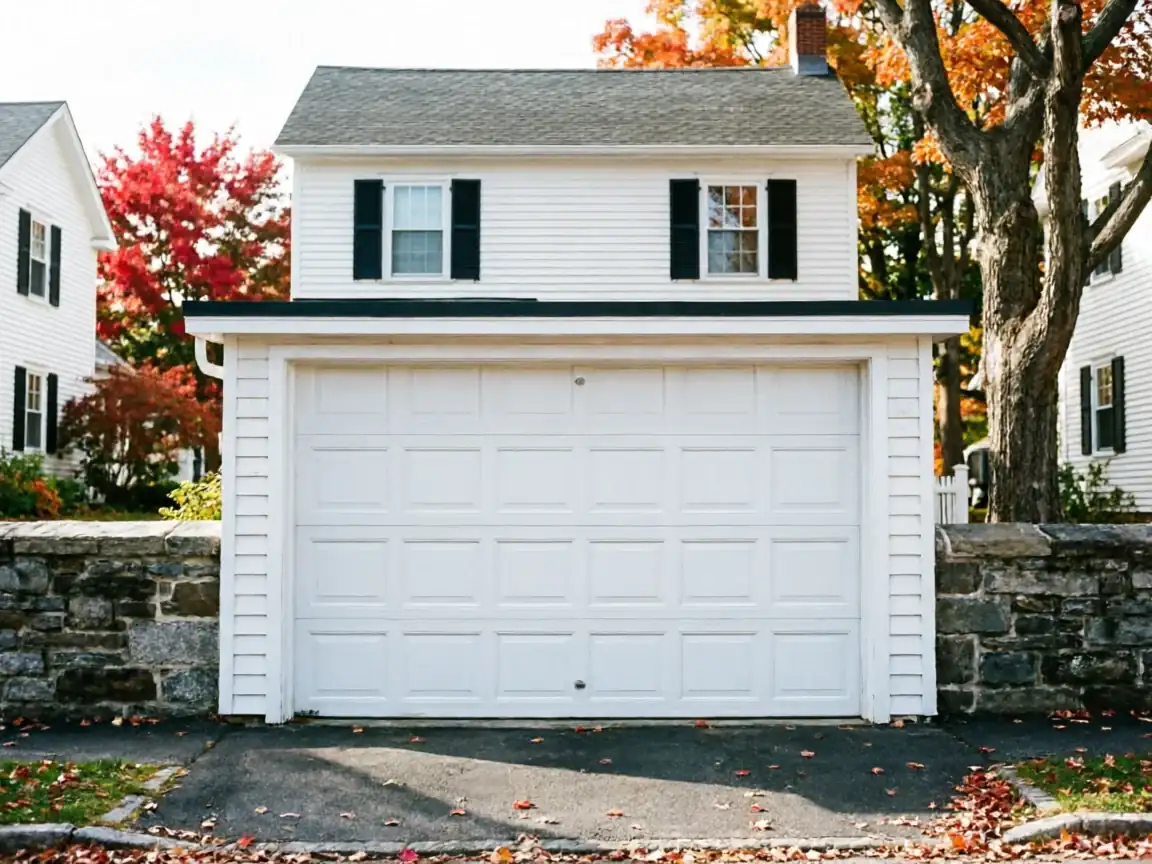
The houses doing most of the calling are older
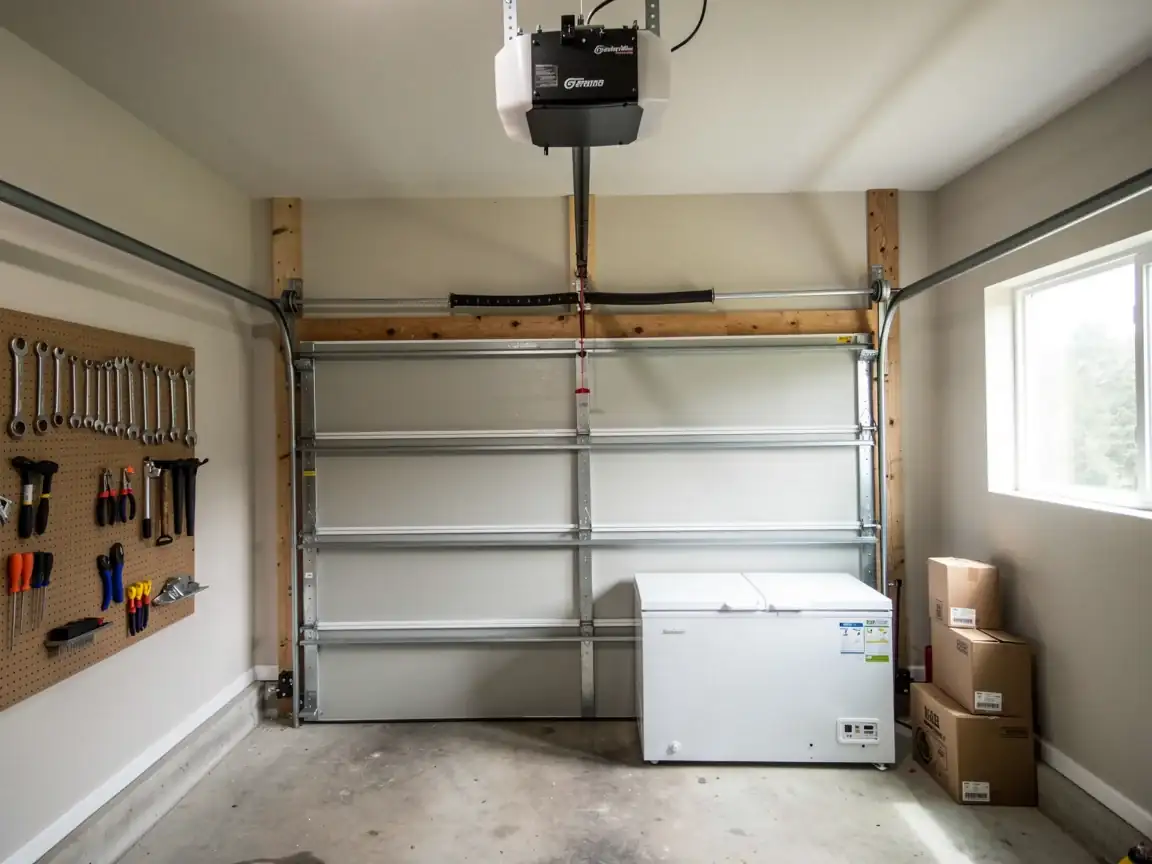
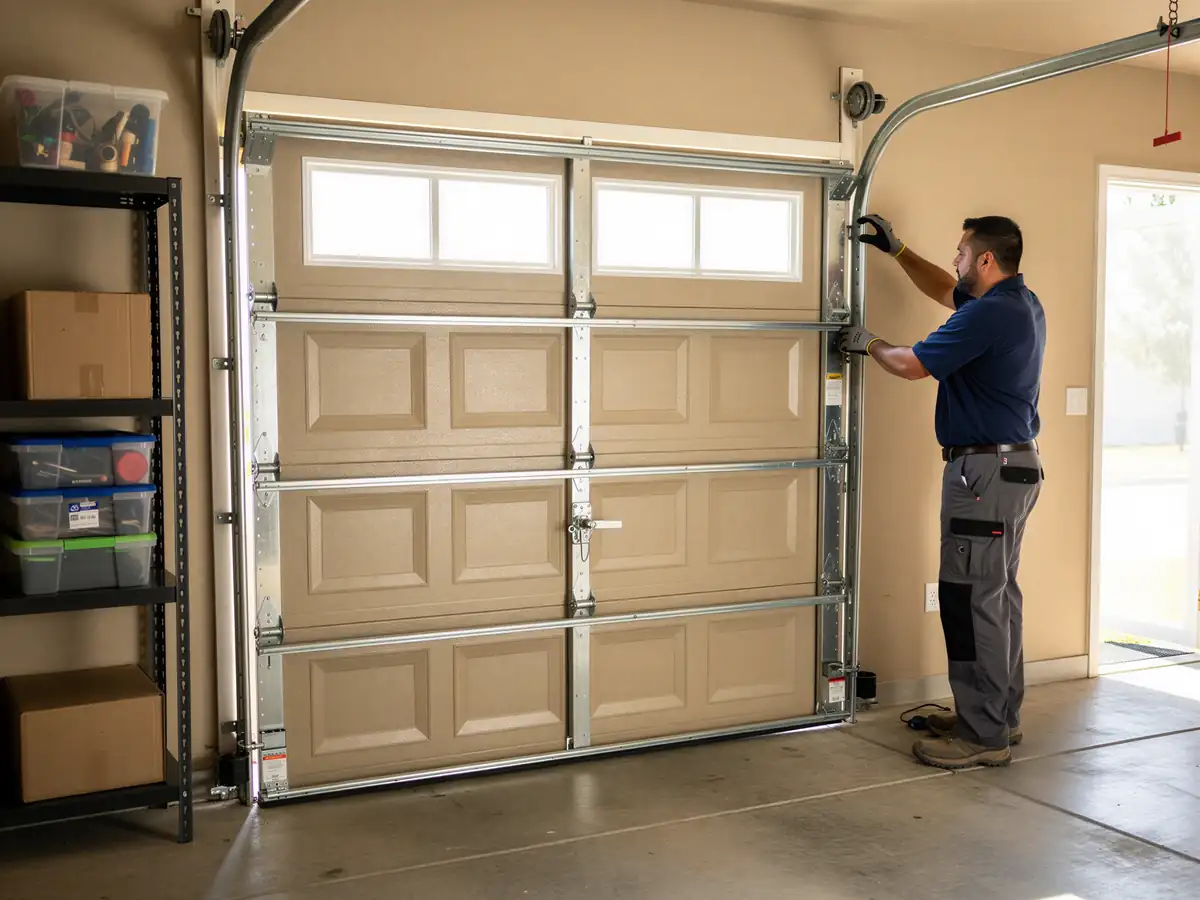
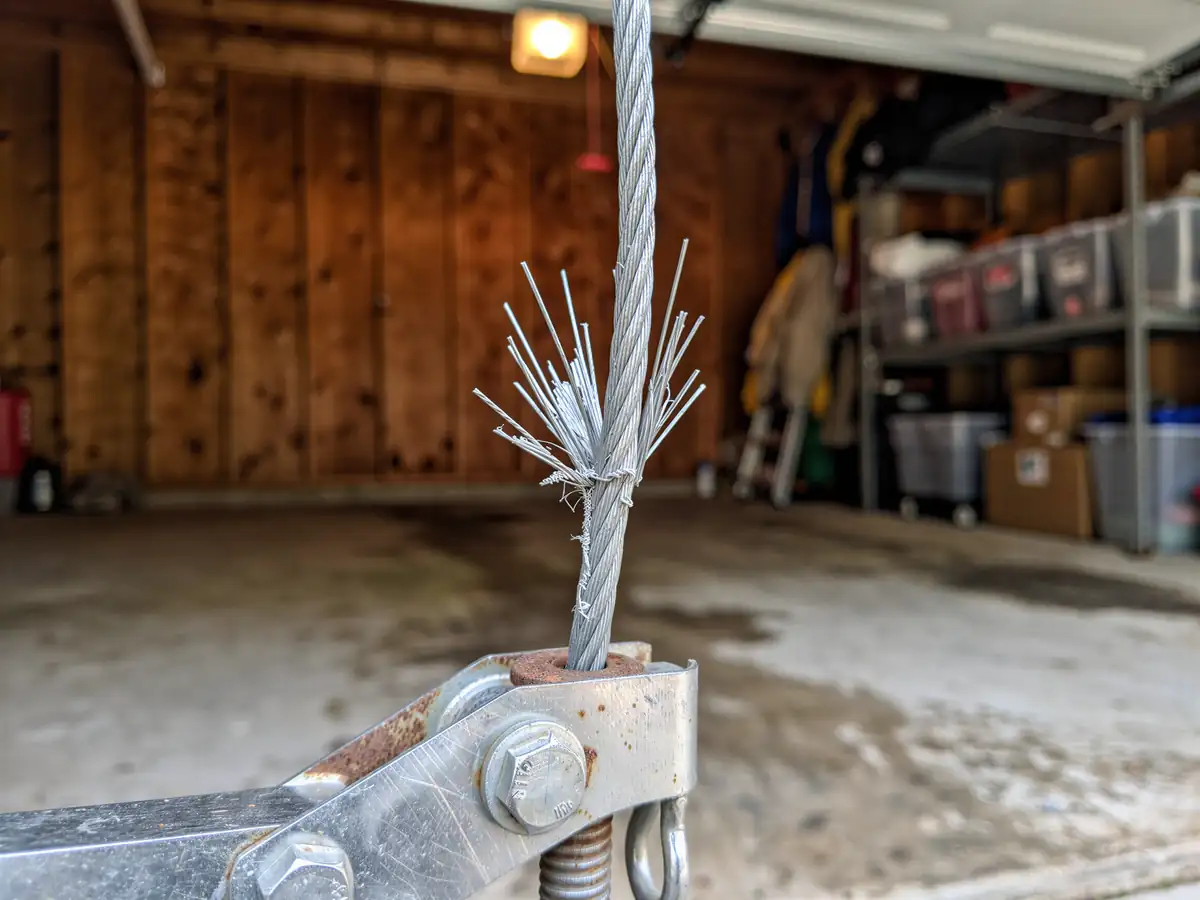
Elizabeth's housing stock runs through the same postwar build window that covers the broader area - a lot of it going up around 1955, inside the 1938 to 1996 range and the mostly-pre-1960 pattern we see across the 156 named areas we track. Doors from that era were set up with steel aircraft cable running off a drum at the top corner of the track, and decades of use wears a groove into that cable at the same spots every time: where it rides the drum, and where it bends over the bottom bracket.
Add a cold-climate winter to steel cable that's already frayed at one of those points
And the metal gets brittle right where it's thinnest. That's usually the morning it finally snaps, not during a mild stretch.
How We Fix It
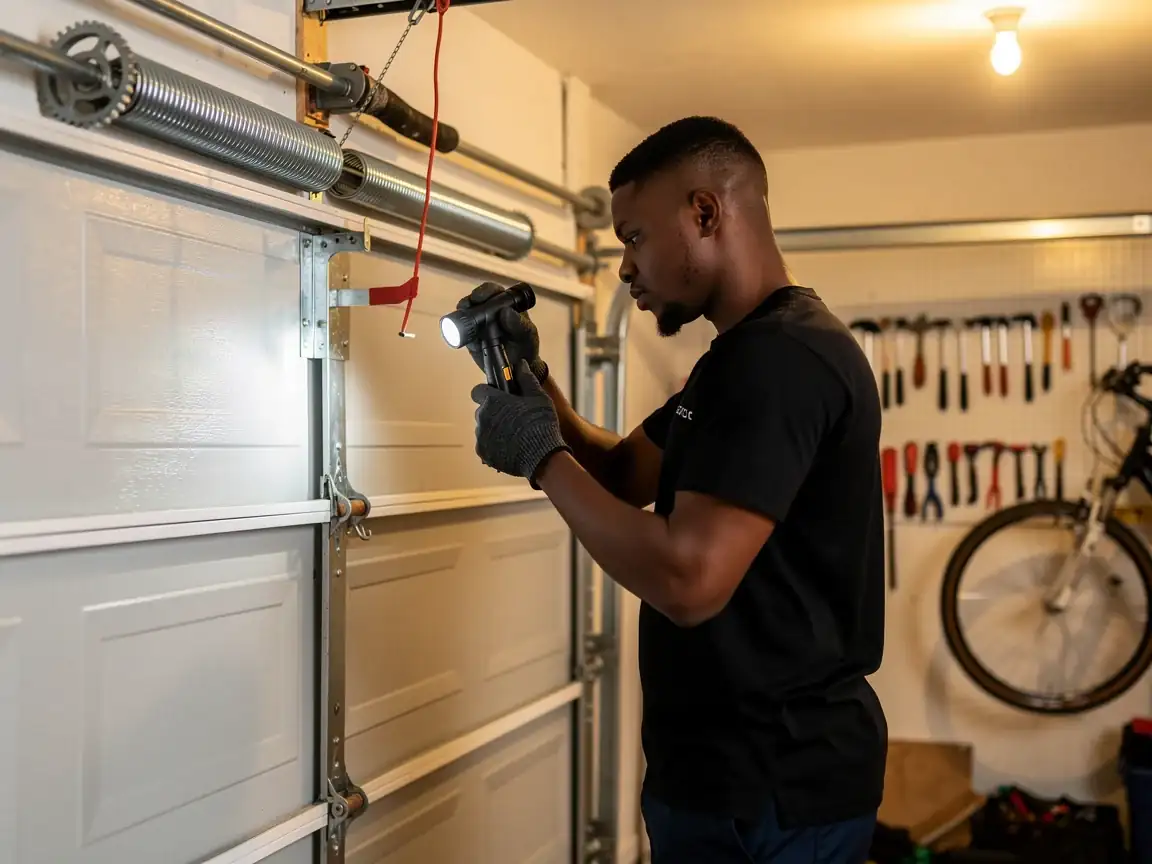
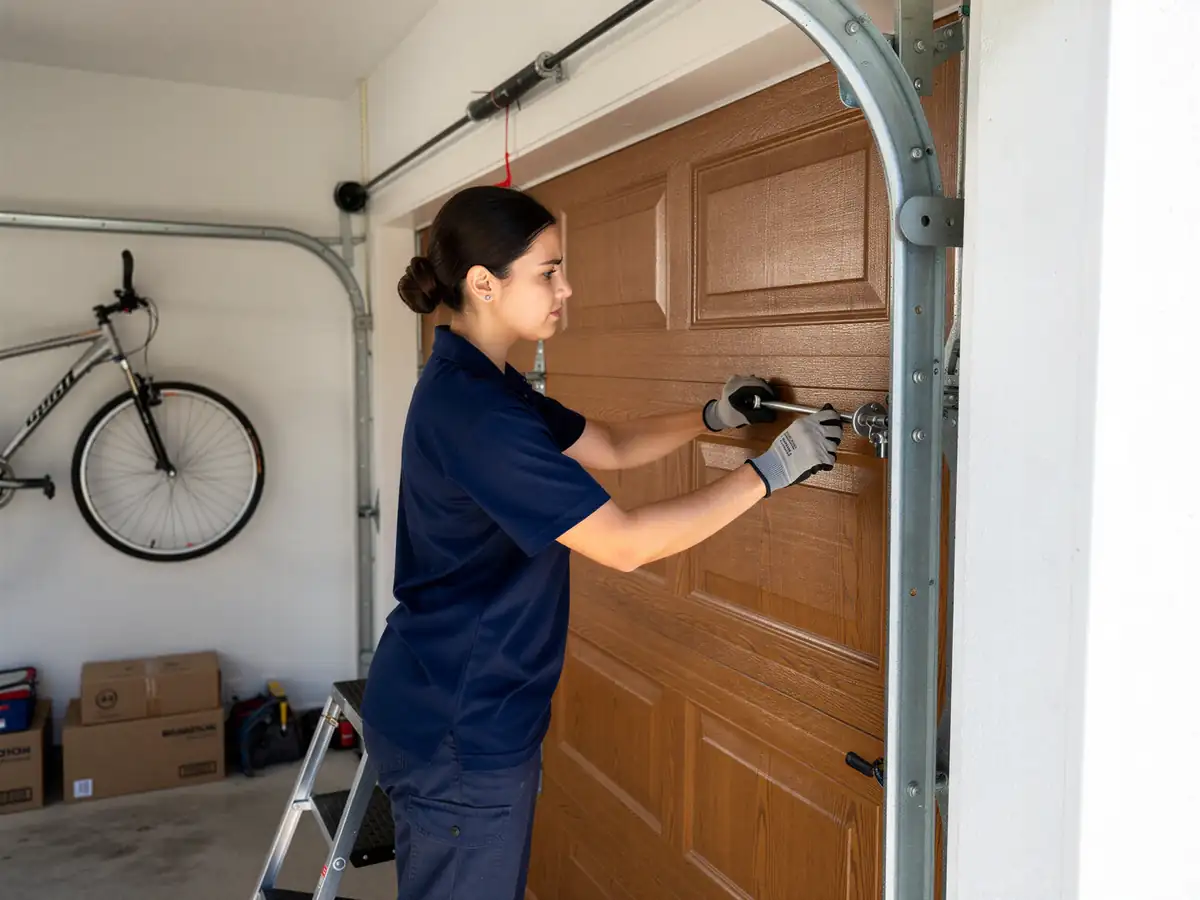
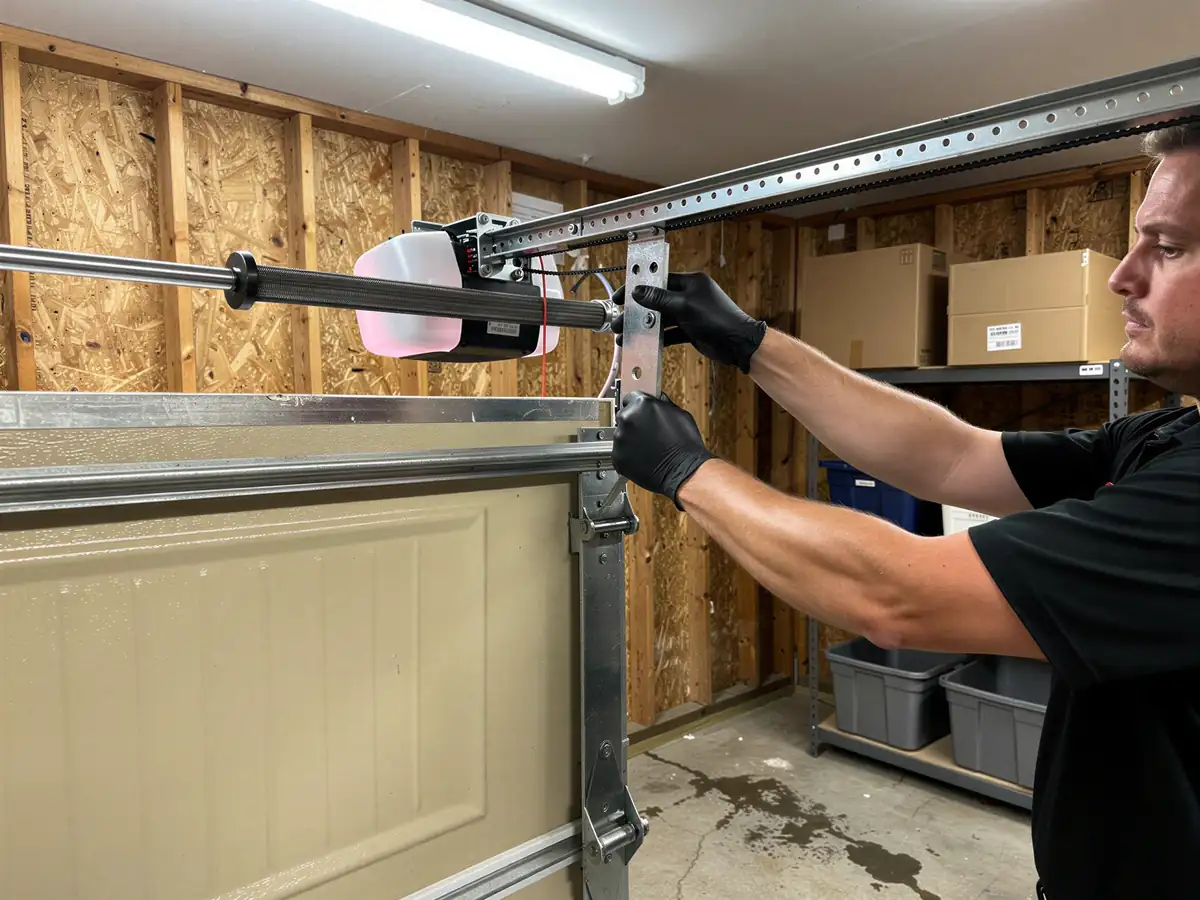
First thing on site is securing the door - clamping the track or blocking the door open so nothing drops while we work, since a door with one cable gone is unpredictable even closed. We check both cables, not just the one that broke, because if one side frayed through on age and use, the other side is usually close behind on the same door.
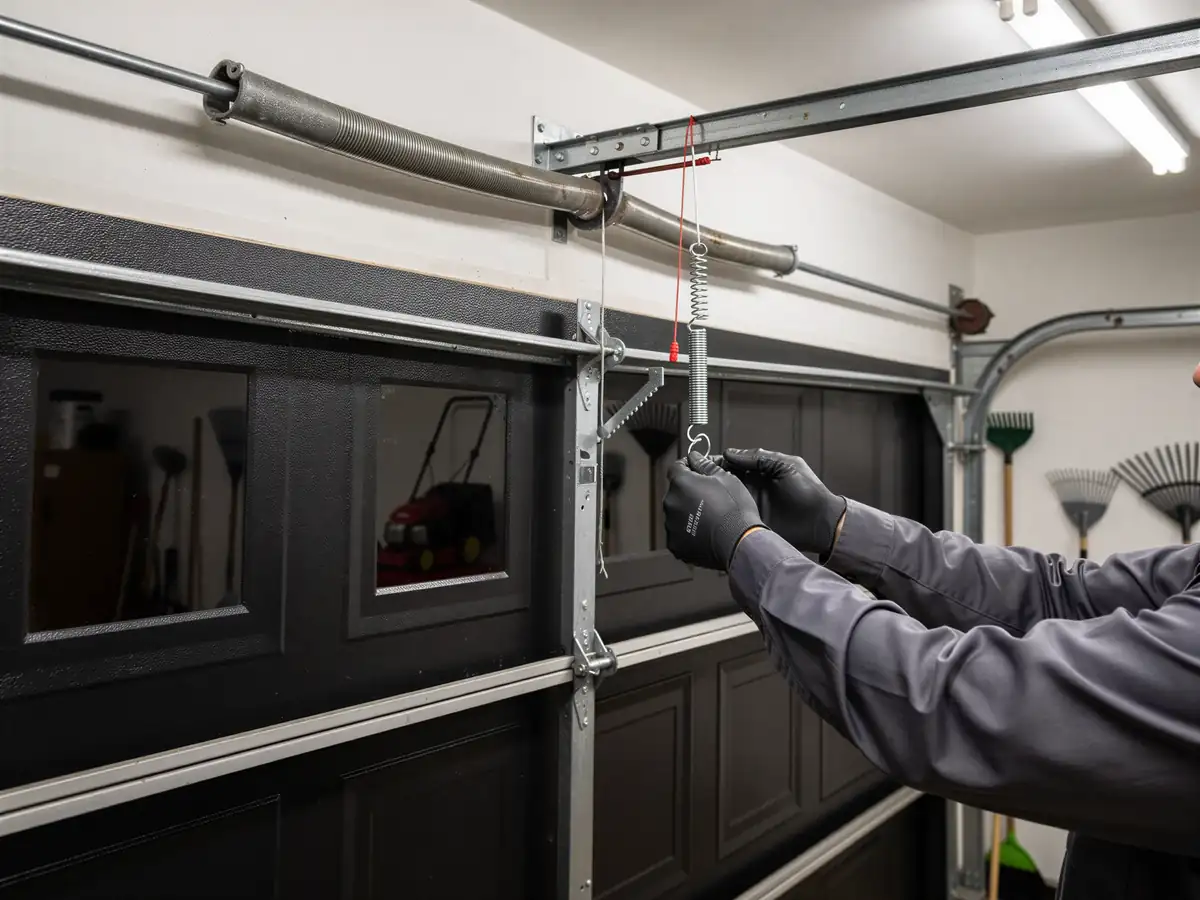
If the drum, the bottom bracket, or the cable itself is scored or bent, we replace the worn piece rather than just the cable - a cable alone doesn't last long riding against a damaged drum. We re-tension the door, run it through a full open-close cycle a few times, and check that the door tracks straight and doesn't bind or jerk partway up. If the torsion spring itself looks tired while we're in there, we'll tell you - a cable fix doesn't fix a spring that's on its way out, and the two failing close together isn't rare on a door this age.
We don't push a full door replacement on a cable call unless the track or panels are actually damaged. Most of the time a cable repair is a cable repair.
The Symptom
The most common version: the door drops suddenly on one side, now hangs crooked, or won't move at all because the opener senses something's wrong and stops. Sometimes you'll see the loose cable itself, dangling or bunched at the bottom of the track instead of running taut up to the drum. Other times the first sign is a popping sound, then the door won't lift evenly - one corner drags while the other side moves.
A frayed cable before it fully breaks often shows as a door that shudders or jerks partway through its cycle, or makes a faint zipping noise as the broken strands catch on the drum. If you catch it at that stage, it's a cheaper fix than catching it after the cable parts completely and the door comes down on one side - sometimes hard enough to bend the bottom bracket or crack a panel on an older, brittle door.
Don't keep running the opener once a door is hanging crooked. Running a motor against a door that's stuck on one side strains the opener and the track both.
How Long It Takes
A straight cable swap, once we're on site and the door is secured, is one of the shorter jobs on the truck
There's no winding or unwinding a loaded spring involved the way there is with a torsion spring job. It gets longer if the drum or bottom bracket needs replacing too, or if the door's been running crooked long enough to have knocked the track out of alignment, which has to get corrected before the new cable will sit right.
We're coming from Newark, about four miles off
So the drive itself isn't the long part of the visit on most days. What takes time is making sure both cables and both drums are sound before we leave, not just patching the one that failed. A door with a mismatched cable - new on one side, worn and stretched on the other - tends to pull unevenly and come back as a second call.
Can You Do This Yourself
A cable job looks simple because the part itself is cheap and the fix looks like "replace the wire." The catch is that the cable is holding back a loaded spring, and on a lot of Elizabeth's older doors that spring is original equipment from the same build era as the house - decades of use, no service history, and no way to tell how much tension is actually left in it just by looking.
If a cable slips off a drum while someone's hand is near the track, or a spring lets go while the door's only partly secured, the door can drop fast and hard. That's the main reason we don't recommend this as a weekend fix, even for someone comfortable with basic tools.
What you can safely check yourself: whether the cable is visibly frayed or off the drum, whether the door is sitting crooked, and whether the opener is straining against it. If any of that's true, leave the door down, unplug the opener, and don't force it.
Parts We Carry
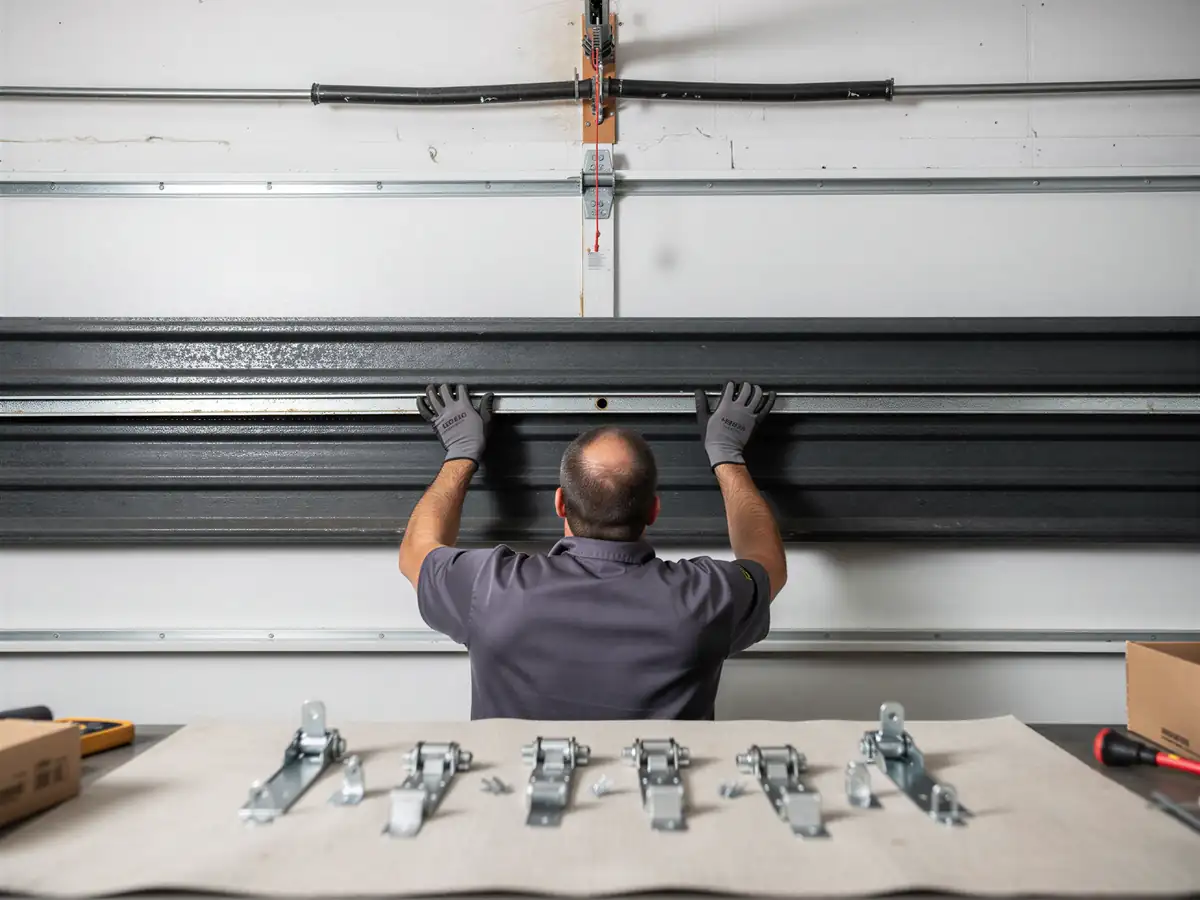
We carry standard galvanized and aircraft-style cable in the common residential gauges used on torsion and extension systems, along with matching drums and bottom brackets, since a cable rarely fails without one of those showing wear too. For the postwar doors common around Elizabeth, the original cable size and drum style is usually a known, stocked match rather than a special order.
Where it gets slower is unusual setups - a door converted to a non-standard track height, or hardware that's been swapped piecemeal over the years so the drum and cable don't match what's typical for a door that age. In those cases we may need to order the exact part rather than pull it off the truck, which can add a day or two. We'll tell you up front if that's the situation rather than force a part that doesn't fit.