Why This Fails Locally
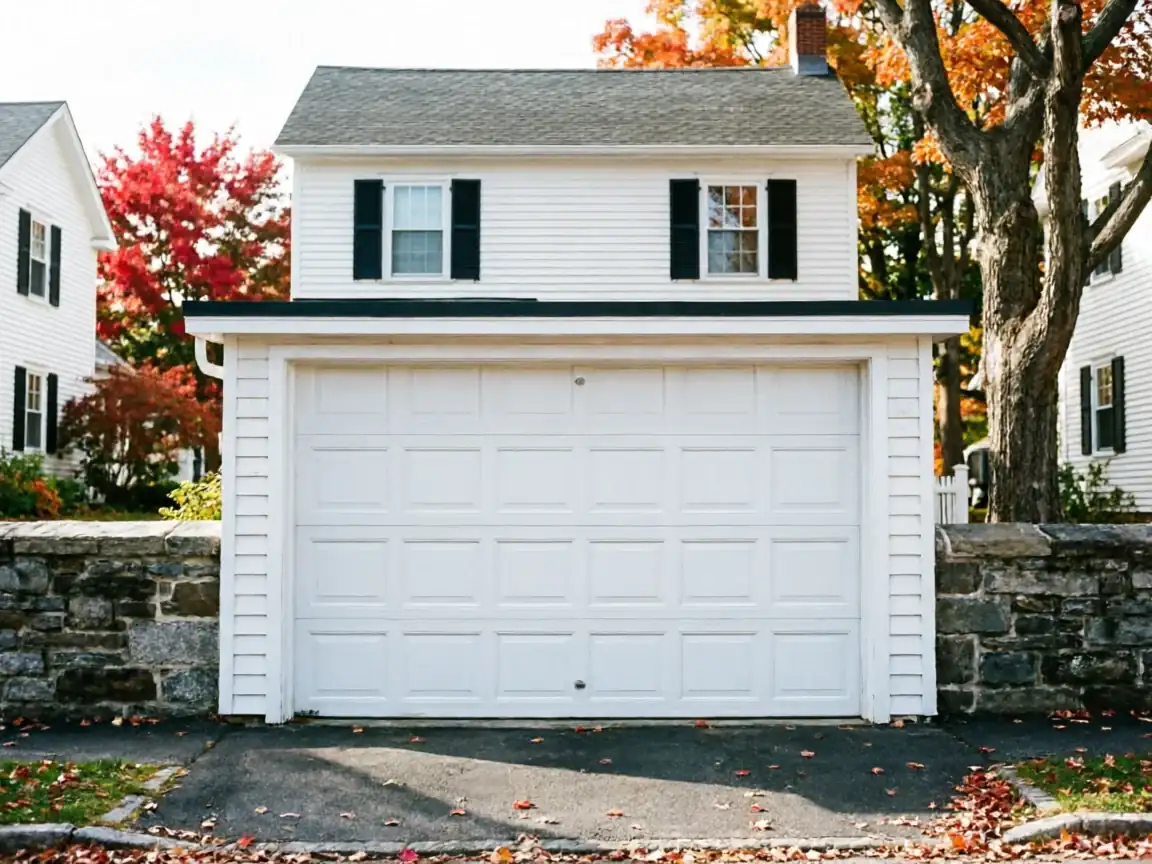
Most houses in Elizabeth went up around 1955
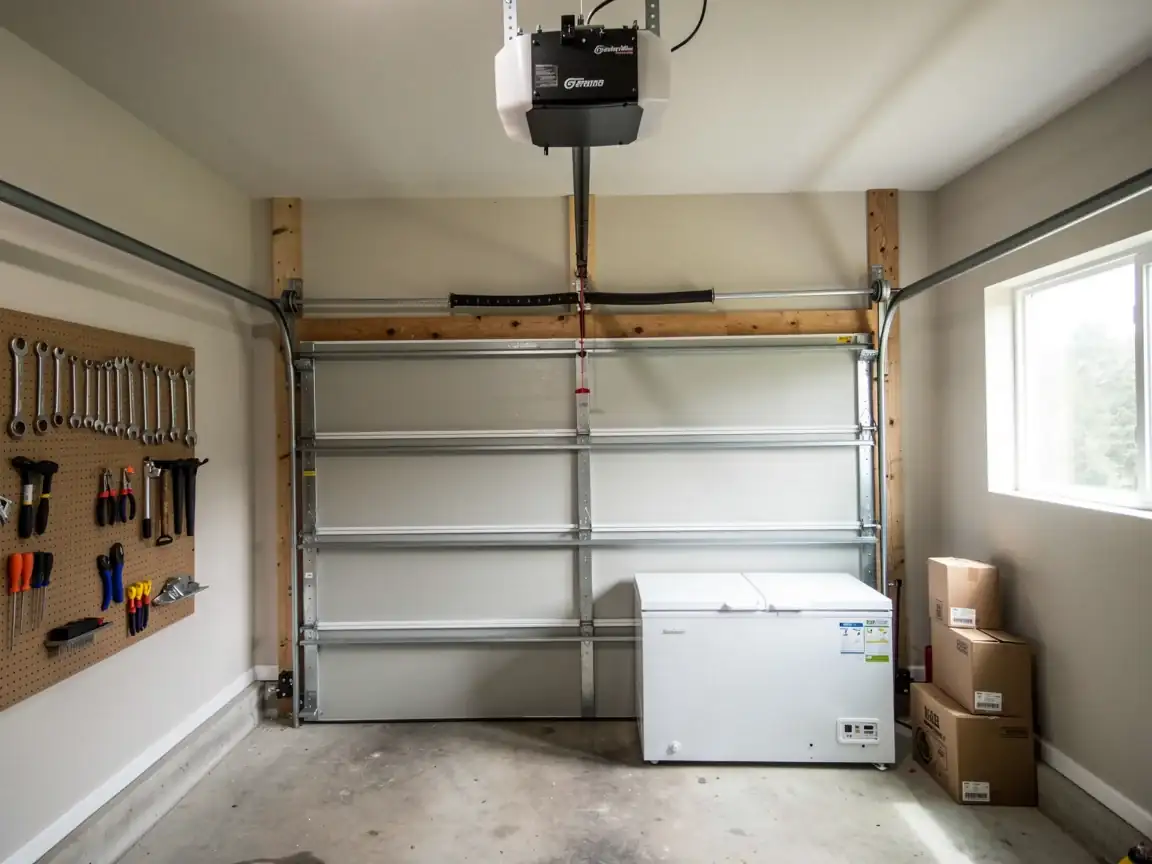
And a lot of that original garage hardware has never been swapped out. That means side-mounted torsion springs rated for a door weight nobody makes anymore, steel tracks bent from decades of cars clipping them, and openers bolted to framing that's shifted a half-inch since Eisenhower was in office. When a spring finally lets go on one of these doors, it's not a surprise failure - it's a part that's been counting down since installation.
The pattern we see on these calls
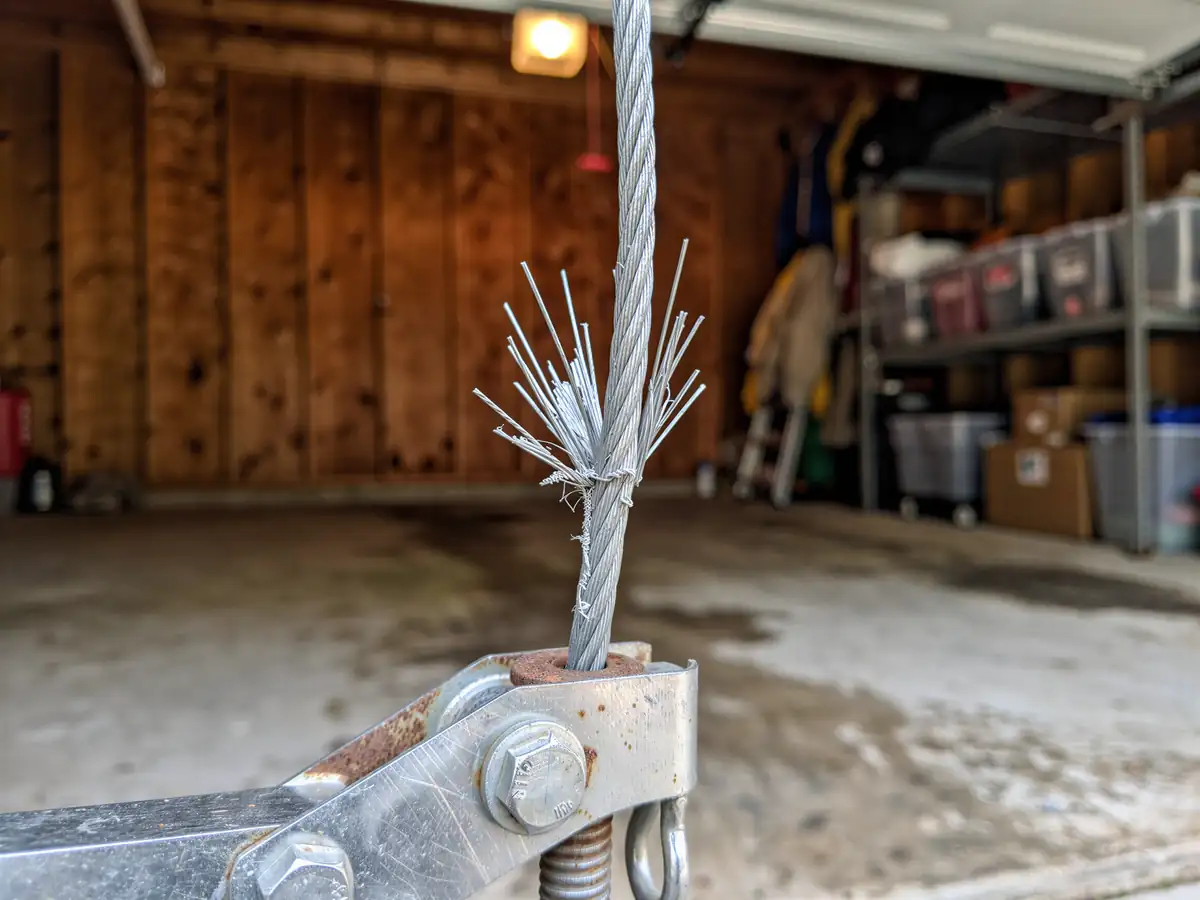
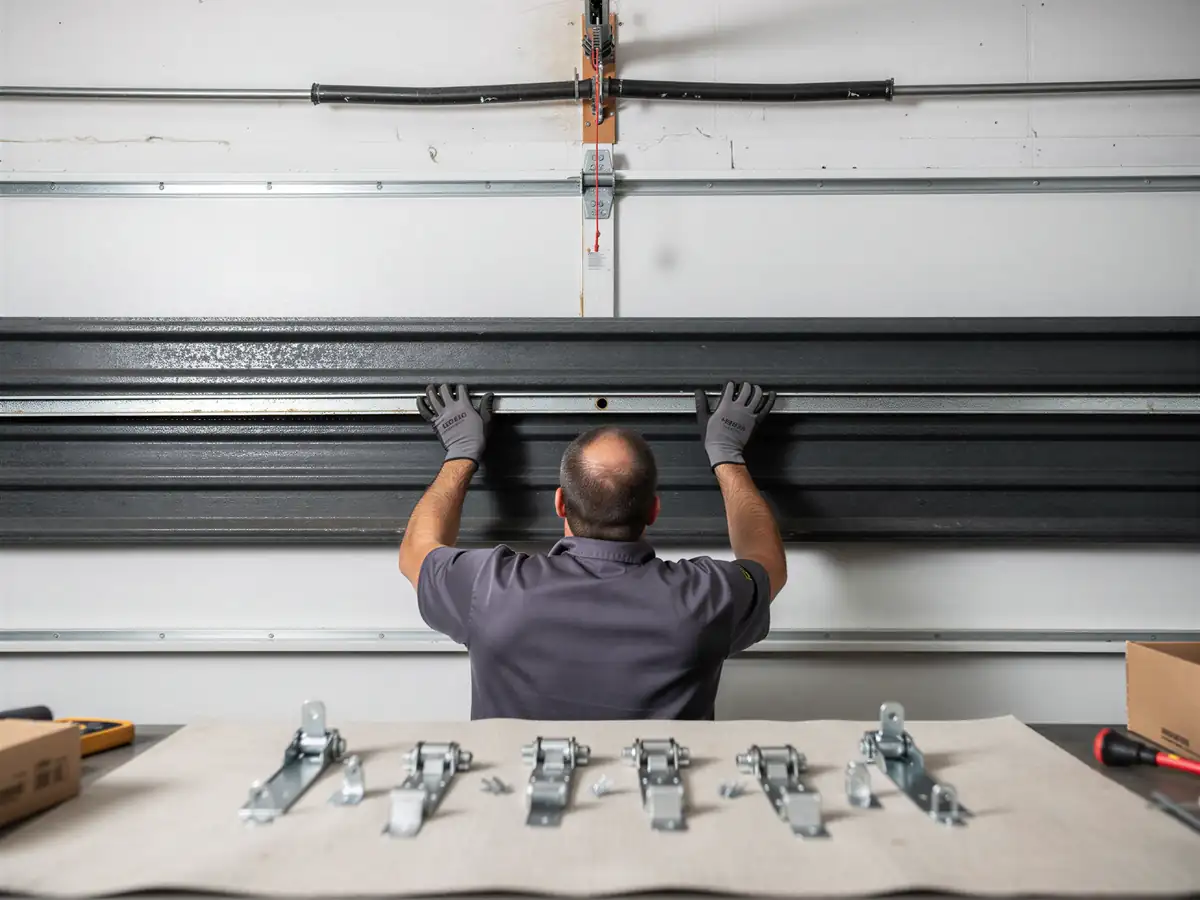
A cable frayed at the drum because the original cable was never rated for the door's current counterweight, or a panel that's been reinforced with wood blocking from a repair decades back and is now pulling away from the roller track. These aren't universal garage door problems. They're what you get when a town's housing stock is this close to 70 years old and the hardware inside the door has aged right along with the house around it.
- 70 years
Elizabeth sits about 4 miles from our Newark base
Which puts it well within range for same-visit diagnosis on most jobs - though we're traveling in, not working out of a shop down the street.
- 4 miles
How We Fix It
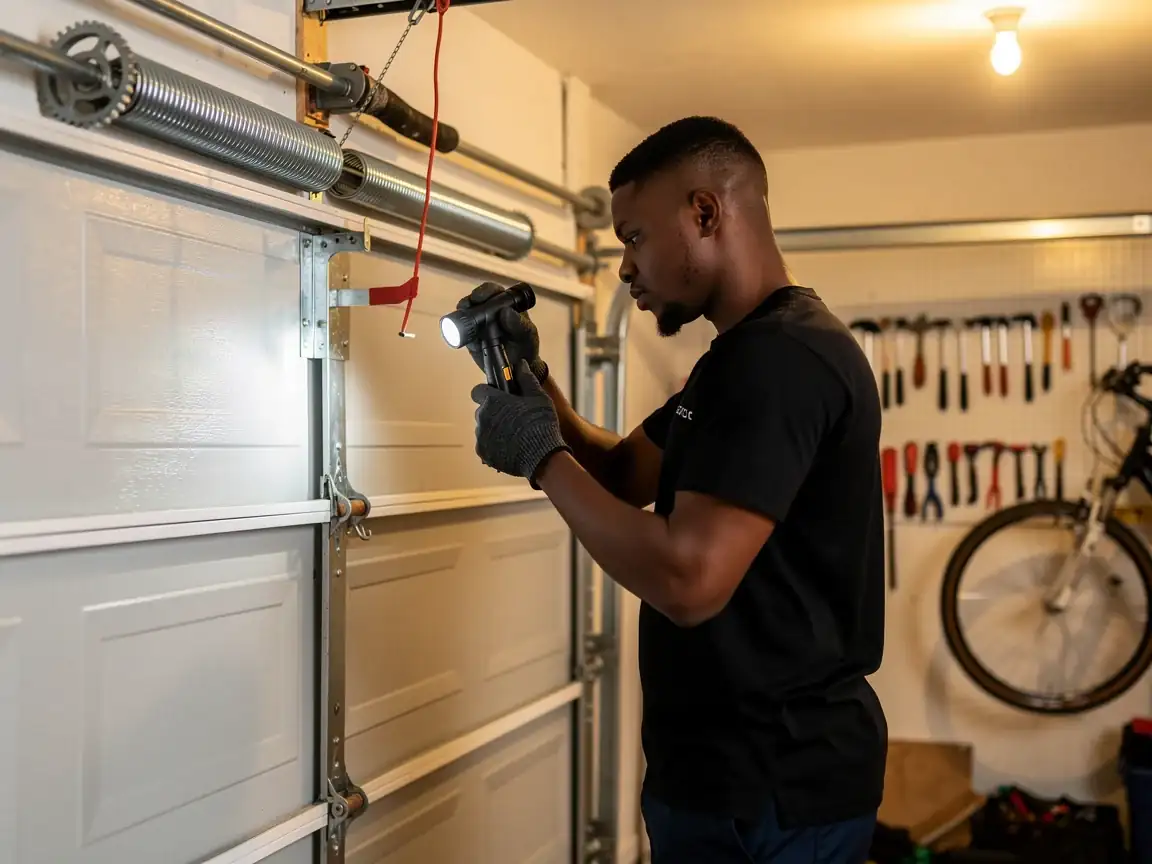
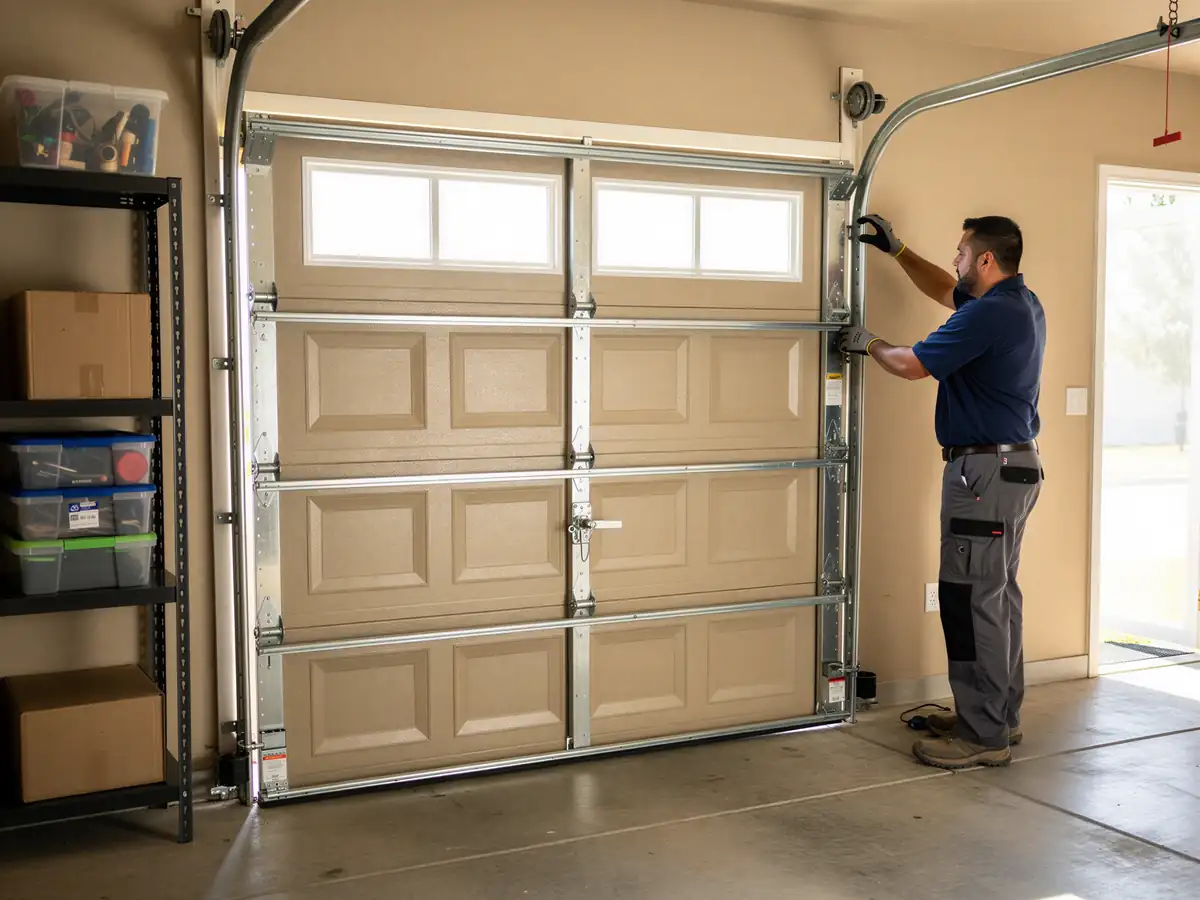
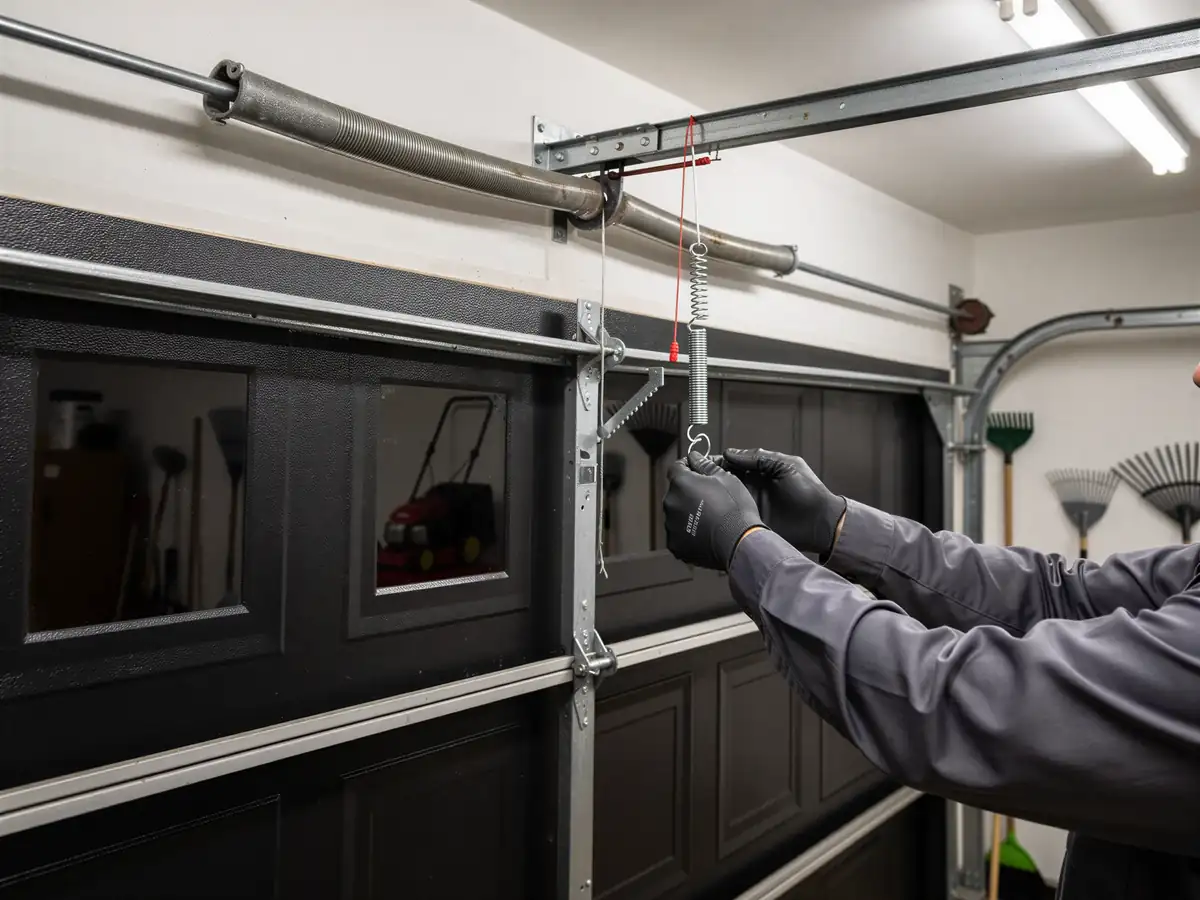
We start by pulling the spring size and door weight off the data plate, if there still is one - a lot of these older doors lost their labeling years ago, so we measure wire gauge and coil diameter by hand instead of guessing. On a house from the mid-1950s, we expect the torsion hardware to be original or close to it, so we check the shaft for pitting and the end bearings for play before we touch the springs themselves.
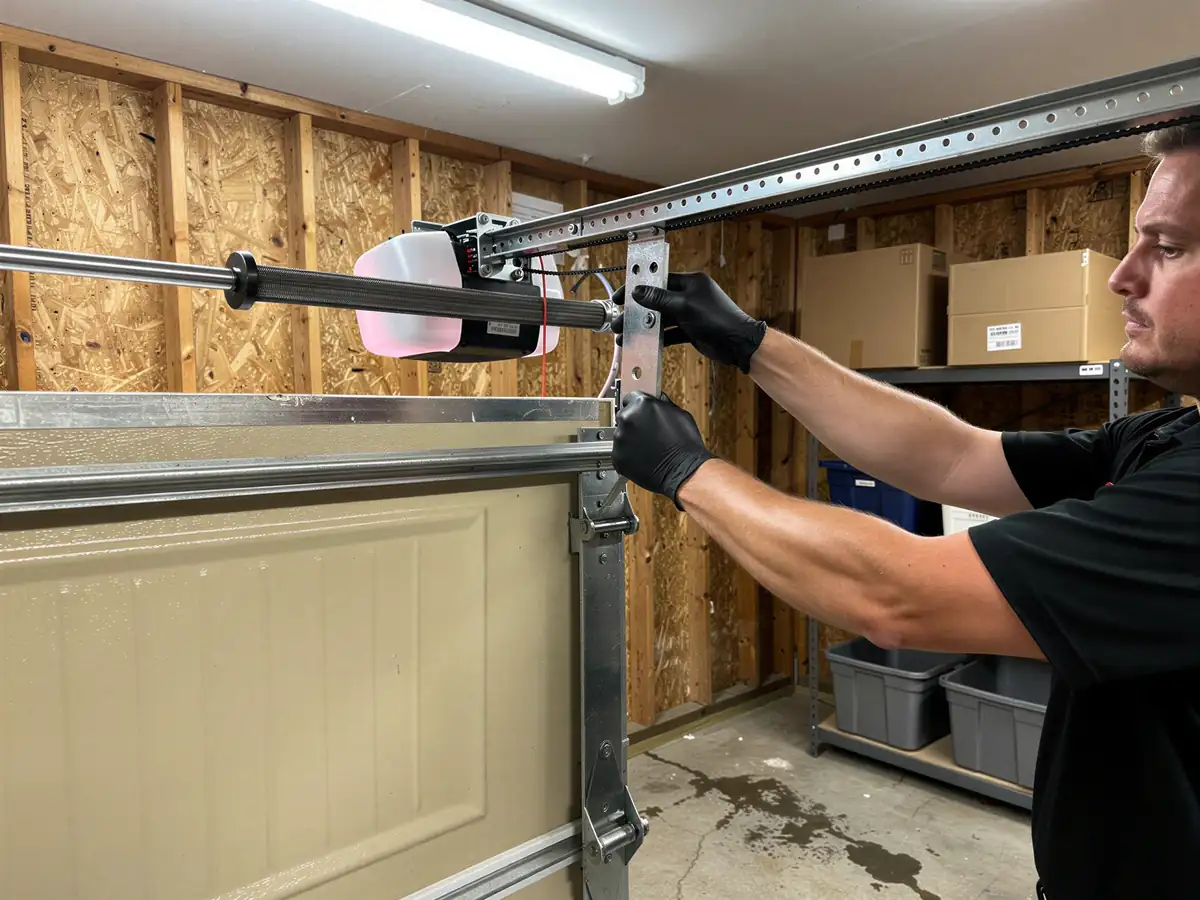
For tracks, we re-level rather than replace whenever the steel itself is sound - bent brackets and loose lag bolts cause more of these jams than warped rail. If the opener is original or close to it, we'll tell you plainly whether it's worth saving; a unit from that era with a failed gear or burned-out motor is usually a replacement call, not a repair, because parts for that generation aren't stocked anymore.
We carry spring stock sized for older low-headroom and standard-lift setups, since Elizabeth's housing era runs heavy on both depending on when the garage was added to the original structure.
The Symptom
The door that won't budge past a foot before stalling is almost always a broken or badly wound torsion spring - on a house this age, usually the spring, not the opener, even though the opener gets blamed first. A door that drops fast on the way down, instead of lowering evenly, points to a snapped cable or a spring that's lost tension on one side only, which is common when one of a pair was replaced years ago and the other wasn't.
Grinding or popping from the header when the door starts to move usually means a roller has seized in a track that's narrowed from rust - not unusual in hardware this old that's never been lubricated on a schedule. If the door reverses right after the opener engages, check the travel limits first; on original openers from this era, those limits drift with age and get blamed on the sensors instead.
A door that's fine on manual pull but won't respond to the opener at all is often a dead capacitor or a stripped gear, not a dead motor - worth ruling out before anyone tells you to replace the whole unit.
How Long It Takes
A straightforward torsion spring swap on a standard double door runs about the length of a single visit
Most of that time is spent winding the new spring to the correct tension, not removing the old one. Cable replacement adds time because we have to unwind the spring fully before touching the drum, so a cable job on a door this old, with hardware that hasn't been serviced, usually takes longer than the spring job itself.
Track realignment is quick if the steel isn't bent
Slower if we're pulling and resetting brackets anchored into framing from the original 1955-era build, where the stud spacing doesn't always match what a newer bracket kit expects. Opener swaps take longer on older installs because the wiring and the wall button are usually original too, and we're not leaving a house with mismatched parts half-updated.
We can usually tell you over the phone which category a job falls into once you describe what the door is doing
But we won't commit to a number until we've seen the hardware - on houses this old, the visible symptom and the actual cause don't always match.
Can You Do This Yourself
Lubricating rollers and hinges, tightening loose bolts on the track, and clearing the photo-eye sensors are all fine to do yourself, and they'll extend the life of hardware that's already decades old. What we don't recommend touching: the torsion spring itself. A spring wound for a door this age holds a dangerous amount of stored tension, and the winding bars and clamps needed to release it safely aren't something most homeowners have sitting in a drawer.
If the door is off its track entirely or a cable has snapped, leave it down and leave it alone - don't try to force it back onto the rail. On a house this old, the track brackets may already be weakened from age, and forcing a panel back into place can bend the rail further or pull the bracket loose from framing that's seen 70 years of settling.
If you're not sure whether what you're looking at is a simple adjustment or a spring under load, assume it's the spring and call. That's the one place where a wrong guess costs more than the service call.
Parts We Carry
For houses on Elizabeth's side of the service area, we stock torsion springs sized for the low-headroom setups common in garages added onto 1950s-era structures, along with standard-lift springs for the wider double-car openings built later. We carry galvanized cable in the gauges that match original drums, not just the newer standard sizes, since swapping a cable size can throw off the whole counterbalance on an older door.
We stock replacement rollers in both nylon and steel, extension and torsion-style end bearings, and the brackets sized for the stud spacing common in mid-century framing - a detail that trips up kits built for newer construction. What we don't stock: full replacement doors in every size and finish. If a panel is too far gone to patch, we'll give you an honest call on repair versus full replacement rather than trying to force a fix that won't hold.